Trial of Opposition Politician in Mozambique Set to Begin
Mozambican opposition politician Venancio Mondlane is set to face trial for charges related to post-election protests.
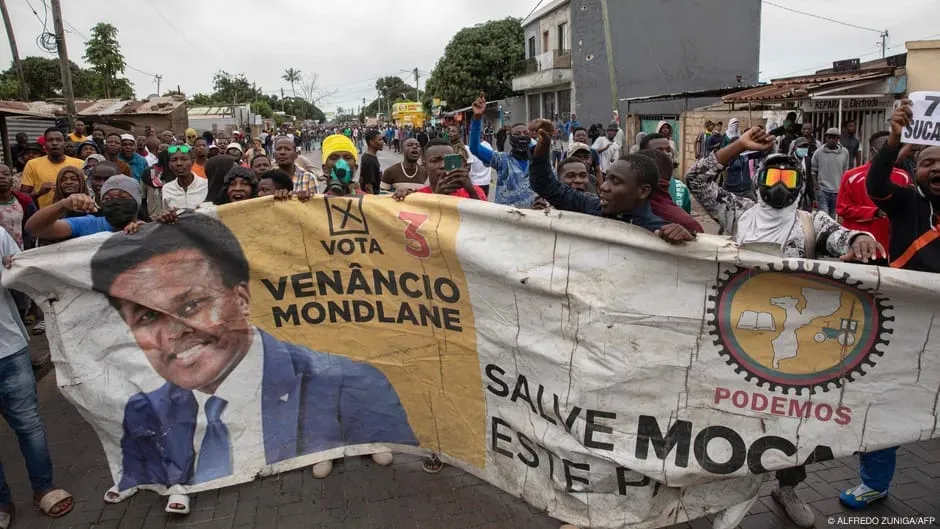
Mozambique is set for a highly anticipated trial that could significantly impact the country's politics and public trust in its institutions. The trial revolves around opposition politician Venancio Mondlane, who has been accused of five serious charges related to post-election protests.
Mondlane, a former presidential candidate, faces allegations of publicly advocating crimes and inciting collective disobedience and terrorism after the October 2024 elections. His defense team claims that his statements were actually intended to prevent violence from erupting in response to concerns over election results and extrajudicial killings within his political movement.
If convicted, Mondlane could face a lengthy prison sentence of more than 20 years, a prospect he strongly denies. In an earlier statement, he clarified that his intentions were not to promote but rather to prevent violence through peaceful means.
The trial of Venancio Mondlane has shed light on Mozambique's justice system as it grapples with allegations of violence and protests following the 2024 presidential elections.
Mondlane, a former presidential candidate, ran under the left-wing opposition party Podemos in October 2024. However, he refused to acknowledge the official election results that declared Daniel Chapo of Frelimo the winner. Frelimo has dominated Mozambique's politics since independence in 1975.
The aftermath of the elections saw widespread protests, strikes, and road blockades across the country. Reports from civil society groups estimate that over 400 people lost their lives during this period, while shops and public facilities suffered damage or looting.
Mondlane's live social media broadcasts are at the center of the indictment, with the public prosecutor's office alleging a connection between his calls to action and the violence that ensued. These online statements urged protests, strikes, and civil disobedience in response to the election results.
Albino Forquilha, Podemos' leader and Mondlane's former ally, is expected to testify at the trial but has stated he will only report on what he personally witnessed during the protests.
The prosecution's case against Venancio Mondlane is facing scrutiny from prominent lawyer Baltazar Fael, who argues that indictment does not necessarily mean conviction.
A key issue in the trial is the charge of incitement to terrorism, which requires a clear link between Mondlane's statements and specific acts. According to Fael, simply showing that violent acts occurred after his calls to action will not be enough to convict him on this charge.
The court must now decide whether what happened constitutes a criminal offense, with both sides presenting their arguments. Predicting the outcome is challenging due to the complexity of the case.
Fael questions whether Mondlane actually had the power to incite people to commit crimes, and believes the prosecution may be overstating some aspects of its case.
The timing of Venancio Mondlane's trial has raised eyebrows among observers, who point to a connection between the proceedings and the recent election challenge in Mozambique.
Several factors have contributed to this perception, according to one analyst. The speed at which the trial was prepared has also sparked concerns about potential political pressure.
Mondlane's case is being closely watched as an indicator of the independence of Mozambique's judiciary. Critics argue that a court's ability to remain impartial may be compromised when it deals with high-profile cases involving prominent critics of the government.
The Supreme Court's decision not to allow live broadcasting of the trial has been seen as another attempt to limit transparency in the proceedings, despite requests from Mondlane's defense team.
The underlying issues that sparked the protests leading up to Venancio Mondlane's trial remain unaddressed. Residents of Nampula, a northern Mozambican city, expressed their ongoing frustrations during interviews conducted by DW reporters.
"The people still want the same thing," said one resident, echoing the sentiment that has driven the protests all along. "They wanted Venancio to become president." This demand for change is rooted in legitimate concerns about hunger and unemployment among young people, as another Nampula resident noted: the population protested against these issues.
Some residents of Nampula have grown weary of the ongoing demonstrations and are now seeking closure, hoping that a resolution will bring an end to the disruptions. Even though the economic situation could be improved, it's clear that the country needs to move towards normalcy at some point.
Facts based on reporting originally published by DW English.
You may republish this story, in full or in part, if you credit News Central Site and link to it (licence CC BY 4.0). Photos are not included.