Tear Gas Use Results in Severe Injuries to Demonstrators
French police have been using tear gas extensively during recent protests, resulting in severe injuries to demonstrators, including a high-school pupil who suffered a shattered jaw when a canister was fired at close range.
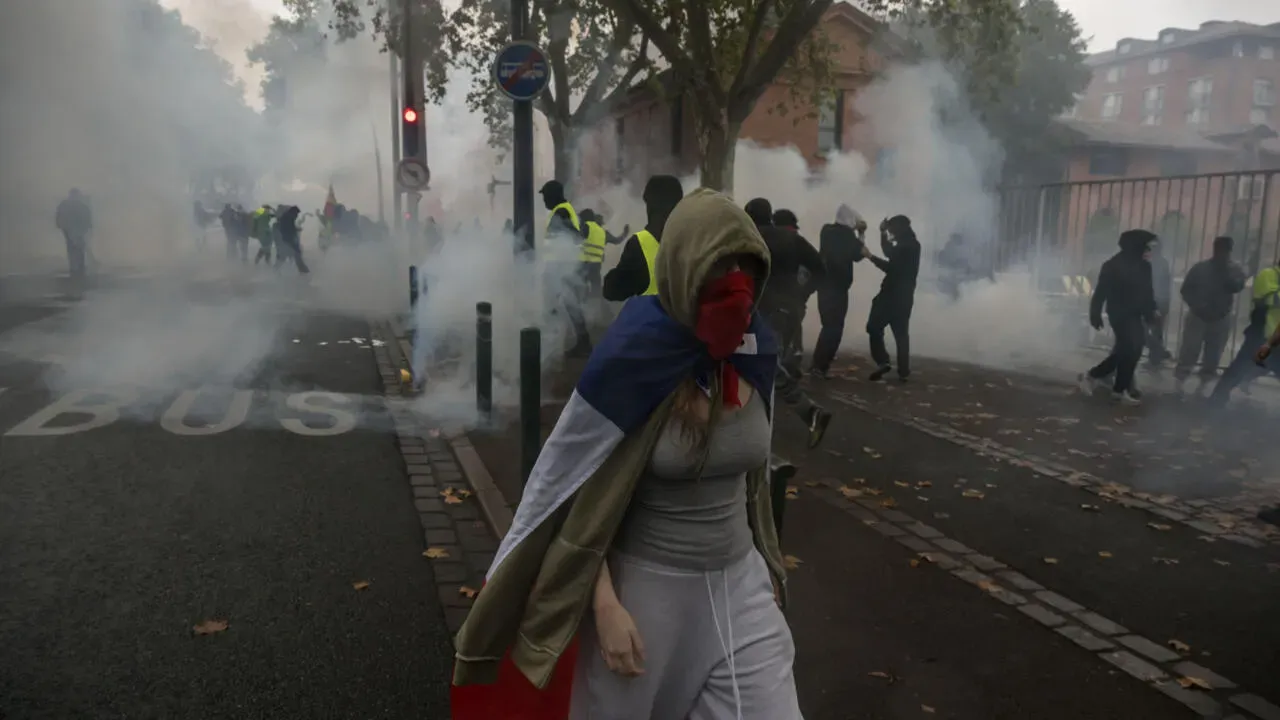
French police have been using tear gas extensively during recent protests, resulting in severe injuries to demonstrators, including a high-school pupil who suffered a shattered jaw when a canister was fired at close range.
The incident involving 14-year-old Eden is just one of many cases where protesters have been left with grievous injuries, sparking widespread criticism of the police's heavy-handed tactics and use of powerful crowd control measures. In addition to physical harm, some demonstrators are reporting long-lasting effects from exposure to tear gas, including severe health problems.
While attention has focused on the impact of stun grenades and rubber bullets, activists and healthcare professionals are now drawing attention to the potential health risks associated with tear gas itself. They argue that the chemical irritant is not as harmless as previously assumed, but rather a potent substance that can cause serious harm.
Protesters and medical workers are pointing out that exposure to tear gas has been linked to menstrual disorders, including painful periods and increased bleeding in women who have been exposed to it during demonstrations.
The effects of tear gas on protesters have been a topic of concern, with many experiencing a burning sensation, streaming eyes, coughing, and skin irritation after exposure. While these symptoms typically subside within 20 minutes in most cases, some individuals are more vulnerable to the chemical irritant's effects.
Children, pregnant women, and the elderly tend to be particularly sensitive to tear gas, and those with respiratory conditions like asthma or emphysema can experience severe reactions. Additionally, people with compromised immune systems may also be at a higher risk of adverse effects from exposure.
The use of tear gas has raised questions about its safety, especially in situations where large doses are deployed. The UN High Commissioner for Human Rights warned in 2020 that excessive use of the chemical irritant can cause serious health issues, including necrosis of the respiratory tract and internal bleeding.
Research on the impact of tear gas is limited, with experts calling for more studies to be conducted, particularly regarding its effects on women's reproductive health. The lack of regulation surrounding the composition of tear gas has also been highlighted by human rights organizations.
Amnesty International has documented over 500 cases of tear gas misuse worldwide since 2018, including instances in France where protesters have been exposed to the chemical irritant without proper justification. The organization has criticized the poor training of officers deploying tear gas and the lack of transparency surrounding its use.
French police have relied heavily on tear gas during recent protests, firing over 22,000 canisters on a single day in October as demonstrations turned violent. Many of these incidents have sparked concerns about the safety of protesters and the potential long-term health consequences of exposure to tear gas.
Video footage from Place de la République in central Paris has captured the moment when gas canisters landed among members of an orchestra who were performing a concert to show support for protesters. The orchestra was caught off guard as tear gas canisters rained down on them, forcing the musicians to abandon their performance.
Investigations are underway into the death of a 59-year-old man whose family suspects that exposure to tear gas may have contributed to his demise. An autopsy revealed that he died from acute cardiorespiratory failure, but the exact circumstances surrounding his death remain unclear.
Eyewitnesses at multiple protests have accused police of firing tear gas without warning, often in narrow streets where the gas takes longer to dissipate and can accumulate in confined spaces such as schools or metro stations. Social media platforms are filled with accounts from protesters and bystanders describing their experiences with tear gas exposure and offering advice on how to protect oneself.
Protesters are increasingly taking precautions when attending demonstrations, donning scarves, masks, goggles, and eye drops to shield themselves from the effects of tear gas. This shift in behavior reflects growing concerns about police tactics and the potential health consequences of exposure to tear gas.
Thousands of protesters and bystanders have shared their experiences with menstrual disorders after being exposed to tear gas in recent weeks. The collective Lacrymos du sang has been gathering these testimonies, which will be released on November 17.
Many women report experiencing severe menstrual cramps and heavy bleeding following exposure to tear gas. For some, this change is not just temporary - it can persist for days or even longer. Maëva's experience is a stark example: she described her periods as being "10 times more painful than usual" just one day after being teargassed.
The initiative by Lacrymos du sang was inspired by a study conducted in Portland, Oregon, following the Black Lives Matter protests of 2020. The study found that over half of those exposed to tear gas reported experiencing cramping, increased bleeding, and other health issues - often lasting for several days.
Transgender individuals who had undergone hormone treatment to suppress menstruation have also come forward with similar experiences. In interviews with Oregon Public Broadcasting, they revealed that exposure to tear gas caused their periods to restart, accompanied by severe cramps and heavy bleeding.
The group behind Lacrymos du sang, a French organization documenting the health impacts of tear gas on protesters, is now aiming to match or surpass the number of people interviewed in a similar study conducted in Portland, Oregon.
To achieve this goal, they collected over 10,000 testimonies from women who experienced menstrual disorders after being exposed to tear gas during protests. However, what's striking is that many of these women had not been directly involved in the demonstrations but were merely living or working nearby when they were affected by tear gas.
This finding suggests that stress alone cannot fully explain the abnormal menstruation reported by these women, as they would have been under less pressure than those who were being teargassed during protests. Instead, it highlights the indiscriminate nature of tear gas, which can affect a wide range of people beyond its intended targets.
According to Lacrymos du sang, some women who provided testimonies had no connection to the protests whatsoever but still experienced unusually painful periods after exposure to tear gas. This is a significant concern, as it indicates that even those not directly involved in demonstrations can be affected by the chemical agent.
Research has shown that the CS compound found in most types of tear gas, including those used by French police, breaks down into several molecules within the body. One of these molecules is a thyroid endocrine disruptor, which can lead to vaginal bleeding outside of the menstrual cycle among certain individuals.
The intense pain experienced during menstruation after exposure to tear gas is believed to be caused directly by CS activating pain receptors in the body. The severity of this pain is thought to depend on the duration of exposure to tear gas, with longer periods of exposure potentially leading to more severe symptoms.
The use of tear gas at French protests has raised concerns about its impact on women's health, particularly regarding menstrual disorders.
Some women have reported experiencing severe menstrual pain after being exposed to tear gas, with one study suggesting that this pain can be ten times more intense than usual.
Researchers are still investigating the link between tear-gas exposure and miscarriages, but some accounts of such cases have been documented in a recent survey.
The government has been urged to suspend the use of tear gas pending further research into its effects on human health.
Facts based on reporting originally published by France 24 English.
You may republish this story, in full or in part, if you credit News Central Site and link to it (licence CC BY 4.0). Photos are not included.