Stock Market Rises by 0.6% on Tuesday
The S&P 500 index rose by 0.6% on Tuesday, with the AI industry contributing to its growth.
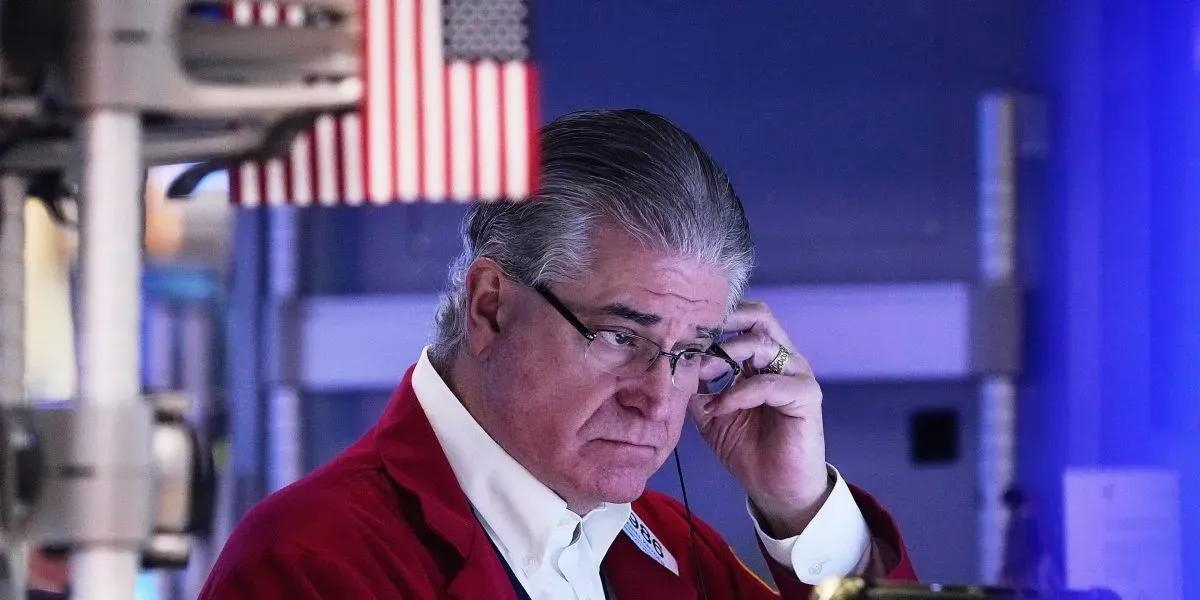
The S&P 500 index has made significant gains on Tuesday, rising by 0.6%. This surge has brought it within a mere 1.2% of its all-time high set earlier this month. Despite the overall increase, not all stocks are participating in the rally.
A closer look at the numbers reveals that many stocks within the S&P 500 are actually falling. However, the gains made by influential AI stocks have helped to offset these losses and drive the index higher. This trend is consistent with the industry's recent performance, which has seen AI stocks experience a second consecutive winning day after weeks of volatility.
The concerns that had been weighing on the sector appear to be subsiding for now. One factor contributing to this shift is the announcement by Broadcom of a $63 billion financing deal. As part of this agreement, several Wall Street firms will provide Anthropic with access to Broadcom's XPU AI accelerators and networking solutions.
This development has sent Broadcom shares soaring, rising by 4.2% in response to the news. Nvidia, another key player in the AI industry, is also benefiting from the trend, its stock up by 0.8%. Other companies, such as CoreWeave, are experiencing significant gains, with its shares jumping 8.5% following a period of severe volatility.
General Motors' decision to switch its stock listing from the New York Stock Exchange to the Nasdaq has sent shares soaring 5.6% higher. The automaker believes that moving to the tech-heavy Nasdaq will better align with its own technology-driven strategy.
By making this move, GM may also become eligible for inclusion in the Nasdaq 100 index, a benchmark that attracts significant investment from funds that track it. This would require these funds to purchase GM shares, potentially driving up demand and boosting prices further.
Meanwhile, JetBlue Airways has seen its stock rise by 20.3% despite reporting a larger-than-expected loss for the summer quarter. CEO Joanna Geraghty is optimistic about the airline's prospects, predicting that it will return to sustained profitability next year and deliver at least $1 in earnings per share in 2028.
Another travel company, Royal Caribbean Group, has also contributed to the market's upward momentum with a 5.5% increase in its stock price. The cruise operator exceeded analyst expectations for summer profits while boosting its forecast for full-year earnings.
The pressure is on companies like GM, JetBlue, and Royal Caribbean to deliver substantial growth in profits, as financial analysts and investors expect big returns despite concerns about inflation, interest rates, and other market headwinds.
The market's mixed performance continued as several major companies reported disappointing earnings. Boeing took a significant hit after announcing a larger-than-expected loss for the latest quarter, with its stock price plummeting 10.2%. This setback was particularly striking given that the company had previously been expected to deliver stronger results.
Hilton Worldwide Holdings also fell short of expectations, with its shares declining 2.6% after it reported weaker revenue for the summer period than analysts had anticipated. The hotel chain's forecast for the final three months of the year only added to investors' concerns, as the midpoint of its profit range failed to meet analysts' expectations.
Sherwin-Williams was another company to feel the pinch, with its stock price slipping 1.9% after it delivered a weaker-than-expected profit. The paint and coatings manufacturer cited high mortgage rates as a major contributor to the slowdown in demand for its products, which are closely tied to the housing industry. This sector has been feeling the pressure of rising interest rates.
The decline in consumer confidence is also taking a toll on companies like Sherwin-Williams. CEO Heidi Petz warned that customer sentiment and key indicators point to muted demand over the remainder of the year and into 2027, as high inflation continues to push up costs for raw materials. This trend is reflected in the company's decision to adjust its production levels.
Meanwhile, a glimmer of hope emerged on Tuesday with news that U.S. consumer confidence had improved in October, despite expectations of further weakening. However, this positive note was largely offset by the anticipation that the Federal Reserve will hold interest rates steady at its upcoming meeting, rather than making another hike to combat inflation.
The yield on the 10-year Treasury note dipped slightly to 4.99%, down from 5.00% late Monday, a development that may have had a stabilizing effect on markets.
Meanwhile, oil prices declined by 1.2% to $109.41 per barrel of Brent crude, which could also be contributing to lower yields. In international stock markets, results were mixed across Europe and Asia, with the biggest moves seen in Seoul where stocks surged 3.1%, and Shanghai where they fell 1.3%.
Facts based on reporting originally published by Fortune.
You may republish this story, in full or in part, if you credit News Central Site and link to it (licence CC BY 4.0). Photos are not included.