Smart Contact Lenses with AI-Powered Features Set for Release Next Year
Dubai-based company Xpanceo is set to unveil its AI-powered smart contact lenses at the Mobile World Congress trade show in Barcelona next year.
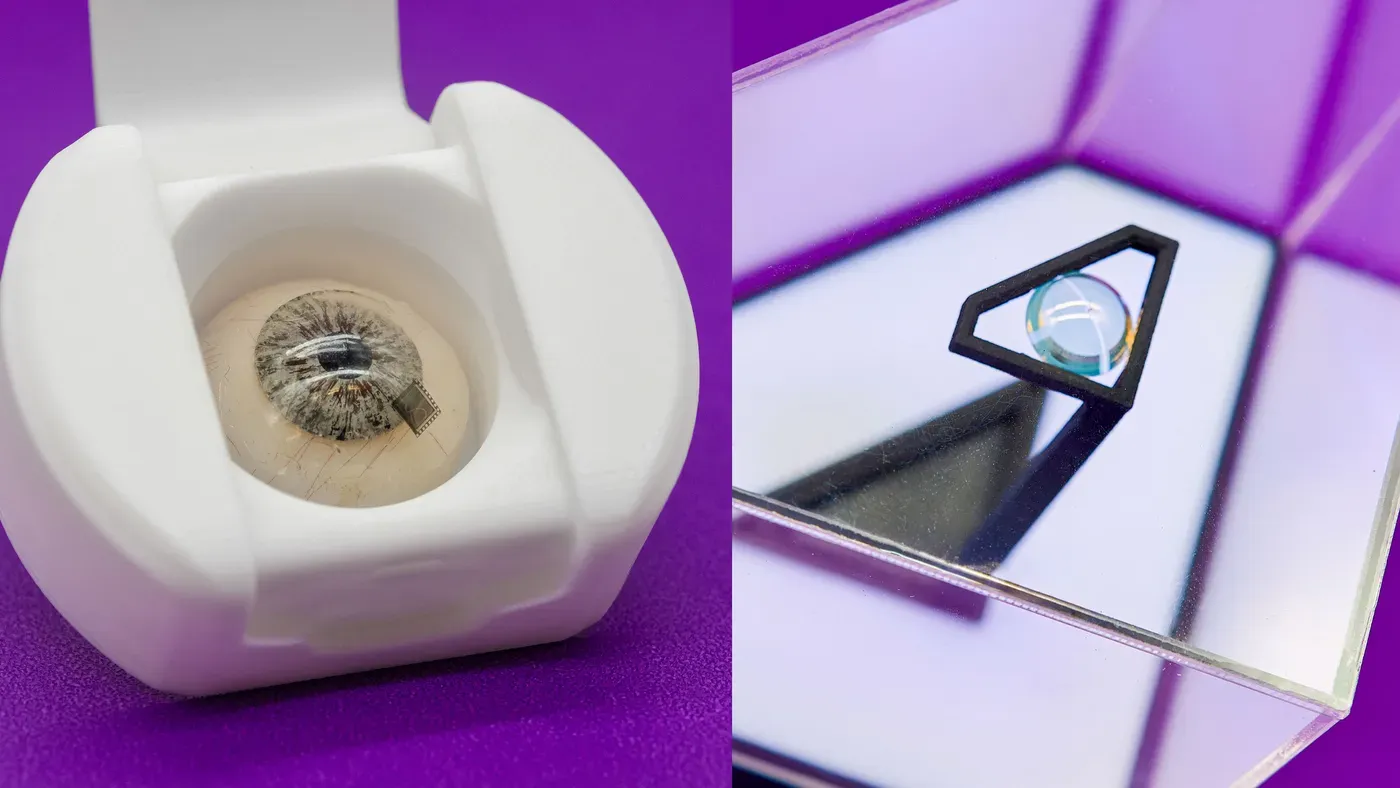
A new innovation in wearable technology is on the horizon, with Dubai-based company Xpanceo set to unveil its AI-powered smart contact lenses as early as next year. The company's founders, Roman Axelrod and Valentyn Volkov, have been working on this project for five years and claim to have already developed 28 functioning prototypes.
The smart contact lens is an innovative device that offers a range of features, from accessing personal apps and data to instant identity verification and even augmented reality experiences. With a companion helmet, users could potentially use the lenses in space missions, aviation, or high-speed racing environments. The lens itself can also monitor certain health metrics by analyzing tear fluid.
According to Xpanceo's founders, the contact lens is equipped with a screen, biosensors, microbattery, antenna, and other components that work together as part of a wireless ecosystem. This system connects seamlessly to an external companion device worn on the side of the head, which contains a camera, earphone, and microphone.
The companion device handles energy storage and computing tasks while wirelessly charging the lenses using custom antenna technology. This allows for a continuous connection between the lens and the companion device.
Xpanceo's smart contact lenses are being touted as a game-changer in wearable tech. The company claims to have filed over 50 patents related to this project, demonstrating its commitment to innovation.
The world will get its first glimpse of these revolutionary lenses at the Mobile World Congress (MWC) trade show in Barcelona next year, where they are set to be unveiled.
These revolutionary smart contact lenses are designed to monitor biochemical levels without requiring blood draws or invasive procedures. This is a significant departure from current wearables, such as wrist-based fitness trackers and smart rings, which have limited capabilities.
The eye provides an ideal platform for biosensing due to its unique properties. According to Volkov, tear fluid can be filtered to provide valuable biological information, including glucose levels, proteins, electrolytes, stress hormones, and other biomarkers.
Glucose monitoring is particularly important for individuals with diabetes, as high blood sugar levels can cause eye damage and vision loss over time. Unlike traditional glucose meters or continuous glucose monitors, smart contact lenses would eliminate the need for painful skin pricks.
The curvature of the eye also presents an opportunity for intraocular pressure measurement, which can indicate overall eye health and risk of diseases such as glaucoma. Smart contact lenses could potentially measure this parameter from their position on the eye.
In addition to monitoring biochemical levels, Xpanceo's smart contact lenses are designed to provide users with proactive tips for maintaining optimal health. The company is working to integrate optoelectronic sensor components into transparent polymer lenses that are both safe and comfortable.
The company's focus on developing a safe and comfortable product is evident in their approach to creating optoelectronic sensor components for transparent polymer lenses. According to Volkov, simply mixing polymers with batteries is not a viable solution, and the team is investing significant resources into finding a suitable method.
To ensure that these smart contact lenses are biocompatible, the team will conduct rigorous testing on multiple levels. Initially, they will test the lenses on cells in a laboratory setting, followed by animal trials to assess any potential adverse reactions. Only after these initial tests have been successful will human subjects be tested.
The target audience for these innovative lenses is likely to be individuals who already wear contact lenses daily. Once this group has adopted smart contact lenses, the company plans to expand its reach and persuade a broader segment of the population to try them out. This rollout strategy bears similarities to the introduction of the first iPhone.
In addition to their health monitoring capabilities, the Xpanceo team is also exploring the possibility of developing a brain-computer interface through these smart contact lenses. They have filed patents for this technology and believe that it could revolutionize the way humans interact with machines.
The company's ambitions extend beyond merely creating a device that can monitor vital signs in real-time; they envision a future where the eye itself serves as a universal interface between the brain and machinery. This concept is based on the fact that 80% of our sensory information comes through our eyes, making them an integral part of our neurological system.
The development of smart contact lenses raises concerns about data privacy, according to Axelrod, who emphasizes the importance of safeguarding personal information when using these devices. This is particularly relevant given the increasing amount of sensitive data that will be transferred from our bodies to the digital world.
To address these concerns, Xpanceo is not only leveraging existing data privacy toolkits but also developing its own unique approach tailored specifically for contact lenses. By doing so, the company aims to provide users with a secure and trustworthy experience when interacting with their smart lenses.
Axelrod is quick to clarify that Xpanceo's goal is not to replace smartphones or medical devices, but rather to offer an additional interface and use case that can enhance our digital lives. This perspective is echoed in his comparison of the evolution of technology, where smartphones did not render laptops obsolete and text messages did not replace emails.
One potential benefit of smart contact lenses is the ability to stay connected even when you forget your smartphone at home. With these devices, users will have access to their digital life right on their eyes, providing a seamless experience that blends physical and digital interactions.
At MWC 2027, Xpanceo plans to showcase its third-generation integrated contact lenses equipped with biochemical sensors. These advanced lenses will also be compatible with another device capable of delivering images directly to the eyes.
In its initial applications, Xpanceo is focusing on narrow use cases in B2B contracts, such as smart contact lenses for hospitals or professional athletes. Examples of these applications include using the lenses to passively measure intraocular pressure and track medication activity in the body during treatment.
Xpanceo's innovative smart contact lenses are taking a significant step forward with their joint project with the UAE Space Agency. This collaboration will enable the team to send their work into space, further expanding its possibilities and potential.
As the technology advances, Xpanceo aims to create a multi-purpose contact lens that can perform various functions simultaneously. By adding one use case after another, they hope to develop a device that can accomplish multiple tasks with ease and efficiency.
After showcasing their work at the recent MWC presentation, Xpanceo will initiate medical trials within the next year. Following this, it's anticipated that only a few years will be needed to refine the device under B2B contracts. If everything proceeds as planned, the smart contact lenses could become available for consumers in narrow use cases by 2030.
The estimated price of these innovative lenses is expected to be around $2,000 per year, similar to the cost of daily contact lenses in the US. However, it's hoped that this price will be lower than anticipated, making the technology more accessible and affordable.
As the release date for the smart contact lenses approaches, it remains uncertain whether they will have a significant impact on the market. Will they become a game-changer like the iPhone, or will they fade into obscurity? Only time will tell.
Xpanceo's ambitious plans are pushing the boundaries of what is thought possible with wearable technology. The potential applications for their smart contact lenses are vast and varied, offering new possibilities for individuals who require specific assistance.
The collaboration between Xpanceo and the UAE Space Agency demonstrates the company's commitment to innovation and exploration. By sending their work into space, they are opening up new avenues for research and development.
As the world waits with bated breath for the release of these revolutionary lenses, one thing is certain: Xpanceo is at the forefront of a technological revolution that will change the way we live and interact with our surroundings.
Facts based on reporting originally published by CNET.
You may republish this story, in full or in part, if you credit News Central Site and link to it (licence CC BY 4.0). Photos are not included.