Signal Restricts Screenshot Functionality Due to AI Agent Concerns
Signal is restricting screenshot functionality due to concerns that AI agents can access user data when taking screenshots. The move aims to protect user privacy and prevent sensitive information from being captured by OS-level AI agents.
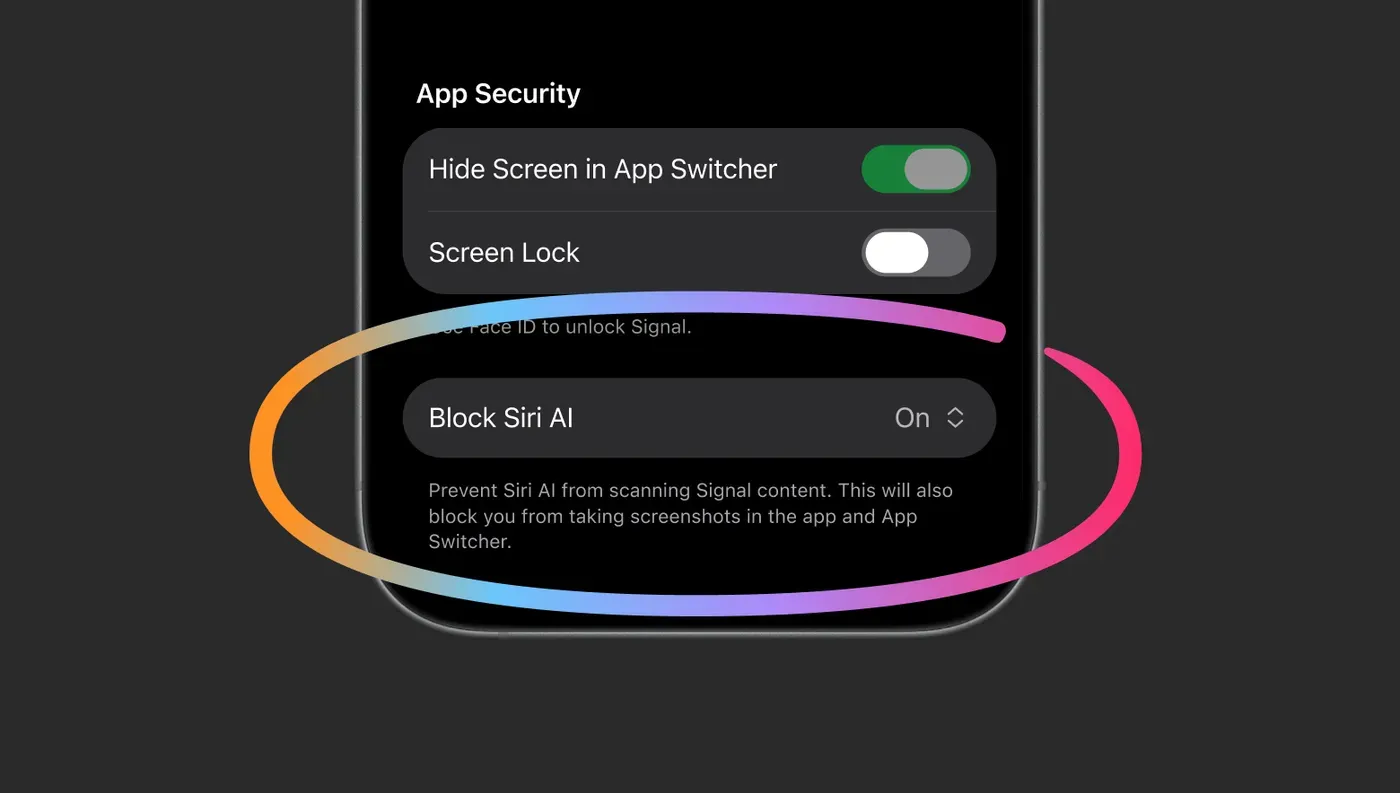
Encrypted messaging app Signal is taking steps to restrict screenshots due to concerns over AI agents and their potential impact on user privacy.
Signal's President Meredith Whittaker highlighted the issue in a recent blog post, pointing out that features like Google's Gemini Intelligence and Apple's Siri AI Onscreen Awareness compromise the privacy missions of third-party developers by observing what's on a user's screen.
These agentic features observe a user's screen to provide context for completing requests, but this raises concerns about sensitive data being captured, stored, and made accessible to OS-level AI agents.
Whittaker emphasized that once this data is captured, it's outside of Signal's control, putting the privacy of all conversation participants at risk.
Signal's decision to restrict screenshots raises concerns about the impact of Big Tech's AI strategy on third-party apps' privacy infrastructure. As AI features become increasingly integrated into operating systems, developers must adapt to conditions that undermine their hard-won security measures.
This trend is evident in the growing presence of AI agents within services external to the OS, such as chatbots from OpenAI and Anthropic. Their integration has led to a shift in how third-party apps operate, forcing them to conform to new standards that compromise user data protection.
The recent use of AI agents to verify Signal's code by Google DeepMind researchers highlights the potential risks involved. By building on Signal's own work, these researchers essentially proved the app's encryption works, setting a high bar for security guarantees within the app.
However, this achievement is rendered meaningless if an agent can simply access messages through alternative means, such as retrieving content already present on a user's device via the filesystem. This vulnerability has been demonstrated by AI agents like Meta's Muse, which have been found to use permissions in unexpected ways to access apps and data.
The development of rival AI agents by tech giants like Samsung and Apple further exacerbates these concerns, as their agents may also be capable of accessing app data through unconventional means.
Signal's latest move to restrict screenshots stems from concerns that AI agents could access app data through unconventional means.
The company's current protections don't extend to MacOS, leaving users on this platform vulnerable to potential privacy breaches. Signal's developers acknowledge the limitations of their tools in preventing AI agents from undermining application-level privacy. Without robust measures, even blocked attempts may still compromise user data.
Signal advises against disabling its screenshot restrictions, as this would expose sensitive content to AI agents and potentially break the app's core functionality. Doing so could put both users' Signal content and that of their contacts at risk of being accessed by these agents, undermining the app's privacy guarantees.
Facts based on reporting originally published by ZDNet.
You may republish this story, in full or in part, if you credit News Central Site and link to it (licence CC BY 4.0). Photos are not included.