Scientists Study Marine Environment Around Madeira Archipelago
A team of nearly 200 scientists is currently on a month-long expedition to study the marine environment around Madeira, an archipelago in the Atlantic Ocean off Portugal's coast.
A team of nearly 200 scientists is currently on a month-long expedition to study the marine environment around Madeira, an archipelago in the Atlantic Ocean off Portugal's coast. The researchers are aboard around 15 vessels, investigating the marine life and assessing the health of the ecosystems.
As part of this effort, environmental engineer Juan Mayorga is analyzing underwater footage to measure the effects of marine protection. Mayorga works for Pristine Seas, a marine conservation initiative run by the National Geographic Society. He expressed his enthusiasm about observing a stingray gliding across his computer screen near the Desertas Islands.
The team's mission is not only to study the current state of Madeira's marine environment but also to explore how its ecosystems can better withstand climate change. As Mayorga noted, protecting the area has led to observable improvements in fish populations over time.
Mayorga's work with Pristine Seas is part of a broader effort to understand and conserve ocean health around the world. The team's findings from Madeira will contribute to this global understanding and inform conservation efforts elsewhere.
The research team is analyzing underwater footage recorded at depths of 130 to 165 feet using cameras mounted on metal frames that are baited to attract fish. This footage is being studied to gain a better understanding of the marine ecosystem in this region.
One key aspect of the study is comparing waters south of the Desertas Islands, where fishing is completely prohibited, with those to the north, where some fishing still occurs. This comparison will provide valuable insights into how different levels of protection impact marine life.
The researchers are particularly interested in examining the effects of varying protection levels on the diversity and abundance of marine species. By analyzing these differences, they can inform conservation efforts aimed at preserving vulnerable ecosystems.
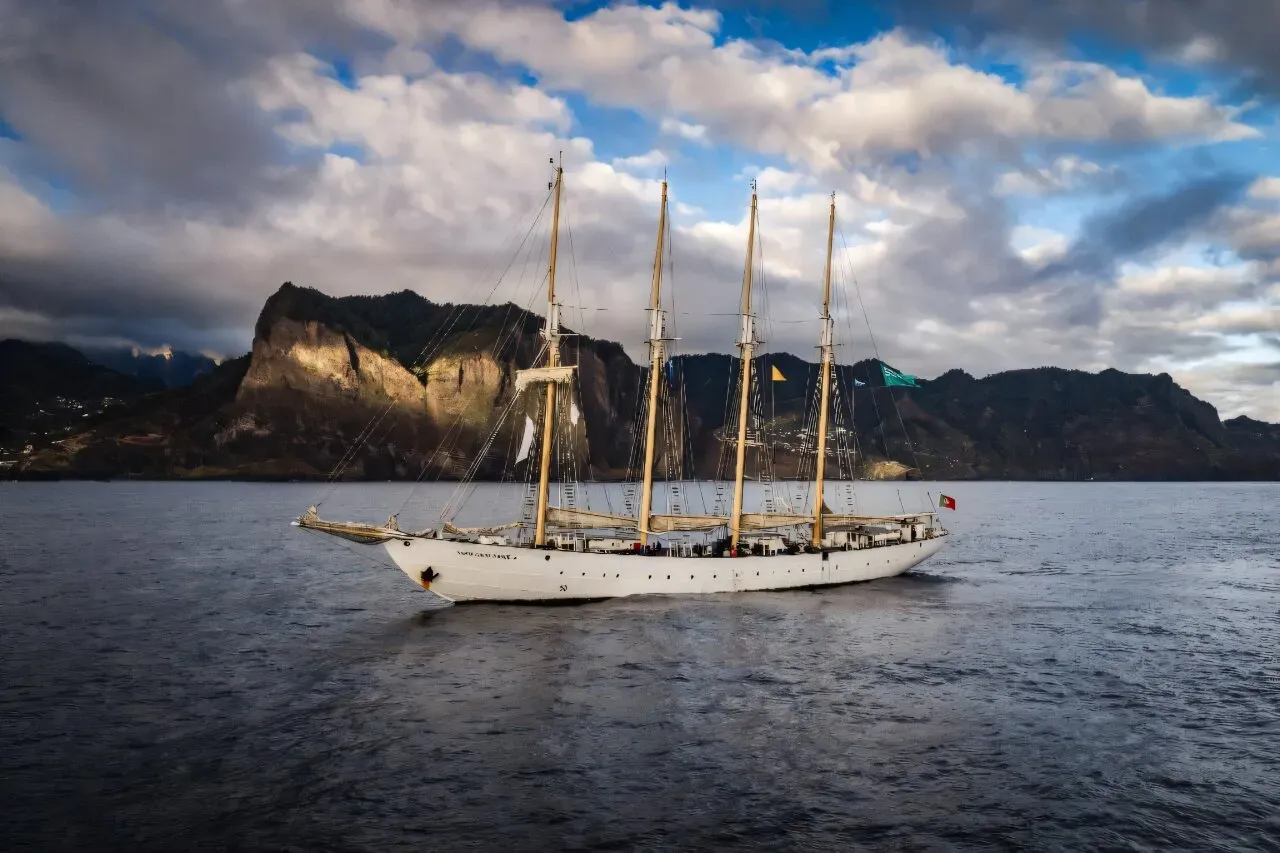
The research team has been using the 230-foot sailing ship Santa Maria Manuela as their base of operations while conducting fieldwork in the Desertas Islands. This group of three uninhabited islands is located about 25 miles southeast of Madeira and is characterized by rugged, rust-colored cliffs and rocky slopes.
Rui Seabra, a researcher from the University of Porto, is studying the distribution of temperature sensors on exposed rocks along a small cove on the largest island. He aims to understand how crustaceans and sponges respond to varying temperatures in sunny and shaded areas.
The team is also using a technique called environmental DNA sampling to gather data on the marine life in the area. This involves collecting water samples that contain genetic material from fish and other organisms, which can then be analyzed to determine what species are present.
Expedition leader Emanuel Goncalves emphasizes the importance of taking action on ocean conservation issues, rather than waiting for decisions to be made at international meetings such as the U.N. biodiversity summit currently underway in Armenia. He notes that the urgency of the situation means that immediate action is needed.
Madeira has a long history of pioneering marine conservation efforts. The archipelago includes several islands, including the main island of Madeira and the remote Selvagens Islands, which are about 280 kilometers south of Spain's Canary Islands.
The reserve around the Selvagens Islands has been expanded to cover a vast area of approximately 2,600 square kilometers.
This expansion makes it the largest protected marine area in the North Atlantic and demonstrates Portugal's commitment to preserving its oceanic heritage.
In addition to the Selvagens Islands reserve, another conservation effort is also underway on the Desertas Islands, where a colony of Mediterranean monk seals has grown significantly since being established.
Facts based on reporting originally published by Phys.org.
You may republish this story, in full or in part, if you credit News Central Site and link to it (licence CC BY 4.0). Photos are not included.