Glaciers Worldwide Could Lose Ice at Faster Rate Due to Daily Weather Extremes
A new study has revealed that glaciers worldwide could lose ice at a faster rate than previously projected due to daily weather extremes, which can quickly remove protective snow cover and cause substantial ice loss.
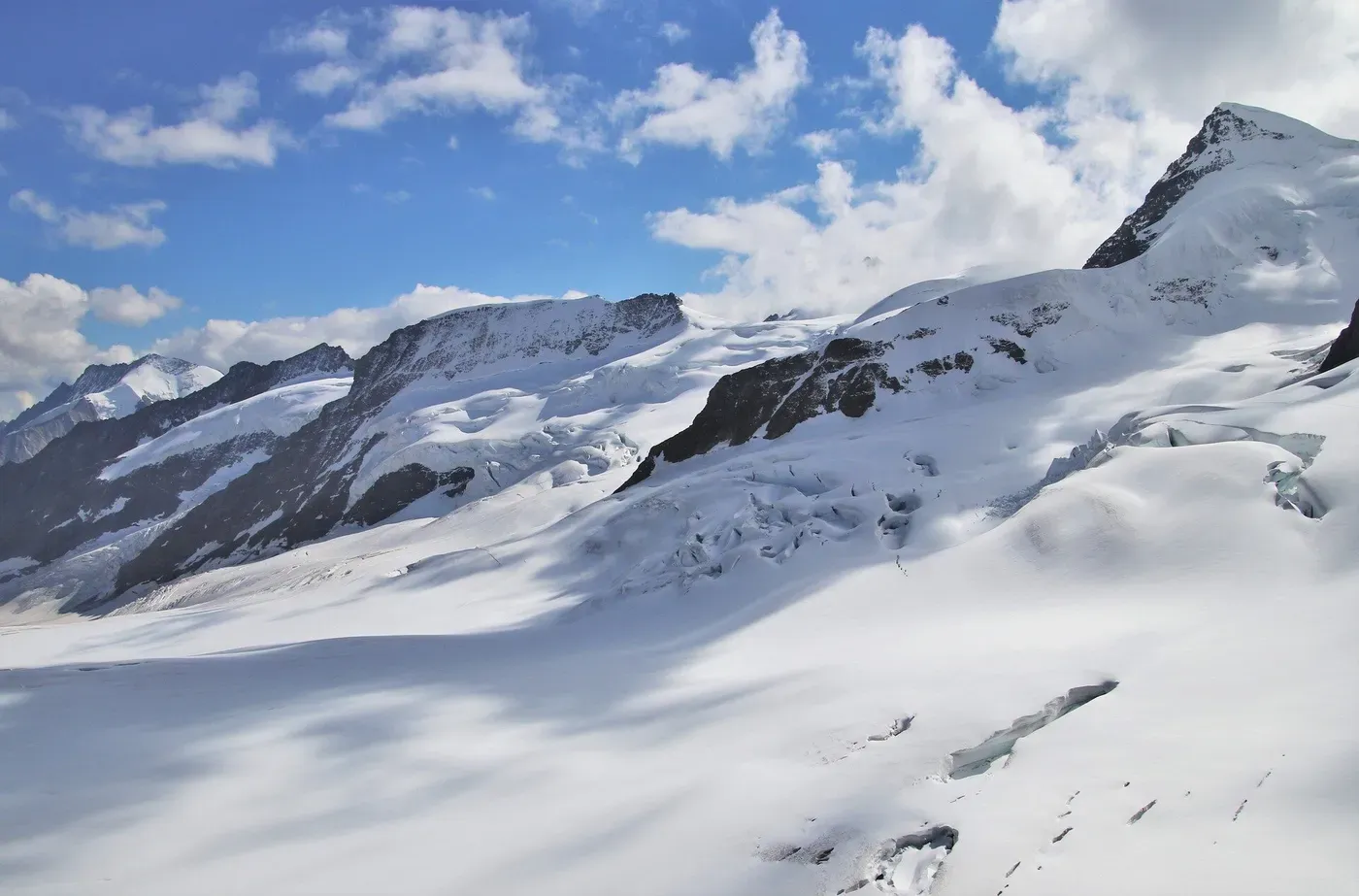
A new study has revealed that glaciers worldwide could lose ice at a faster rate than previously projected due to daily weather extremes. The research, led by ETH Zurich (Switzerland) and Vrije Universiteit Brussel (Belgium), suggests that accounting for short-term weather fluctuations is crucial in simulating glacier melt.
Most global glacier models rely on monthly climate data, which can obscure the impact of individual weather events such as heat waves and heavy precipitation. However, glaciers respond rapidly to these events, including sudden temperature changes that can quickly remove protective snow cover.
The study highlights the importance of considering daily weather variability in glacier models. This approach leads to more realistic simulations of ice loss and results in greater projected ice loss by the end of the century. The findings underscore the significance of exceptional heat waves and extreme melt seasons observed in several regions around the globe.
Glacier models that neglect short-term weather fluctuations may underestimate the rate of ice loss, according to the research.
The daily weather patterns that glaciers experience can have a significant impact on their accumulation and runoff. Heavy precipitation events, for example, can fall as rain or snow depending on the temperature at the time, which in turn affects how much water is absorbed by the glacier.
Glaciers respond to short-term weather fluctuations rather than long-term averages, according to researchers who studied this phenomenon. They found that a few days of high temperatures can cause substantial ice loss, which would be overlooked if only monthly averages were considered.
To better account for these daily variations, scientists extended the Global Glacier Evolution Model (GloGEM) to operate at a daily resolution. This enabled them to simulate more than 12,500 glaciers worldwide that comprise about 94% of global glacier ice volume.
The enhanced model showed improved accuracy in predicting glacier mass loss compared with traditional monthly models, particularly during years with exceptional melt such as those experienced in the European Alps and western North America.
The effects of daily weather variability on glaciers have been found to accumulate over time, leading to a more significant impact on ice loss than previously thought. This is particularly evident in regions where melting is heavily influenced by short-term temperature fluctuations.
According to researchers, incorporating daily weather extremes into glacier models reveals a faster retreat and greater ice loss compared to traditional monthly models. As a result, the projected contribution of glaciers to global sea-level rise is significantly higher, with some estimates suggesting a 5%–10% increase over the 21st century.
The study's findings suggest that relying solely on monthly climate forcing may underestimate the rate at which glaciers will lose ice in a warming world. This is because extreme melt events, such as those recently witnessed in the European Alps and other regions, can have lasting consequences for glaciers.
Glacier meltwater runoff patterns are also expected to change, with implications for downstream water resources. As a result of these changes, researchers warn that existing global projections may need to be reassessed to accurately account for the impacts of daily weather variability on glacier retreat and sea-level rise.
The study highlights the importance of considering daily weather fluctuations when modeling glacier retreat and sea-level rise. This is crucial for millions of people who rely on glaciers as a source of freshwater. By accounting for these short-term weather variations, researchers can gain a more accurate understanding of changes in water availability.
Previous models have focused primarily on long-term climate trends, but the study shows that daily weather extremes play a significant role in glacier melting and sea-level rise. This means that existing projections may need to be reassessed to reflect the full impact of these weather patterns. The researchers' findings suggest that glaciers are more vulnerable than previously thought.
The study's results have significant implications for climate modeling and future water resource planning. By incorporating daily weather variability into their models, scientists can better anticipate changes in glacier ice mass and sea levels.
Facts based on reporting originally published by Phys.org.
You may republish this story, in full or in part, if you credit News Central Site and link to it (licence CC BY 4.0). Photos are not included.