Portable Printing Revives Journaling Habit
Journaling was a vital part of my teenage years, helping me cope with hormonal changes, school drama, and existential crises. It provided an outlet for my emotions and thoughts during a...
Journaling was a vital part of my teenage years, helping me cope with hormonal changes, school drama, and existential crises. It provided an outlet for my emotions and thoughts during a tumultuous period in life. However, when I left for college in another country, I abandoned this habit along with my cherished Nirvana cassettes.
Despite making several attempts to revive journaling over the years, I never managed to stick to it consistently. I experimented with bullet journals to boost productivity but found it too time-consuming and gave up. Multiple notebooks and planners were also invested in, only to be left untouched eventually.
The turning point came when I discovered the concept of portable printing on social media platforms. Journalers showcased vibrant pages adorned with photos from compact printers that fit seamlessly within their journals or planners. This idea resonated with me, and I became determined to incorporate it into my journaling practice.
My decision to opt for a Polaroid Hi-Print pocket printer was influenced by my research into portable printing technology. I focused on finding a dye sublimation printer over the more common ZINK printers. Dye sublimation prints are renowned for their superior quality, achieved through layer-by-layer transfer of cyan, magenta, and yellow dyes followed by a protective coating.
The benefits of using a dye sublimation printer became apparent as I began exploring my options. It offered higher image quality compared to ZINK printers, which rely on special paper that activates under heat without the need for ink. This distinction made it clear that dye sublimation was the better choice for someone seeking crisp and vibrant prints.
The prospect of adding photos to my journal pages has reignited my passion for journaling. The process of printing small images using a portable printer excites me, allowing me to capture moments from everyday life and decorate my pages in a creative way.
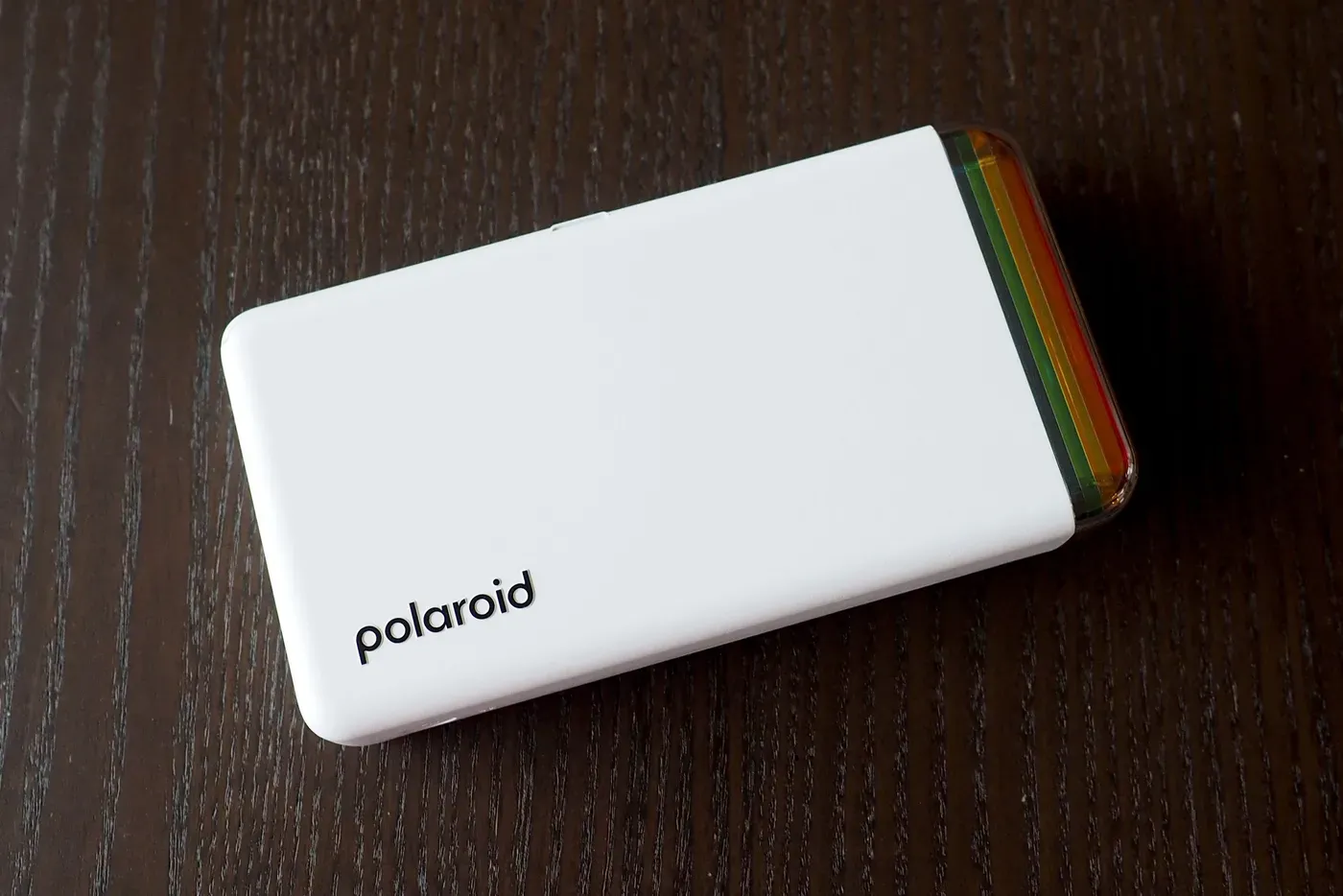
When I started looking for a portable printer to use with my journal, I knew I wanted photos on sticky paper to avoid any hassle when adding them to my pages. This led me to explore dye sublimation pocket printers, and one model that stood out was the Polaroid Hi-Print 2×3 Generation 2.
The sleek design of this printer caught my eye immediately - its white color scheme, the prominent Polaroid logo, and a curved rainbow accent on the edge all contributed to its appeal. I must admit that I have a weakness for stylish products, which made it hard to resist purchasing the Hi-Print 2×3 "starter set". This bundle includes the printer itself along with two 2×3 paper cartridges.
Each cartridge contains 10 photo sheets made of sticky back photo paper, exactly what I had been looking for. Both the newer Generation 2 and its predecessor, the original Generation 1 model, are widely available on the market. The main difference between these two versions lies in their charging ports: the Gen 2 uses a USB-C port, whereas the older one relies on Micro-USB.
Getting started with the printer is relatively straightforward - after downloading the Polaroid Hi-Print app and pairing it with your phone, you're ready to print photos. The app's user interface is easy to navigate, allowing you to arrange multiple photos into collages rather than printing just a single image per sheet. You can also customize your prints by adding colorful frames or decorations through the app.
The printer offers another feature that lets you create mosaics by combining multiple sheets to print one large image.
The Hi-Print's printing process is a slow but deliberate one, as it uses dye sublimation to lay down colors in multiple passes. The first pass adds yellow, followed by magenta in the second, and subsequent passes add other hues until the final image is complete.
This multi-pass approach results in a wait time of around 60 seconds per photo, which may seem like a drawback at first glance. However, the payoff is well worth it: the resulting photos are incredibly vibrant and sharp, with colors that pop off the page.
One potential pitfall to consider is the cost of replacement cartridges, which can be pricey. A single pack of 20 sheets costs around $17, although purchasing in bulk can bring the price down slightly to approximately $14 per pack.
Another limitation of the Hi-Print is its battery life, which may not be sufficient for frequent travelers or those who plan to use it on extended trips. With a 620mAh battery, Polaroid estimates that users will get up to 20 photo printing sessions before needing to recharge.
Fortunately, recharging the Hi-Print doesn't take an eternity: according to Polaroid, it takes under an hour to top off the battery, which feels about right based on my own experience with the device.
The compact size and portability of the Polaroid printer make it an ideal companion for capturing memories on the go. The thin photo sheets produced by the device are also a welcome feature, allowing journal entries to remain uncluttered and aesthetically pleasing.
My experience with the printer has reignited my passion for creative expression through journaling. Even though I may not have access to all the nostalgia of my childhood, this portable printer has helped me recapture some of that lost joy in a modern way.
Facts based on reporting originally published by CNET.
You may republish this story, in full or in part, if you credit News Central Site and link to it (licence CC BY 4.0). Photos are not included.