The Hunger Games Franchise Draws Inspiration from Ancient Greece and Rome
A resurgence in popularity for The Hunger Games has been fueled by recent book releases and an upcoming movie adaptation, which explores the world of Panem.
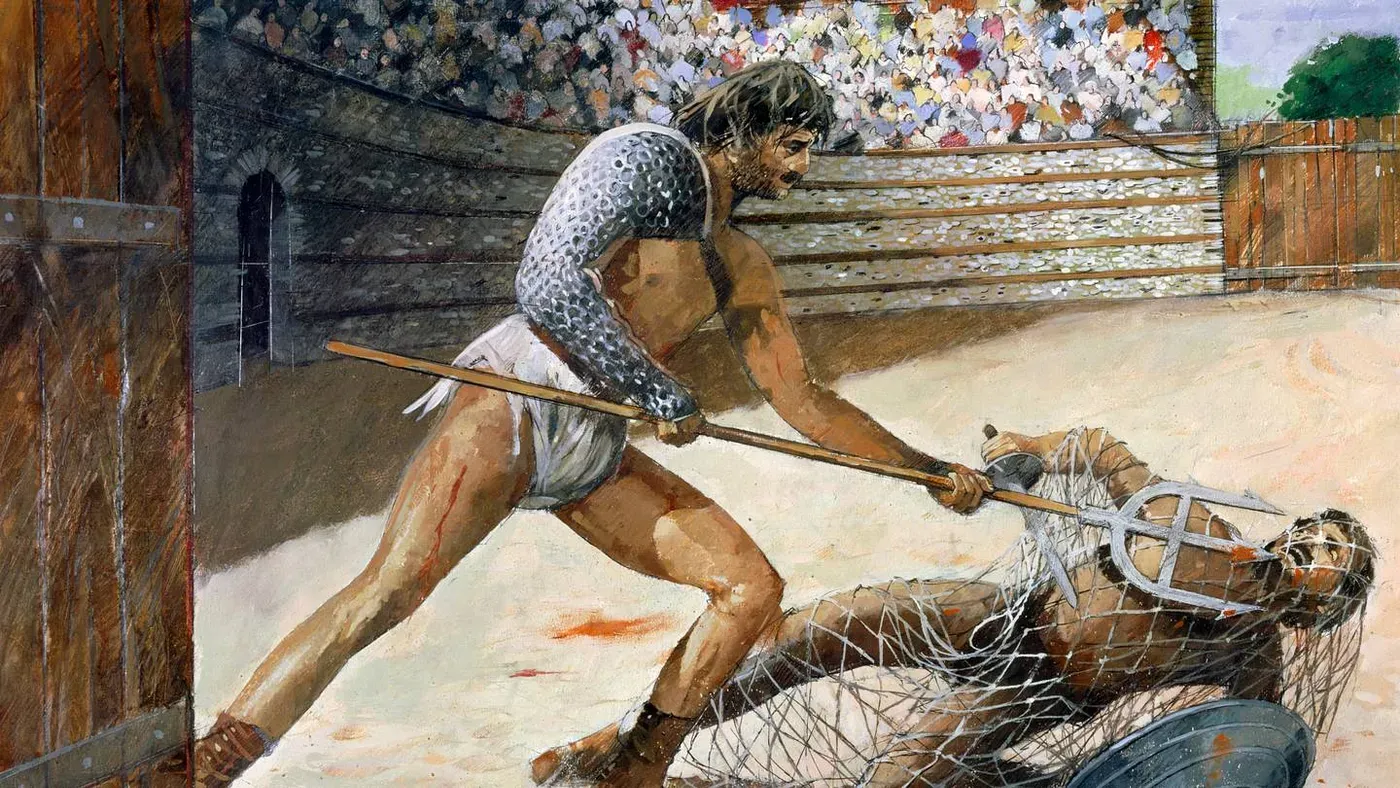
The Hunger Games franchise is experiencing a resurgence in popularity, thanks to the release of two prequel books in recent years and an upcoming movie adaptation hitting theaters on November 20. Author Suzanne Collins' Classical inspirations are becoming increasingly evident as she expands our understanding of the world of Panem.
Collins has shared her creative process with audiences multiple times, revealing that she was inspired by a peculiar combination of reality television and war footage while channel surfing one day. This unusual pairing sparked her imagination and led to the creation of The Hunger Games series. Her writing began as an exploration of just war theory, merging the concepts of reality TV and deadly combat.
The origins of the Games themselves owe a debt to ancient Greek and Roman traditions. Collins drew inspiration from the myth of Theseus and the Minotaur, as well as the brutal gladiatorial combat that was a staple of Roman entertainment. By combining these elements, she crafted the core plot and style of The Hunger Games.
Collins' use of Classical influences is not limited to her creative process but also permeates the world-building of Panem itself. Major Capitol residents are given names that echo ancient Greek and Roman figures, while the terminology used by the people of Panem bears a striking resemblance to historical accounts from these cultures.
The connections between The Hunger Games and ancient death battles may be apparent even to non-experts in Classical history. However, upon closer examination, it becomes clear just how deeply embedded these influences are within the franchise. From names to terminology, Collins' use of Greek and Roman history serves as a commentary on the darker aspects of these cultures.
This appropriation of historical elements highlights the dangers of authoritarian regimes co-opting cultural heritage for their own purposes. By examining The Hunger Games through this lens, readers can gain a deeper understanding of how power is exercised and maintained in societies that value control above all else.
Collins' use of Classical influences extends beyond the names and terminology used within the series. Her depiction of the Capitol as a decadent and oppressive force also draws parallels with ancient Rome's own imperial excesses. This commentary on the dangers of unchecked power serves as a warning to readers about the consequences of allowing authority to go unchallenged.
The influence of Greek and Roman history on The Hunger Games is not limited to Collins' creative process or world-building. Her use of Classical terminology and concepts has also been incorporated into the language used by characters within the series, further blurring the lines between fiction and reality.
The Hunger Games series has been praised for its thought-provoking commentary on authoritarian regimes, but few fans realize just how deeply rooted in ancient Greek and Roman culture it is.
From the names of Capitol residents to the terminology used by Panem's citizens, references to Classical history are scattered throughout the franchise. This blending of fiction and reality has sparked debate among scholars about the implications of such appropriations.
One of the most striking examples of Roman influence on The Hunger Games setting is the country itself, which gets its name from the Latin word for bread. Collins has acknowledged that bread plays a significant role in the series, often symbolizing life and sustenance.
The Capitol's use of food as a tool to control the population is another example of how ancient cultures are woven into the narrative. By keeping the districts hungry, the Capitol ensures they have no energy left to resist its rule, highlighting the darker aspects of Roman and Greek culture.
This theme is perhaps most evident in Peeta Mellark's profession as a baker, where his gift of bread helped keep Katniss alive long enough to spark the rebellion. The significance of bread in both the arena and outside it underscores the Capitol's calculated use of food to maintain its grip on power.
The concept of "bread and circuses has been explicitly referenced by Plutarch in Mockingjay, a phrase coined by Roman writer Juvenal in his work Satires. This idea highlights how authoritarian regimes often use entertainment as a distraction from their own brutality and oppression.
This borrowing from ancient cultures is not limited to terminology alone; the series also draws on Classical concepts and ideas. The Capitol's manipulation of information and its use of propaganda are just two examples of how Roman and Greek history have been incorporated into the narrative.
The Hunger Games franchise has been praised for its thought-provoking commentary, but it also raises important questions about cultural appropriation and the implications of drawing from ancient cultures in modern storytelling.
The Capitol's excesses are a stark reminder of the Roman Empire's own decadence, as described by Juvenal in his scathing critiques of Rome's elite. The citizens' gluttony is so extreme that they intentionally induce vomiting to make room for more food. Their reliance on bread and circuses is a deliberate ploy to distract them from the darker aspects of their society, as Juvenal so astutely observed.
The parallels between Panem and ancient Rome are striking, particularly in the Capitol's use of entertainment to manipulate its citizens. The annual spectacle of child deaths and Victor celebrations serves as a cruel reminder that even those who have no desire for violence can revel in the power to do so. This insidious dynamic is a hallmark of Juvenal's Rome, where bread and circuses are used to keep the population in a state of complacent apathy.
However, this complacency is short-lived, as the Capitol has learned through experience. When the food and entertainment that have lulled its citizens into submission are suddenly taken away, they can quickly turn on their oppressors. This volatile mix of apathy and aggression makes for a potent cocktail, one that the Capitol has carefully calibrated to maintain control.
The character Plutarch Heavensbee is a direct nod to the esteemed Greek writer Plutarch, who rose through the ranks to become a prominent Roman citizen and one of the most respected sources for Classical historians. His extensive body of work includes approximately fifty surviving biographies of notable figures from ancient Greece and Rome, published under his influential Parallel Lives series.
Despite often incorporating gossip and potentially unreliable information, Plutarch's writings offer invaluable insights into the mindset of 1st century Romans and have shaped public perceptions of these figures for centuries. His contributions to our understanding of this pivotal era in history are undeniable, making him a fitting inspiration for the character of Plutarch Heavensbee.
Plutarch's experiences as both a Greek aristocrat and a prominent Roman citizen provide a unique perspective on the cultural and social dynamics at play during this time period. His writings often walked the fine line between fact and fiction, but their enduring influence is undeniable.
As a historian and biographer, Plutarch was acutely aware of the power of storytelling to shape public opinion and influence perceptions of historical figures. His own works were carefully crafted to engage his audience and convey the complexities of ancient Greek and Roman society.
The parallels between Plutarch's Rome and Panem are clear, particularly in the Capitol's use of entertainment and manipulation to maintain control over its citizens. The character of Plutarch Heavensbee serves as a reminder that even the most seemingly innocuous figures can have a profound impact on our understanding of history and its lessons.
Suzanne Collins' father introduced her to the works of Plutarch at a young age, reading passages from his biographies that would later influence The Hunger Games series.
Collins has mentioned that Plutarch Heavensbee was given his name because he embodies a sense of historical perspective, one of the few characters in the series who understands the broader context of the events unfolding around him.
As a Capitol aristocrat, Heavensbee's education and upbringing would have exposed him to a sophisticated understanding of history, even if he had never known a world without the Hunger Games.
His unique position as both a gamemaker and head of propaganda for the rebellion allowed him to shape public opinion and create compelling narratives that resonated with the masses.
This is reminiscent of Plutarch's own role in shaping our understanding of ancient Greek and Roman history through his biographies, which continue to be studied today.
The concept of the Hunger Games themselves draws on elements from both Greek mythology and Roman politics. One notable example can be found in the myth of Theseus.
In this myth, the Cretan king was forced to send seven youths and maidens to Athens every year as a sacrifice to the Minotaur, only for an Athenian prince to volunteer to end the cycle by defeating the monster.
The idea of each District providing a boy and girl as Tributes to the Capitol draws inspiration from both ancient Greece and Rome's political systems.
This concept is rooted in the myth of Theseus, where a Cretan king forced Athens to send seven young men and women to Crete on a regular basis, only for them to be sent into a labyrinth to be killed by a minotaur.
The mythological influence can also be seen in Katniss's character, who serves as a futuristic Theseus according to author Suzanne Collins. Katniss volunteers for certain death to protect innocents, echoing the bravery of the Athenian prince.
But what about the word Tribute itself? Its origins lie in Latin, where Tributum referred to a form of taxation collected for military purposes. As Rome's empire expanded, however, citizens were exempt from paying this tax, and it instead became a price that conquered peoples paid as a sign of submission.
In The Hunger Games, the Tributes serve as literal taxes paid by the districts after their defeat in the Dark Days, highlighting the brutal nature of the Capitol's rule. This concept is a far cry from the original purpose of taxation, which was meant to fund military campaigns and maintain order within the empire.
When Katniss and Peeta arrive at the Capitol, they meet Effie, who warns them that Haymitch is their lifeline to the world - the difference between life and death. This concept of a mentor is ancient and has appeared in countless stories throughout history.
However, there's an interesting connection between this idea and Greek mythology that might have influenced its use in The Hunger Games. In many stories, a mentor serves as a guide or advisor, often providing crucial support to the protagonist.
Effie's warning also underscores the significance of Haymitch's role as Katniss and Peeta's Mentor, highlighting his importance in their survival within the arena.
The concept of a mentor is not new, but its origins are deeply rooted in ancient Greek mythology. In Homer's epic poem The Odyssey, Mentor was a man who advised Telemachus during his father Odysseus' absence from Ithaca.
Mentor's role went beyond mere guidance; he also served as an intermediary between the gods and mortals. Athena, disguised as Mentor, played a crucial part in ensuring Odysseus' safe return to Ithaca by advocating for him before the gods and providing his allies with vital information.
The word mentor itself has its roots in Ancient Greek, meaning mind" or "thought". However, its usage as a name first appeared in The Odyssey. This raises questions about how The Hunger Games authors might have drawn inspiration from this ancient concept when creating Haymitch's role as Katniss and Peeta's mentor.
Haymitch's actions in the arena are indeed pivotal to the survival of the two tributes, much like Athena's support for Odysseus. He provides them with crucial advice, advocates on their behalf to the sponsors, and guides them through the treacherous landscape of the Games.
The parallels between Haymitch's role and Athena's in The Odyssey are striking. By drawing from this ancient mythology, the authors may have been intentionally creating a connection between Katniss and Peeta's experiences and those of Odysseus and Telemachus.
Ultimately, the influence of Greek mythology on The Hunger Games is a testament to its enduring power to shape storytelling across cultures and centuries.
Facts based on reporting originally published by Mental Floss.
You may republish this story, in full or in part, if you credit News Central Site and link to it (licence CC BY 4.0). Photos are not included.