New H Mart Cookbook Offers Comprehensive Guide to Korean Cooking
The cookbook is written by Stacey Kwon, president of H Mart, and aims to help readers understand and appreciate Korean cuisine.
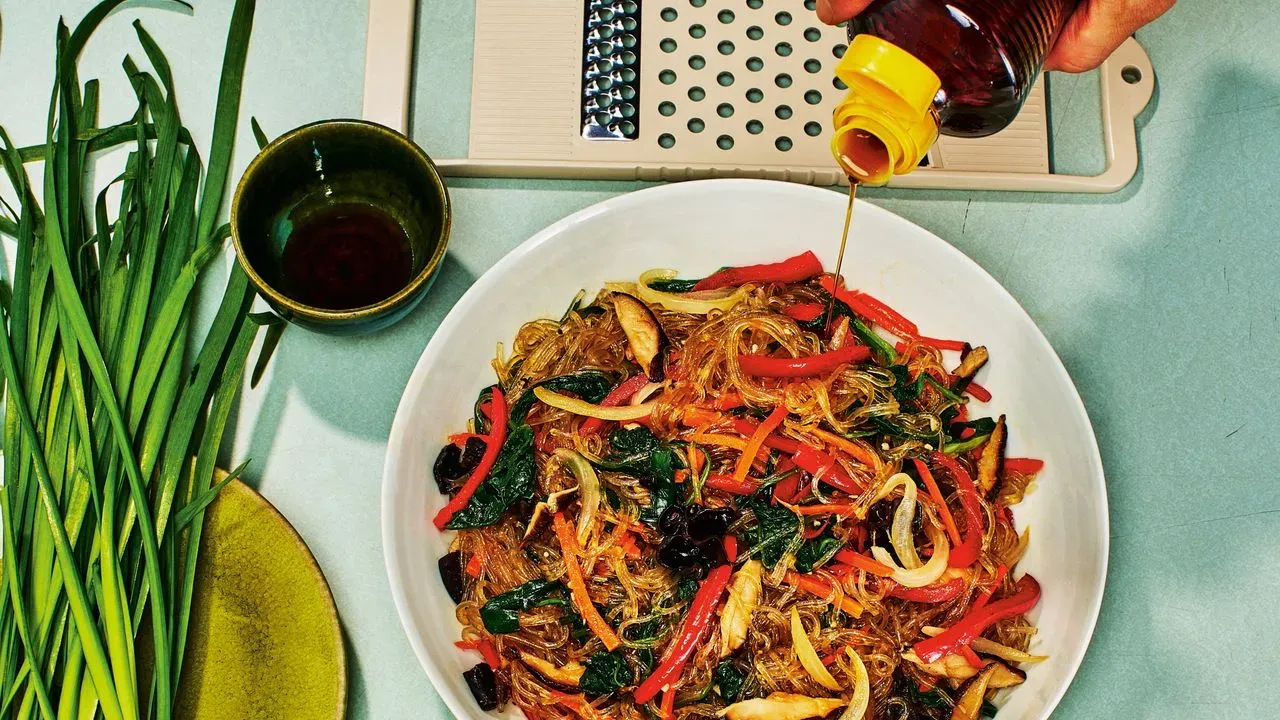
A new cookbook from H Mart is set to become a staple in many American households, offering a comprehensive guide to Korean cooking and shopping at the store.
The brainchild of Stacey Kwon, president of H Mart, the book brings together essential ingredients, techniques, and recipes that have made the chain a household name across America.
As the child of a small grocery store owner in Queens, Kwon has seen firsthand the impact that Korean food can have on people's lives. Her family's shop, Han Ah Reum, was one of the first to introduce Korean cuisine to American consumers.
Kwon hopes that her cookbook will help readers understand and appreciate the rich culinary heritage of Korea. "If there's one thing I hope readers will take away from this book," she says, "it's an understanding of Korean food."
The book is designed to be a user-friendly guide to shopping at H Mart, with each section organized by aisle, making it easy for customers to navigate the store and find the ingredients they need to make their favorite dishes.
The cookbook is designed to be a comprehensive guide to Korean American food, making it accessible to those who may be new to this culinary tradition.
One of the standout features of the book is its use of vibrant and detailed illustrations that provide step-by-step instructions for various cooking techniques and tools.
These visual aids are particularly helpful in explaining the intricacies of grilling equipment and the importance of using high-quality ingredients, such as Korean herbs, which play a crucial role in many traditional dishes.
Throughout the cookbook, Kwon also reflects on her own experiences growing up as a child of Asian immigrants in the United States, weaving together memories of family meals and cultural traditions.
The secret to serving kalbi jjim to guests lies in attention to detail, according to experts who have perfected this traditional Korean dish. Every bite should be perfect, and it takes time and effort to achieve that goal.
To make kalbi jjim on a large scale, cooks can use a massive vat to simmer the ingredients slowly over several hours. This technique allows for even cooking and ensures that every piece of meat is tender and flavorful.
Braising short ribs with rice cakes in tteok kalbi jjim is a labor-intensive process that requires patience and dedication. The rich beef soup relies on oxtail bones, which are soaked and then slowly simmered to create a thick, deeply flavored broth.
To prepare the dish, cooks will need several key ingredients, including English-cut short ribs, dried shiitake mushrooms, soy sauce, garlic, mirin, sugar, black pepper, Korean radish, carrots, rice cake logs, scallions, sesame oil, and sesame seeds.
To prepare a rich and flavorful Korean American dish, cooks must first tackle the task of cleaning and soaking oxtails. This process involves placing the oxtails in a large pot or bowl, covering them with cold water, and allowing them to soak for at least five hours or overnight.
The excess blood is then drawn out from the oxtails by discarding the initial water, rinsing, and draining the meat. The next step involves boiling the oxtails in a large pot filled with water until they release any remaining impurities that rise to the surface. This process takes around 15 minutes.
After boiling the oxtails, cooks must drain them in a colander, rinse under cold running water, and trim off any clotted blood or excess fat using kitchen shears. The pot is then rinsed and cleaned to prevent any residual flavors from affecting the subsequent cooking steps.
The radish is added to the pot along with 6 liters of water, and the mixture is brought to a boil over medium-high heat before being reduced to low heat for simmering. This process takes about an hour, during which time the radish turns translucent.
After removing and discarding the radish, the soup simmers for three more hours, requiring regular checks to skim off any impurities and add water as needed. The broth eventually turns cloudy, and the meat on the oxtails becomes tender and slightly falls off the bone.
The final serving steps for this oxtail stew are straightforward. A few pieces of tender meat should be placed in individual bowls to create a visually appealing presentation. The hot broth is then ladled over the oxtail, adding a rich and savory element to each portion.
A sprinkle of scallions on top adds a pop of color and freshness to the dish. To allow everyone to customize their meal, warm rice and salt are served alongside the stew. This way, diners can adjust the seasoning of their broth to suit their taste preferences.
This oxtail stew yields approximately 4 L of broth after cooking is complete. If less broth is produced, it simply means that the flavors will be more concentrated. To achieve the desired consistency, the broth can be diluted with water as needed.
Facts based on reporting originally published by Vogue.
You may republish this story, in full or in part, if you credit News Central Site and link to it (licence CC BY 4.0). Photos are not included.