Midterm Election Losses Expose Divisions Within Republican Party
A recent poll reveals significant divisions between MAGA loyalists and those who backed President Donald Trump without identifying with the movement.
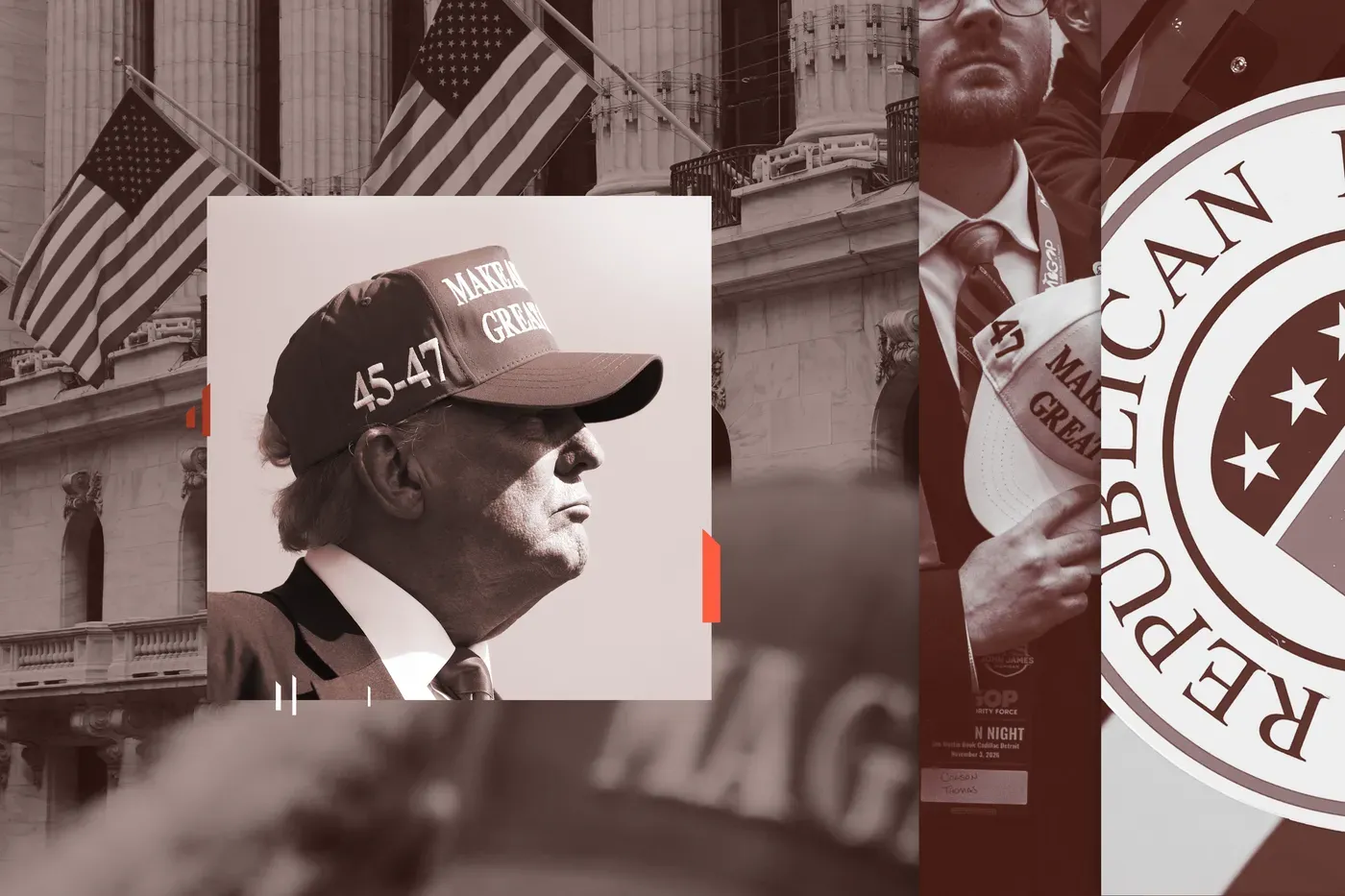
The Republican Party's election losses have exposed deep divisions within President Donald Trump's voter base.
Cracks had been appearing among Trump's supporters for months, particularly on issues like immigration and the Iran war, but also over his level of influence in party decisions.
A recent poll reveals a significant chasm between Trump's self-identified MAGA voters and those who backed him without identifying with the movement.
The survey found that MAGA loyalists tend to blame external factors for the election losses, arguing that the party would have fared better if Trump was on the ballot.
Despite the party's efforts to unite behind a common cause, the midterm losses have exposed deep divisions within the Republican Party.
The survey suggests that many voters are questioning whether the party should continue to rally around Trump and his movement, which has been at the forefront of GOP politics for over a decade.
Republican strategist Doug Heye warned that these divisions will only intensify as the party tries to redefine itself in the coming years. "As the [GOP] spends the next two years figuring out who it is and what it stands for," he said, "these divisions will only be further exposed."
The data highlights a stark contrast between MAGA Trump voters and non-MAGA Trump voters, with different groups placing blame for the party's losses in vastly different places.
According to the survey, a significant majority of non-MAGA Trump voters hold Trump himself responsible for the party's loss of the House and Senate.
The results of the midterms have left a bitter taste in the mouths of many Republican leaders, who are struggling to come to terms with their party's loss of control over Congress. In a scathing letter, 31 members of the Republican National Committee laid bare the extent of their party's humiliation, highlighting the widespread losses suffered by Republicans across the country.
The losses have reignited debate about the role played by former President Donald Trump in the election outcome. Trump himself has sought to deflect blame for his party's performance, claiming on Truth Social that he "just wasn't on the ballot" despite repeatedly urging voters to treat him as if he were a candidate. The White House has stuck firmly behind its outgoing president, hailing his achievements and predicting that history will judge him kindly.
The divide between MAGA loyalists and non-MAGA Trump voters is growing increasingly apparent, with each group offering starkly different assessments of the election outcome. While MAGA supporters are calling for their party to double down on Trump's agenda, others are urging a more nuanced approach, including breaking ranks with the president on key policy issues like the economy.
Republican leaders face a daunting task in navigating the party's internal dynamics following the midterm losses, which have exposed deep divisions within the Trump voter base.
GOP operatives who worked on midterm races were asked whether the defeat signaled a need for a new vision for the party, and the response was telling: many believe that the party must adapt to survive.
The split between MAGA and non-MAGA Trump voters is particularly striking, with the former group showing unwavering loyalty to the president despite his unpopularity among Americans on key issues such as mass deportations and tariffs.
Meanwhile, congressional Republicans who once supported these policies are now grappling with how to distance themselves from them in order to regain voters' trust, a delicate balancing act that requires careful consideration of their next moves.
As Trump himself acknowledged in an interview after the midterms, his party's losses may have been partly due to the unpopularity of certain aspects of his agenda, including the war in Iran and resulting high gas prices.
As President Trump's popularity wanes among some voters, his party is grappling with how much his successor should carry on his legacy. Republicans are weighing whether to stick with a candidate who embodies the MAGA agenda or opt for someone new.
Some Hill Republicans are considering a Marco Rubio presidential bid, seeing it as an opportunity to appeal to voters looking for a change after Trump's tenure. Vice President JD Vance is also being eyed, but some worry he may be too closely tied to the president's policies.
The divide between MAGA and non-MAGA Trump voters is becoming increasingly apparent, with some party members acknowledging that it might be time to adjust course. GOP Rep. Kevin Hern recently expressed this sentiment, suggesting that his colleagues should "learn from this" and adapt to changing voter preferences.
Facts based on reporting originally published by Politico.
You may republish this story, in full or in part, if you credit News Central Site and link to it (licence CC BY 4.0). Photos are not included.