Microbes thrive in toxic quarry environments
A geomicrobiologist is studying microbes at a quarry site to understand how they can contribute to addressing climate change.
A quarry site may seem like an inhospitable environment, but appearances can be misleading. The barren landscape and exposed rock face hide millions of living microbes that thrive in conditions toxic to other life forms.
Dr. Thomas Jones, a geomicrobiologist, has spent years studying these microorganisms at CSIRO, Australia's national science agency. His work focuses on identifying microbes already present in the quarry, which he then takes back to the lab for further research and experimentation.
Jones's approach is to find existing microbial populations that can be used as starter cultures for his experiments. In other words, he seeks out microorganisms that are already adapted to their environment and could potentially contribute to addressing climate change.
When collecting samples from the quarry site, Jones carefully gathers a small amount of material from the rock surface. This "smear may seem insignificant, but it holds great potential for understanding how microbes can be harnessed to mitigate environmental damage.
The scale of microbial activity spans from the tiniest particles to the vast expanse of the planet itself.
Geomicrobiologist Jones has spent his career studying the intricate relationships between microbes and minerals, seeking ways to harness these interactions for human benefit.
Many of the processes he's studied have been crucial in shaping our planet over millions of years, with ancient microbial activities still influencing Earth's geology today.
According to Jones, microbes have been removing carbon dioxide from the atmosphere for an astonishing 3.5 billion years, a testament to their enduring impact on the environment.
Stromatolites are a fascinating example of this phenomenon, formed by communities of photosynthetic microbes that extract carbon dioxide and lock it into calcium carbonate mineral layers, creating layered mounds that have been essential in producing Earth's early atmospheric oxygen.
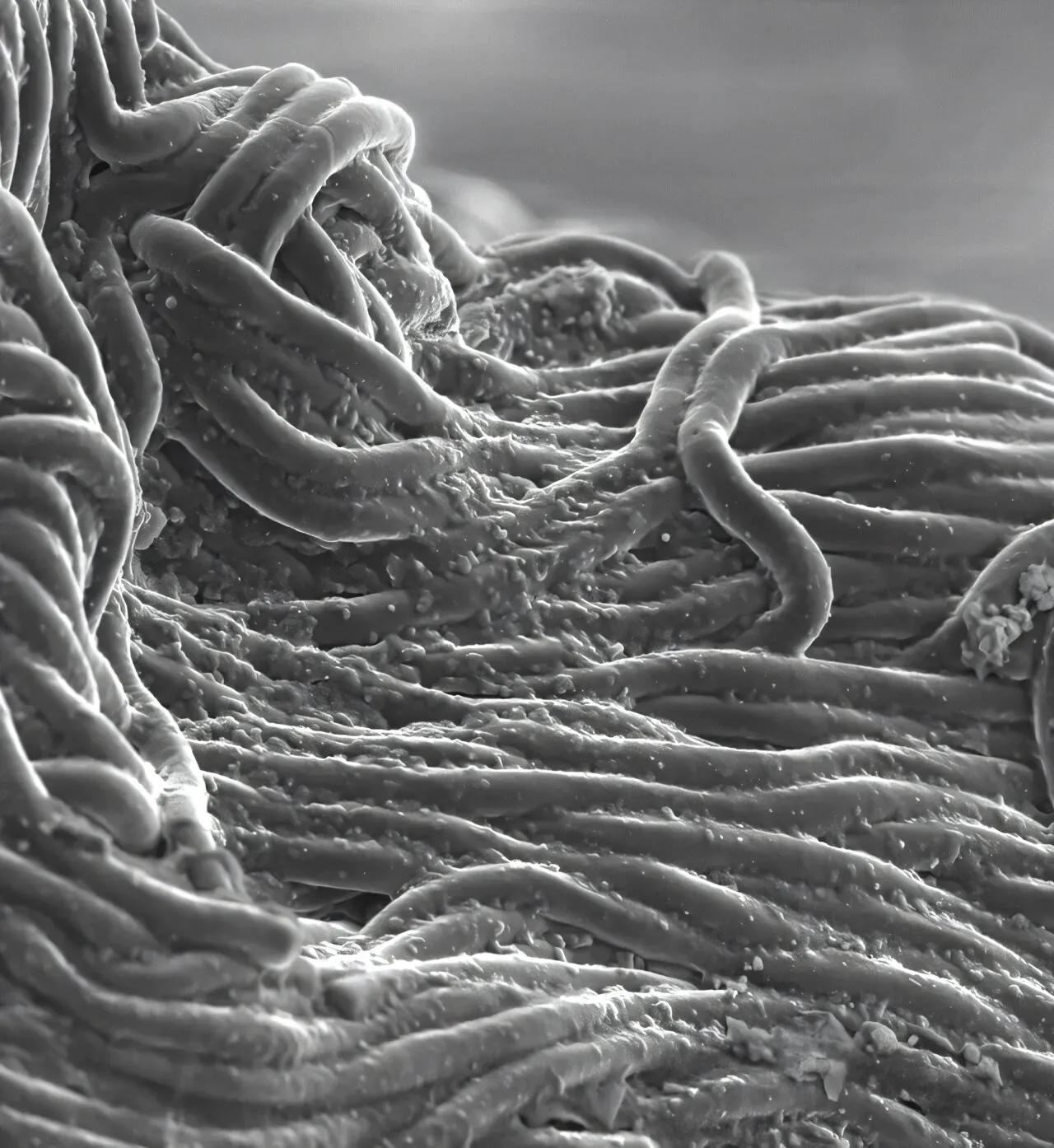
The intricate details of microbial interactions with minerals can be revealed using advanced imaging techniques such as scanning electron microscopes, which provide extraordinary surface detail.
To further analyze the elemental composition of these samples, Jones employs X-ray fluorescence (XRF) mapping at ANSTO's Australian Synchrotron, allowing him to pinpoint specific elements within the mineral structures.
For Jones, geomicrobiology is a creative pursuit that involves piecing together complex puzzles, much like painting a picture, he seeks to fill in gaps in understanding by identifying missing pieces of information that exist elsewhere.
Microbes are ubiquitous and can thrive even in harsh environments such as neglected mine tailings dams, where water is highly acidic but still manage to survive.
The pH scale is a crucial tool for measuring acidity, with pure water sitting at a neutral 7. But as one moves down the scale, each step becomes increasingly acidic, with lemon juice reaching a pH of 2 and stomach acid plummeting to around 1.
In fact, some microbes can thrive in environments that would be hostile to most other forms of life, with acidity levels even dipping into negative numbers. This remarkable ability to adapt has left researchers like Jones in awe of the resilience of these tiny organisms.
The sheer diversity and ubiquity of microbes have made them a valuable asset in the fight against climate change. By harnessing their power, scientists are discovering new ways to mitigate the effects of global warming.
One such process is enhanced rock weathering, which involves crushing up basalt, a type of gray rock commonly used in road gravel and building sites, and spreading it across farmland. As the rock breaks down, it releases essential minerals that help lock carbon dioxide out of the air while neutralizing soil acidity.
By accelerating this natural process, researchers aim to create a more stable form of carbon storage that can help combat climate change.
Field trips by Jones yield diverse microbial communities that are more resilient to changing environments than lab-grown strains. These broad communities are then adjusted through careful manipulation of nutrients and acidity, allowing a specific group to flourish. Once an optimal mix is achieved, it's dubbed gold" in microbe form - the "Daddy consortium". This potent blend of microbes is now ready for deployment in the field.
However, things don't always go according to plan when introducing these microbes into complex ecosystems like soil. Pure cultures accustomed to laboratory environments can struggle to adapt and may be outcompeted by established microbial populations. Every microbe in a given environment plays a vital role and has evolved to thrive under specific conditions, leaving little room for newcomers.
Jones acknowledges that working on farms adds an extra layer of complexity due to the delicate balance already present. Any changes to soil chemistry could disrupt this equilibrium and undermine the efforts put into maintaining the farm's ecosystem. Jones must therefore be mindful of his approach when introducing microbes to these environments.
When working with farms, timing is a crucial factor in deploying rock dust and microbes effectively. Applying them just after rain allows the microbes to settle and establish themselves before being washed away. Conversely, spreading them out just before the onset of the wet season enables them to be carried into the soil where they can take hold.
Throughout this process, Jones remains acutely aware that he's working with living organisms that require careful consideration and handling. His approach must strike a balance between introducing beneficial microbes while respecting the existing ecosystem and minimizing potential disruptions.
To succeed in enlisting microbes to combat climate change, it's essential that they are content and able to thrive in their new environment. This requires a delicate balance between providing them with what they need to function effectively and not overstimulating them.
Jones' background is in geology, but he discovered his passion for microbiology through elective courses in college. It was there that he became aware of the vast potential of microbes to be harnessed for beneficial purposes. This epiphany marked a significant turning point in his academic and professional journey.
The XXXX brewery in Brisbane proved to be an unexpected yet valuable source of starter cultures for Jones' early research. He has always been drawn to novel and unconventional approaches, which has served him well in his work as a microbiologist. His enthusiasm for the field is evident in his comments about its vast potential.
Jones' professional path has taken him on a global journey, with stops in Australia, Brazil, and southern Africa. Along the way, he completed his Ph.D. at the University of Queensland and successfully scaled up microbial techniques from laboratory settings to industry applications. This experience has provided him with a unique perspective on the practical applications of microbiology.
The work being conducted by Jones and his team is focused on developing mineral-building microbes that can store carbon for extended periods in Western Australia. In this context, he is collaborating with some of the oldest and most effective carbon catchers on Earth, the microbes themselves.
He has a straightforward approach when working with these tiny helpers - he simply asks them to take on the task of capturing carbon from the atmosphere.
The microbes are a massive team effort, comprising the vast majority of Earth's inhabitants, and most of them remain invisible to the naked eye.
Facts based on reporting originally published by Phys.org.
You may republish this story, in full or in part, if you credit News Central Site and link to it (licence CC BY 4.0). Photos are not included.