Lloyd Blankfein Challenges Peter Thiel's Views on Higher Education
Business leaders are locked in a heated debate over the value of a college degree, with some questioning its importance and others emphasizing its benefits.
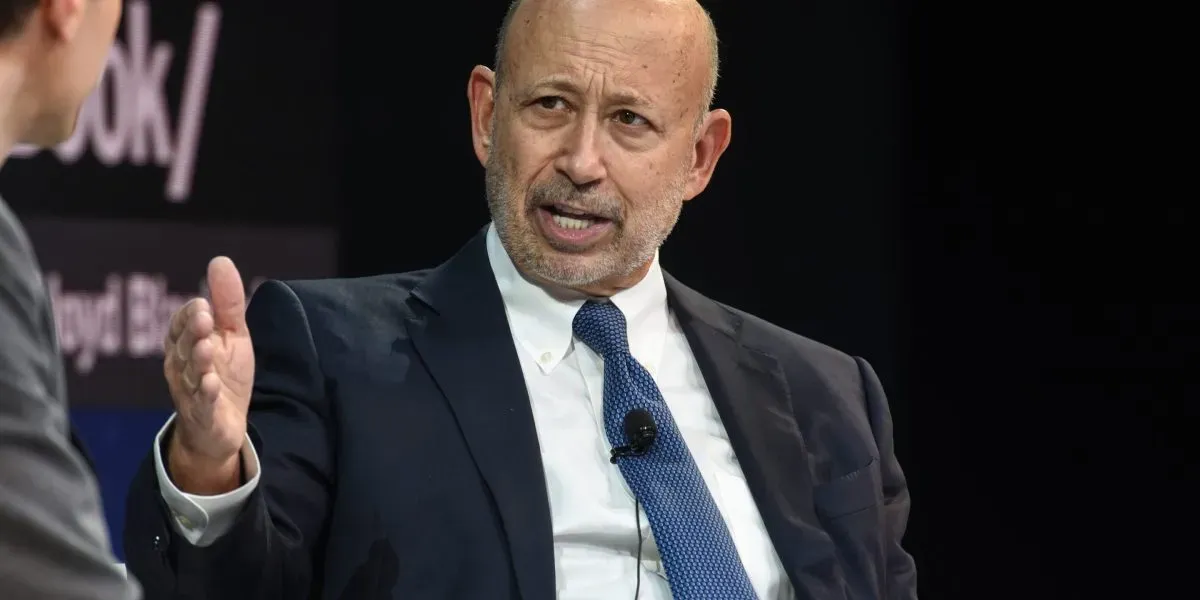
Business leaders are locked in a heated debate over the value of a college degree.
Lloyd Blankfein, former CEO of Goldman Sachs, is taking on Peter Thiel's stance that higher education is a corrupt institution. In an excerpt from his memoir, Streetwise, shared with Vanity Fair earlier this year, Blankfein strongly disagrees with Thiel's views.
The Wall Street executive emphasized the importance of being a "complete person in one's career, arguing that it's not just about technical knowledge but also about personal qualities.
Blankfein's own educational background is marked by two prestigious institutions: Harvard University and Harvard Law School.
Blankfein's experience at Harvard University had a profound impact on his personal development. He attributes this to the liberal arts education he received, which helped him grow as an individual. His undergraduate years allowed him to step out of his comfort zone and explore various subjects, including history.
Blankfein emphasizes that college is not just about acquiring knowledge but also about developing essential skills. In a statement, he noted, Your undergraduate years are your best opportunity to make yourself uncomfortable in a way that can help make you more curious and interesting."
Some tech leaders have been questioning the value of higher education. This skepticism has led companies like Palantir to offer alternative programs for recent high school graduates. One such initiative is the Meritocracy Fellowship, a four-month internship where participants learn about U.S. history and work alongside Palantir employees.
The program's creators claim that it provides a more effective way to acquire skills and knowledge compared to traditional college education. The job posting for the fellowship even went so far as to imply that universities have become breeding grounds for extremism and chaos due to opaque admissions standards.
The Thiel Fellowship has been around since 2011, offering significant grants to young entrepreneurs who choose to forgo college and start their own businesses instead.
Some notable recipients of these grants have gone on to achieve impressive success, with several becoming unicorns in the process. These include Figma co-founder Dylan Field and Scale AI creator Lucy Guo, both of whom have made a name for themselves in their respective fields.
Daniela Amodei, cofounder of Anthropic, is another business leader who believes that college degrees hold value. She thinks that studying the humanities will become increasingly important as technology continues to advance.
According to Amodei, critical thinking skills and the ability to interact with others will be essential in an ever-evolving world. In her view, these skills are just as crucial as technical ones in driving innovation forward.
Usher, a highly successful music artist who did not attend college himself, still acknowledges the benefits of higher education. However, he warns that no single degree can guarantee success, hard work and putting skills to good use are also essential for achieving one's goals.
In a counterpoint to Peter Thiel's critique of higher education, former Goldman Sachs CEO Lloyd Blankfein emphasizes that earning a college degree is still valuable because it enables individuals to develop into well-rounded people.
The true worth of a diploma lies not in the paper itself but in what graduates create with their skills and knowledge. According to Usher, Emory University's commencement speaker in 2025, ambition, integrity, hustle, and heart are essential qualities for success that cannot be taught in a classroom but rather developed through personal effort and dedication, ultimately making one a complete person.
Facts based on reporting originally published by Fortune.
You may republish this story, in full or in part, if you credit News Central Site and link to it (licence CC BY 4.0). Photos are not included.