Life cycle assessments simplified through new framework development
A new framework has been developed to simplify the process of assessing a product's environmental impact, making it more accessible to those without extensive mathematical knowledge.

A new framework has been developed to simplify the process of assessing a product's environmental impact, making it more accessible to those without extensive mathematical knowledge. This innovation could pave the way for more widespread use of life cycle assessments (LCAs) in decision-making.
LCAs are crucial tools for evaluating the environmental effects of products and services, serving as a foundation for policy decisions. However, collecting comprehensive data is often challenging. Researchers at the Paul Scherrer Institute have made a significant breakthrough by distilling four established hybrid methods into two, laying the groundwork for an open-source software solution.
The need for reliable and user-friendly LCA tools has been highlighted by Michael Weinold, a researcher who previously worked at PSI's Laboratory for Energy Systems Analysis. He emphasizes that LCAs are only as effective as the data they rely on. The development of this simplified framework aims to overcome the barrier of requiring in-depth mathematical expertise.
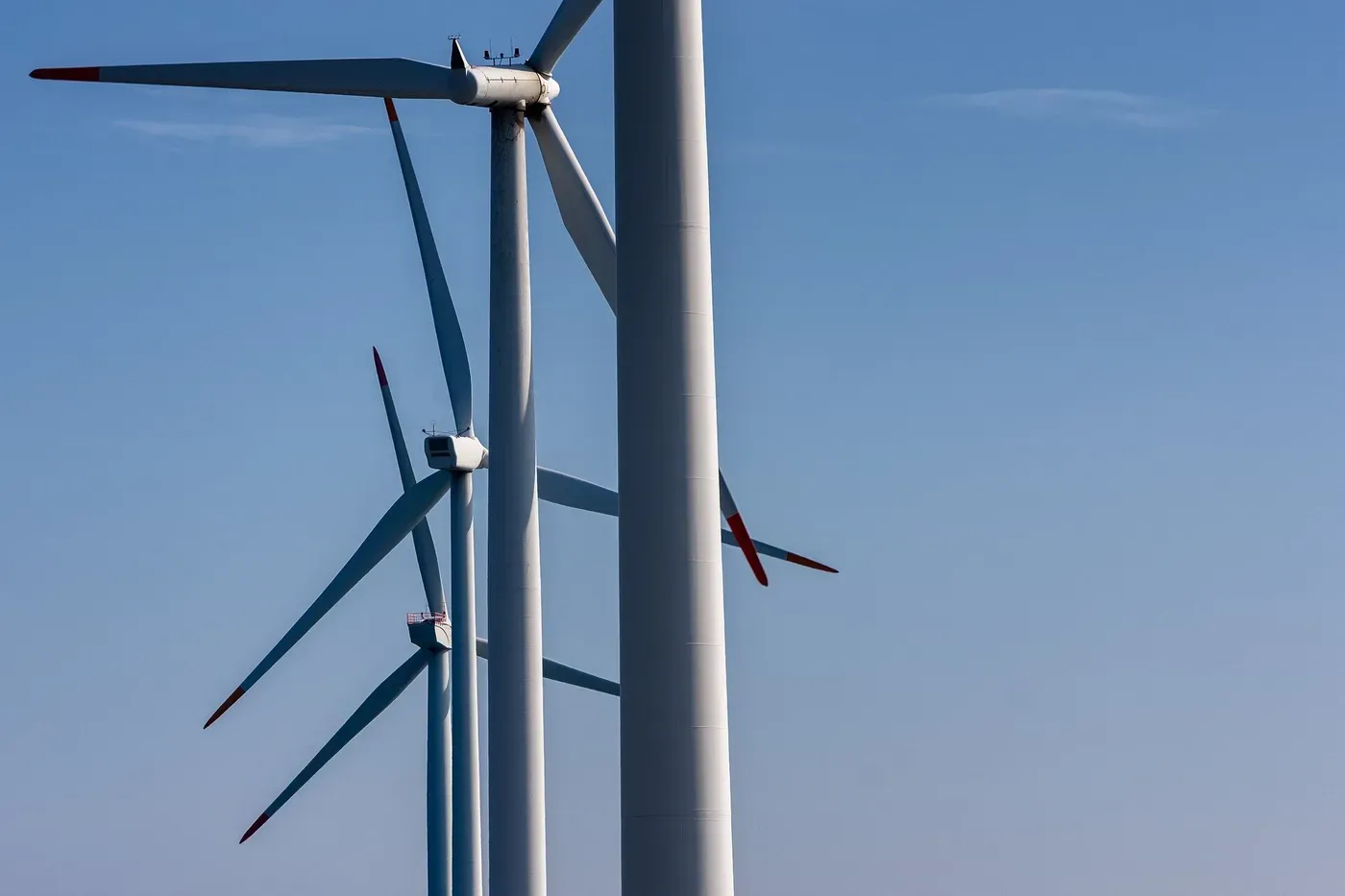
By streamlining the assessment process, this new approach could make it easier for individuals and organizations to evaluate the environmental impact of various products, from vehicles and food items to renewable energy sources like wind turbines.
Conventional life cycle assessments often struggle to capture all processes that contribute to a product's environmental impact. The boundaries of these assessments are typically drawn by those who create them, which can lead to inconsistencies and gaps in data.
A closer examination of hybrid life cycle assessment methods revealed another challenge. Several approaches exist for combining different types of data, but the differences between them had not been clearly defined. This made it difficult to determine when and how each method should be used.
To address this issue, researchers investigated four established hybrid methods. They found that these methods can be mathematically reduced to just two, simplifying the assessment process. This discovery was made in collaboration with a professor at the CIRAIG Life Cycle Assessment Research Center in Canada.
The life cycle of a product encompasses more than just its manufacturing phase. It includes raw materials, energy supply, transportation, and other activities that contribute to its overall environmental impact. For instance, when assessing gasoline for a car, it's not just the combustion process that matters but also the origin of the fuel.
The decision on where to draw the line in life cycle assessments is a subjective one, and it varies depending on who is conducting the analysis.
This subjectivity can have significant economic implications, particularly in cases where imported goods are charged according to their carbon footprint, as seen with the European Carbon Border Adjustment Mechanism. This mechanism aims to ensure that imported products reflect their true environmental costs, making certain imports more expensive. For instance, importing steel from China may become more costly under this scheme.
The calculations involved in assessing a product's environmental impact must be as objective as possible because consumers ultimately bear the costs of these assessments. The economic implications are significant enough to warrant careful consideration and accurate data.
To improve the objectivity of life cycle assessments, researchers suggest combining detailed production process data with global economic information. Input-output tables are a valuable resource in this context, providing insight into how different sectors of the economy interact and their resulting environmental impacts.
These tables can reveal specific details about intersectoral relationships, such as the steel used by the U.S. aviation industry. With knowledge of CO₂ emissions from steel production, it becomes possible to attribute a portion of these emissions to the aviation sector.
A simplified framework for evaluating products' environmental impacts could soon become a reality thanks to the work of researchers who have been developing hybrid life cycle assessments (HLCAs). These methods combine traditional process data with input-output tables from the economy, providing a more comprehensive picture of a product's ecological footprint.
The use of economic tables in HLCAs has several advantages. Unlike other life cycle assessment methods, these tables are complete by definition, eliminating the need to draw arbitrary lines when evaluating a product's environmental impact. This approach also allows researchers to consider the broader economic context in which products are produced and consumed.
Researchers have been working on developing hybrid life cycle assessments since the 1970s, with four main methods and several variants being scientifically recognized. However, a recent study has found that all of these methods can be mathematically reduced to just two approaches. This simplification could make it easier for companies and policymakers to understand the environmental impacts of their products.
The two remaining methods differ in terms of complexity. The simpler "tiered HLCA" approach involves supplementing traditional process assessments with data from input-output tables, such as specific information about milk quantity or electricity consumption. If this type of data is not available, average values from related sectors can be used instead.
The tiered hybrid life cycle assessment method is suitable for products with small production volumes, such as Swiss watches, according to Weinold. This approach focuses on the overall economic context and allows for a more straightforward analysis of a product's environmental impact.
For processes that significantly affect the economy, however, a different method must be applied. In this integrated HLCA approach, data can flow in both directions between the economic table and the process chain, requiring a reclassification of economic sectors to accommodate this two-way exchange.
The integrated method is necessary when analyzing large-scale scenarios, such as the expansion of wind energy in Switzerland. For instance, if one wants to assess a scenario where 20% of Swiss electricity production comes from wind power, all consumers would be involved in the analysis, making the integrated method essential.
Weinold's findings are now being put into practice through the development of software for creating hybrid life cycle assessments. The goal is to create a user-friendly tool that can be used even by those without extensive mathematical knowledge, building upon the existing Brightway model, an open-source software widely used in traditional life cycle assessments.
The researchers have developed a simplified framework that can be used to assess the environmental impact of products by combining different methods for hybrid life cycle assessment. This unified approach aims to provide a more accurate and comprehensive picture of a product's ecological footprint.
The new framework builds upon existing open-source software, allowing users without extensive mathematical knowledge to easily evaluate a product's environmental impacts. By streamlining complex calculations, the tool is designed to be user-friendly and accessible to a broader audience.
Facts based on reporting originally published by Phys.org.
You may republish this story, in full or in part, if you credit News Central Site and link to it (licence CC BY 4.0). Photos are not included.