Launchpad Incubator Workshop Hosts 66 Startup Founders in Rural Pennsylvania Barn
A two-week incubator workshop called Launchpad has gathered 66 startup founders in a rural Pennsylvania barn, with the event being hosted by Stan and featuring participants including Max Harding and Skyler Ji.
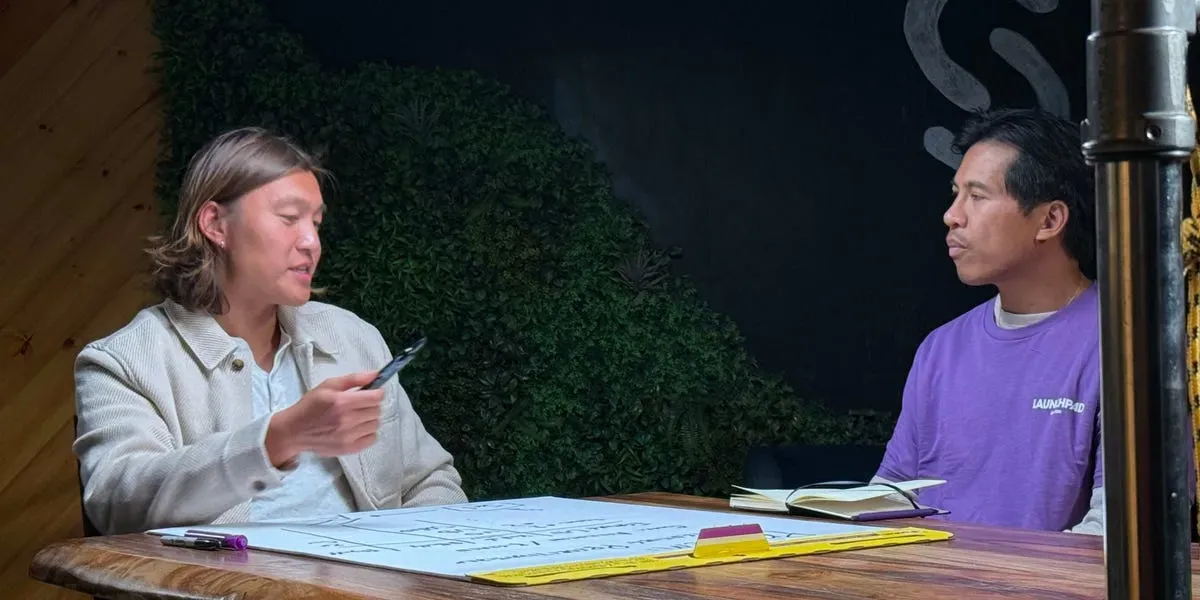
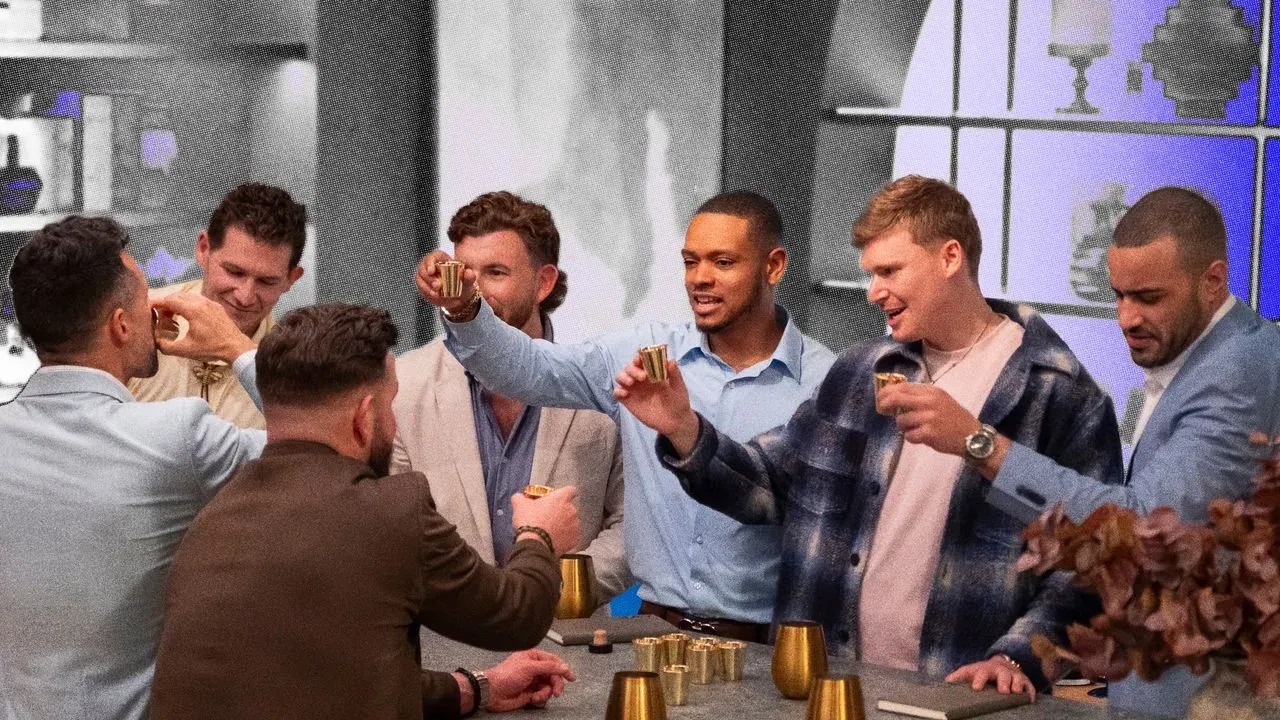
In a rural Pennsylvania barn, a group of 66 startup founders gathered for a two-week incubator workshop called Launchpad. The event was hosted by Stan, a company that has previously organized unconventional meetups, including a jet-skiing session across the East River.
Among the participants were Max Harding and his cofounder Skyler Ji, who are working on a startup called Hivemind Research. Their project aims to develop "digital brains in the form of social media platforms. Despite not being skilled programmers, Harding has a talent for drawing attention and spreading their philosophy.
Harding's role at Hivemind Research involves keeping the team in the spotlight, with Ji describing him as someone who captures the camera" and keeps them "center stage. The pair's startup is one of several projects represented at Launchpad, which was designed to be a reality-show-style incubator for founders.
The event has been documented on camera, with footage intended for use in a future reality show. Stan is uploading clips from the incubator to Instagram daily, giving followers a glimpse into the lives of these young startup founders as they navigate the challenges and drama of building their businesses.
As the founders work together and compete against each other, tensions are rising, and personalities are being put to the test. The magnetic qualities of individuals like Harding are becoming increasingly valuable in this incubator setting, where networking and self-promotion can be just as important as innovation.
The participating teams at Stan's incubator event were chosen from over 700 applicants, primarily based on their existing social media presence and ability to grow it further. This focus on social media influence is a key aspect of today's startup culture, where distribution and reach are crucial for success.
As Vitalii Dodonov explained, It's not the building that gets you to revenue, it's the distribution. This mindset reflects the changing nature of business, where traditional metrics like sales and profits are increasingly being supplemented by measures of social media engagement and online visibility.
The teams were required to meet a range of daily metrics, including making 10 sales calls per day, with their social media videos being among the most heavily weighted. Everywhere I looked, people were busy recording themselves on camera, often talking about their companies into phones attached to tripods.
The products showcased at the event ranged from innovative uses of AI technology, such as an acne-tracking facial scanner, to practical solutions like an app that connects parents with babysitters. Despite the focus on high-tech innovation, some of these products seemed more focused on solving everyday problems rather than pushing the boundaries of what is possible with technology.
The living conditions at Launchpad were far from luxurious, with contestants often going without sleep as they worked tirelessly to perfect their products.
Jacob Snarr and his cofounder RJ McLaughlin were among those who had been pushed to their limits, having spent countless hours building a web browser game that allowed friends to debate everyday questions and preferences.
Their product was one of the most popular among contestants, with Snarr and McLaughlin holding onto second place on the leaderboard when I spoke with them.
Despite the grueling schedule, contestants were not given much time to rest or recharge, with many struggling to get more than six hours of sleep per night.
Rey Mendoza, a 41-year-old founder who had already been eliminated from the competition, showed me his sleep tracker for the six days he was at Launchpad.
The organizers attempted to inject some levity into the proceedings by adding more low-key events to the schedule, but they largely went unnoticed amidst the chaos of teams frantically uploading videos to social media.
A Mario Kart gathering in a room adjacent to the cafeteria proved to be a resounding failure, with not a single person attending. Two TVs displayed the game's start screen, while a handful of individuals sat at nearby tables, squinting at their laptops as they struggled to focus on the task at hand.
The contrast between the excitement of the competition and the monotony of the task at hand was striking. As one observer noted, it's hard to imagine anyone getting swept up in the thrill of watching a group of individuals prompt chatbots to refine source code for yet another AI startup.
According to census data, over 7 million business ideas were submitted by Americans last year alone, but the government estimates that only a fraction of those will be successful enough to require employees. This creates a highly competitive environment, where it takes more than just a good idea to stand out.
In our conversation with Hu, he pointed out that even with the aid of AI tools, starting multiple businesses is now a relatively simple proposition, but making them profitable remains a significant challenge. He noted that this is where the personalities and creativity of the founders are supposed to come into play, combined with a healthy dose of manufactured drama and social media savvy.
The teams participating in this reality-show-style incubator for founders were subjected to a particularly harsh critique by Hu, who tore into them in front of everyone.
Hu described one particular roast" as being very honest and said it produced tears from the submitters. He explained that his intention was to mimic the real-life struggle of starting a company in a saturated market, making it clear that most teams would not succeed.
The critique aside, many teams seemed to enjoy the ramshackle experience of trying to make a company profitable within just two weeks. The picturesque setting, though far from Manhattan, added to the excitement and challenge of the event.
Meanwhile, the organizers spared no expense in creating an immersive experience for the participants. The venue was equipped with fiber-optic internet, despite being located deep in the woods where cell service was nonexistent.
The venue was equipped with fiber-optic internet, despite being located deep in the woods where cell service was nonexistent.
To host the founders, some of whom had traveled from as far away as Spain and Denmark, a significant investment was made by Stan, totaling $3 million for two weeks' rental, camera crews, and other necessary arrangements.
The substantial sum is particularly noteworthy given that the company's cofounder reported annual recurring revenue of nearly $41 million this year.
Facts based on reporting originally published by Business Insider.
You may republish this story, in full or in part, if you credit News Central Site and link to it (licence CC BY 4.0). Photos are not included.