Cats Show Discomfort When Touched in Sensitive Areas
A cat's body language often changes when petted in sensitive areas such as the belly, feet, or tail.
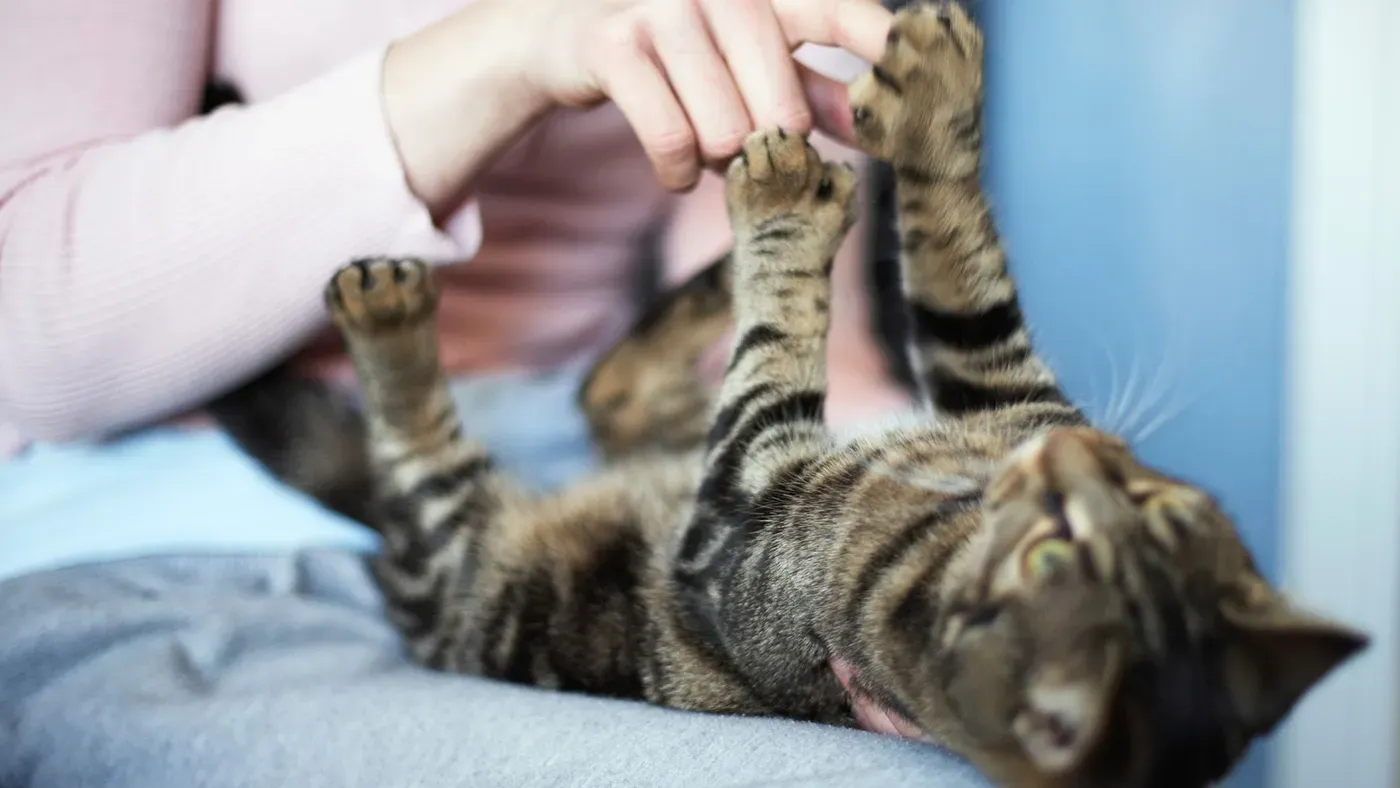
Cats are often seen as independent animals that don't require much attention from their owners, but they still have a unique way of showing affection and discomfort. Unlike dogs, which tend to love belly rubs and will even roll over on their backs to get more, most cats are visibly uncomfortable when someone touches their belly, feet, or tail.
When a cat is petted in these sensitive areas, its body language often changes. According to animal behavior experts, this can manifest as a quick head turn to check the hand that's touching them, or they might start moving away from the person petting them. Some cats may even wiggle around excessively in an attempt to get away from the unwanted touch.
Experts suggest that cats' aversion to being touched in certain areas may be linked to their natural behavior as both predators and prey animals. As such, they can be protective of vulnerable areas that are susceptible to injury during an attack. This theory is supported by Sarah Ellis, head of cat mental well-being and behavior at the cat welfare charity International Cat Care.
One area that cats tend to be particularly sensitive about is their belly, which is a vital organ that they need to protect. As Mikel Delgado, a cat behaviorist and senior research scientist, notes, when a cat is petted in this area, its body language may change as it tries to get away from the touch.
Cats' bellies house vital organs such as the liver, stomach, and intestines, which are not protected by a bony cage like their heart and lungs. This lack of protection makes their belly a vulnerable area, and most cats will try to avoid having it touched or rubbed. Even though they have an extra layer of padding called the "primordial pouch" that can provide some cushioning during fights, this does not seem to be enough to make them feel secure about exposing their belly to humans.
Their anatomy is similar to dogs', but with one key difference: cats are more likely to fall prey to larger animals. Dogs may have to worry less about being hunted by birds or other predators, while cats have to contend with threats from urban coyotes, hawks, and owls, making it natural for them to be protective of their bellies.
Cats' tails are also a vulnerable area that they may try to avoid having stroked. Their tail is exposed and can be easily injured, which could make them skittish about allowing humans to touch or rub it. This behavior is likely an instinctual response to the potential dangers that their tail poses.
When it comes to foot rubs, there are two possible explanations for why most cats hate them. One explanation is that they may associate having their feet touched with being handled in a way that's not comfortable or natural for them.
A cat's paws play a crucial role in their defense mechanism, serving as a primary means of escape during threatening situations.
When faced with danger, running away is often a cat's preferred strategy, and they rely on their paws to facilitate this action, according to Ellis.
If fleeing is not possible, cats may resort to other defensive measures, such as swiping and scratching, requiring the use of their paws for these actions.
Cats' paws are also highly sensitive, which could be another reason why they prefer them untouched.
Some felines defy convention and enjoy being touched in areas that most cats consider off-limits, such as their belly or tail.
These individual preferences can even serve as a sign of close bonding between a human and their cat, suggesting that the cat has developed trust with its owner.
Facts based on reporting originally published by Live Science.
You may republish this story, in full or in part, if you credit News Central Site and link to it (licence CC BY 4.0). Photos are not included.