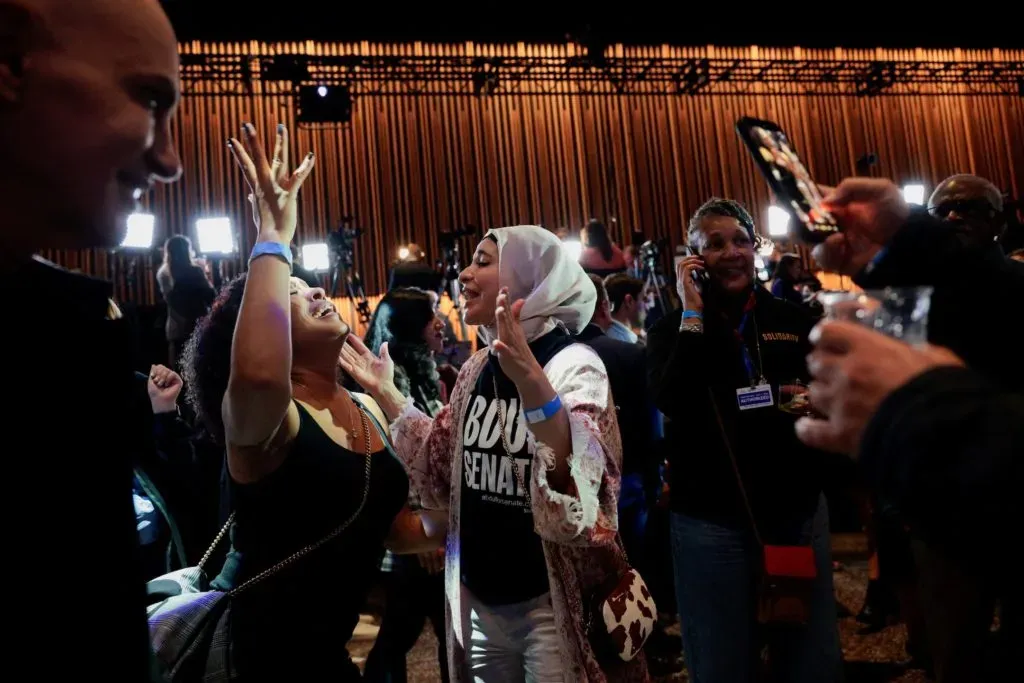
LaKesha Womack unseats Republican incumbent in North Carolina's 14th Congressional District
Democratic challenger LaKesha Womack defeated Rep. Tim Moore in the midterm election, ending his time in Congress after just one term.
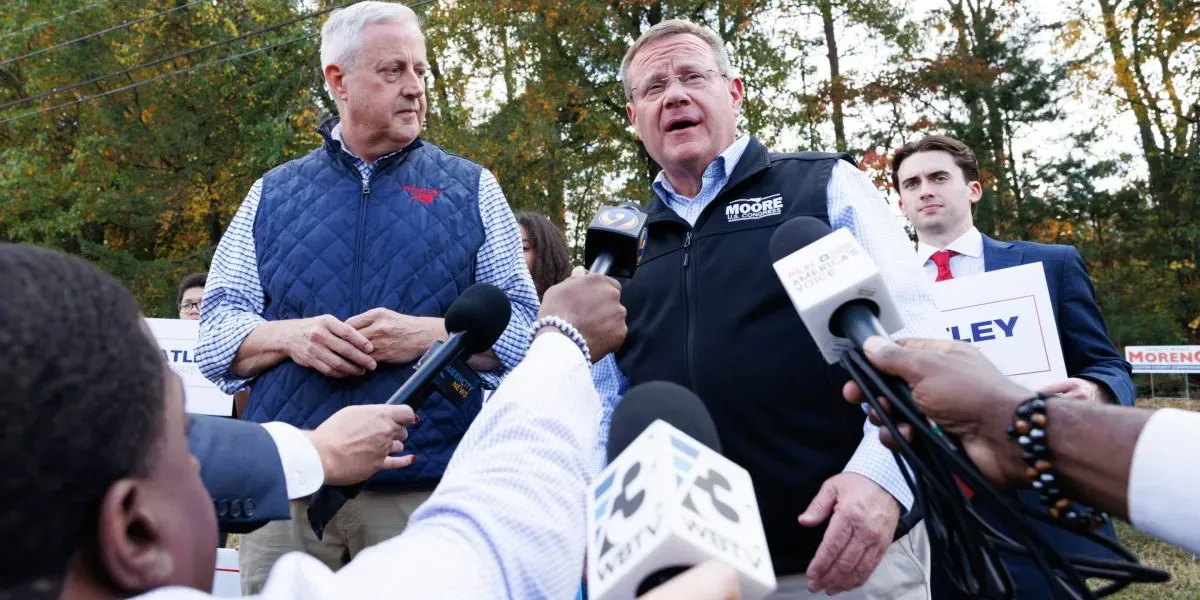
In a surprising turn of events, a Democratic challenger has unseated a Republican incumbent in North Carolina's 14th Congressional District. LaKesha Womack, a political newcomer and entrepreneur, defeated Rep. Tim Moore in the midterm election, ending his time in Congress after just one term.
The district, which spans from the suburbs of Charlotte to the Western North Carolina mountains, was previously dominated by Republicans, including Rep. Moore himself. He had won the seat with ease two years ago, securing a 16 percentage point margin over his opponent. However, this year's election proved to be a different story.
Rep. Moore boasted a significant fundraising advantage, with a war chest of $3 million compared to Womack's meager $59,000. Yet, despite being outspent by more than 50 to 1, Womack managed to eke out a narrow victory, securing the seat by about 6,400 votes.
The win has raised eyebrows in political circles, given Rep. Moore's influential role as former state House speaker and his involvement in redrawing the district in 2023. It remains to be seen how this unexpected outcome will impact future elections in the region.
Womack's campaign strategy appears to have been centered around grassroots engagement, with reports suggesting she attended between five and seven events per week in the district, utilizing her limited funds to maximum effect.
Womack's campaign strategy of grassroots engagement has been well-documented, with reports suggesting she attended numerous events across the district each week.
The extensive travel schedule was made possible by Womack's frugal use of resources, with a significant portion of her limited funds allocated towards gas for her trips to various locations within the district.
In contrast to Womack's community-driven approach, Rep. Moore's campaign was significantly more well-funded, boasting a substantial $3 million war chest that likely played a major role in his electoral success.
The outcome of this North Carolina House race has broader implications, as it contributed to a significant shift in power within the state's congressional delegation, with Democrats now holding a majority of seats in the House of Representatives for the first time since 2010.
Meanwhile, Republicans suffered setbacks elsewhere in the state, including the loss of their veto-proof supermajority in the state Senate and at least five Republican-held seats in Congress.
The outcome of several elections across the United States has defied expectations based on fundraising totals, as Democratic challengers have managed to win against Republican opponents despite being significantly outspent.
A key factor in these upsets appears to be voter dissatisfaction with the current state of the economy and President Trump's policies. According to an exit poll conducted by NBC News, a substantial majority of voters - three-fourths - described the economy as "poor" or "not so good, while 65% believed that President Trump's policies had made the economy worse.
This sentiment has been reflected in several races nationwide where Democratic challengers have overcome significant fundraising deficits to secure victories. In Tennessee, for instance, Democrat Victoria Broderick is currently leading longtime Republican Rep. Scott DesJarlais by a narrow margin of 280 votes, despite raising less than one-eighth of the $660,000 raised by her opponent.
In other parts of the country, Democratic candidates have also achieved success in state legislative races where they were significantly outspent by their opponents. In Alabama, Democrat Allison Montgomery won a seat in the state House after raising about $23,000, while another Democrat, Nell Brown, secured a victory despite raising just $11,000 to her opponent's $185,000.
These results suggest that fundraising totals may not be as decisive in determining election outcomes as previously thought. Instead, it appears that voter frustration with the economy and other issues has taken precedence over partisan considerations, leading to an unexpected wave of Democratic victories across the country.
The unprecedented spending in this year's midterm elections has not yielded the expected results for some of the wealthiest candidates and donors.
In Georgia, Democrat Keisha Lance Bottoms defied expectations by defeating billionaire Republican Rick Jackson, who had invested over $200 million of his own fortune into the governor's race. Meanwhile, pro-Jackson groups spent or reserved nearly $76 million in TV airtime, compared to around $8 million for Bottoms and her allies.
Even Elon Musk, the world's richest man, was unable to secure victories for all of the Republican candidates he supported with at least $447 million. As of Thursday, only three out of 37 House candidates backed by Musk had won, while 33 had lost, according to Reuters. Another race was still undecided.
In a separate Senate contest in Alaska, Democrat Mary Peltola was narrowly ahead with nearly three-fourths of the votes counted as of Thursday, according to the New York Times, despite being outspent by her Republican opponent. This outcome suggests that even significant financial investments may not guarantee success in high-stakes elections.
A 2022 study on fundraising and election outcomes found that top fundraisers are more likely to win their primaries, with a success rate of 92% according to Professor Danielle Thomsen's research at the University of California, Irvine.
The 2026 midterm election saw a record-breaking $12 billion spent on political advertising, according to data from AdImpact cited by NPR. This staggering figure underscores the immense financial resources at play in modern American politics.
A study published in the American Political Science Review found that campaign effectiveness is notoriously difficult to predict based on past results, highlighting the challenges of measuring the impact of individual campaigns. In some cases, negative advertising has even led to public backlash, as seen with an Ohio gubernatorial candidate's ad featuring his opponent's estranged birth mother.
Womack's win in the North Carolina House race suggests that grassroots efforts and community engagement can be just as valuable as large campaign contributions, according to her own assessment. Just being present in the community, I think, meant more than dollars could ever pay for," she told Spectrum News, underscoring the importance of personal connection in political campaigns.
Facts based on reporting originally published by Fortune.
You may republish this story, in full or in part, if you credit News Central Site and link to it (licence CC BY 4.0). Photos are not included.