India Faces Severe Water and Power Shortages Following Weak Monsoon Season
A weak monsoon season has led to severe water and power shortages in India, affecting farmers and electricity generation.
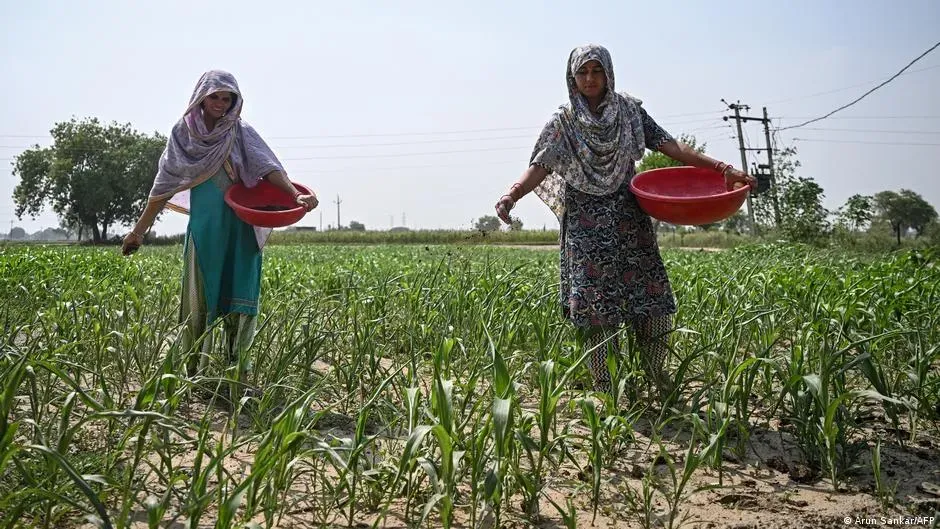
India is facing severe water and power shortages following a weak monsoon season that has left many farmers struggling to make ends meet.
Ramesh Reddy's tomato farm in Karnataka is one such example of the devastating impact of the drought-like conditions. The 44-year-old farmer had invested everything he owned into his 3.5 acre farm, borrowing 250,000 rupees at a staggering 24% annual interest and even pledging his wife's wedding jewelry as collateral.
Reddy's farm was meant to repay the loan and cover his son's college fees, but the irrigation well ran dry just three weeks after planting. The tomato plants turned brown, and he couldn't salvage a single crate of tomatoes.
The farmer is now left with nothing, having lost everything he invested in the failed crop. "I have no money left for the next crop," Reddy said, "and I don't know how I will repay the loan." He's even considering taking up a job as a security guard in Bengaluru to make ends meet.
The weak monsoon has had far-reaching consequences for India's agricultural sector, which employs nearly half of the country's workforce. The 12.6% deficit from the long-term average is the lowest in 11 years, making it the driest monsoon on record this century.
The weak monsoon has severe consequences for India's water and energy systems, with major reservoirs holding less water than usual at the end of the rainy season.
According to data from the Central Water Commission, the combined storage in 178 monitored reservoirs stood at 132.7 billion cubic meters, below the 10-year average of 151.1 billion cubic meters.
This shortfall is already affecting electricity generation, with hydropower output falling nearly 16% in September compared to the same period last year, according to Grid India data.
As a result, coal-fired plants have had to take on more of the load, but they are also facing their own challenges. Data from the Central Electricity Authority shows that around 40% of coal-fired plants are operating with critically low stocks, with supplies below a quarter of what is required.
The impact of this situation can be seen in electricity shortages, which reached 560 million kilowatt-hours in September, the highest monthly shortfall in over three years.
The Indian government has taken steps to address the power shortages by instructing private industrial power plants to operate at maximum capacity and supply excess electricity into the national grid.
As a result of these disruptions, manufacturers are feeling the strain of inconsistent power supplies. This is particularly concerning for small and medium-sized manufacturers in Mohali, where nearly 600 units rely on uninterrupted power to maintain production cycles.
The frequent power cuts not only cause losses for manufacturers but also lead to waste of raw materials. The impact on production can be significant, with potential consequences for the wider economy.
A poor monsoon season has far-reaching economic implications that extend beyond agriculture. Weaker farm output can affect rural incomes and employment, as well as consumption patterns in these areas.
Rural households are facing a "twin shock" of weaker farm incomes and higher food prices, making it challenging for them to manage their budgets. The situation is likely to have a wider impact on the economy than just headline numbers suggest.
The economic impact of India's weak monsoon is starting to be felt across the country.
Rural households are particularly vulnerable as agricultural incomes fall and food prices rise, squeezing their purchasing power. This has a ripple effect on consumption, with households having less money to spend on other goods and services due to lower incomes and higher food costs.
The uneven distribution of rainfall compounds the problem, with some farming regions suffering significantly heavier losses than the national average suggests. This disparity can lead to a more severe impact on rural consumption.
In urban areas, the pressure is also being felt as households become increasingly concerned about rising inflation. A recent survey by India's central bank found that households were expecting higher prices due to increasing costs of food and fuel.
Households are already feeling the pinch, with many forced to cut back on discretionary expenses just to afford basic meals. For example, a homemaker in New Delhi reported that her usual shopping list now costs hundreds of rupees more than it did a few months ago.
The upcoming rabi crop season will be a crucial test for India's agricultural sector as farmers prepare to plant wheat, mustard, and chickpeas. However, the success of this crop will largely depend on the amount of moisture remaining in the soil after the weak monsoon.
As climate expert Rajeevan pointed out, predicting long-term weather patterns is becoming increasingly challenging due to global warming. He warned that a warmer climate may lead to longer dry spells and greater rainfall variability.
Facts based on reporting originally published by DW English.
You may republish this story, in full or in part, if you credit News Central Site and link to it (licence CC BY 4.0). Photos are not included.