Elon Musk Criticizes Delay in Launching Starlink Services in India
Elon Musk has continued his public criticism of the delay in launching Starlink services in India, sparking a heated exchange on social media.
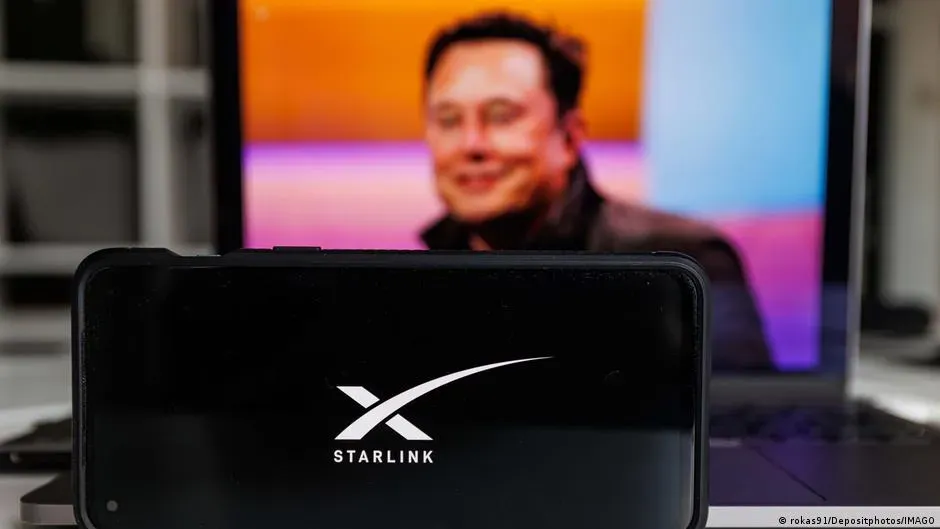
Elon Musk has continued his public criticism of the delay in launching Starlink services in India, sparking a heated exchange on social media.
Musk's latest remarks came after he sarcastically referred to Mukesh Ambani, one of India's wealthiest individuals and chairman of Reliance Industries, as "Prime Minister Ambani", implying that his supporters were protecting a monopoly. He also questioned whether the Indian government would allow Starlink to operate in the country, highlighting its potential to bring internet access to underserved communities.
Rahul Gandhi, leader of the opposition Indian National Congress, chimed in on the discussion, warning Musk about the complexities of doing business in India. His comment was met with a response from Musk, who expressed his appreciation for Gandhi's advice but noted that the situation was indeed troubling.
The government and Reliance Jio have responded to the criticism, with Akash Ambani declining to comment on Musk's remarks during the India Mobile Congress 2026 in New Delhi last week.
The commercial launch of Starlink in India is yet to materialize despite securing crucial approvals and partnerships with local telecommunications giants Reliance Jio and Bharti Airtel.
Starlink's low-earth-orbit satellites have the potential to provide internet access to remote areas where building fiber-optic networks or mobile towers would be expensive, such as villages, hilly regions, and border zones.
However, entering this market poses a challenge for Starlink as mobile data is relatively inexpensive in India, and established telecom operators already have extensive networks.
India's Ministry of Communications has confirmed that security assessments are underway for all three licensed satellite operators, including Starlink.
The regulatory hurdles facing Starlink's launch in India have sparked debate about the country's approach to foreign investment and national security.
According to a parliamentary committee chairman, the challenges faced by India's security agencies through Starlink have been well understood by his committee.
In response to criticism from Elon Musk, a senior government official stated that India is a sovereign nation with its own security policies, which are not influenced by social media or external figures.
The official did not specify the security risks or regulatory requirements holding up the launch, fueling speculation about the reasons behind the delay.
A former intelligence officer and national security expert suggested that legitimate security concerns were at play, alongside commercial competition and regulatory uncertainty.
The uncertainty surrounding Starlink's entry into India can be attributed to the complexity of regulatory processes rather than a outright rejection of foreign investment. According to experts, security reviews are necessary for satellite communications due to their critical infrastructure and cross-border data implications.
However, the issue lies in the lack of transparency regarding approval criteria and timelines, making it difficult for investors to plan accordingly. This uncertainty can be attributed to discretionary, multi-agency processes with unpredictable outcomes, which cannot be priced efficiently by investors.
The Indian electronics industry could potentially benefit from Starlink's entry, creating opportunities for local manufacturers in satellite terminals, antennas, communication modules, and network equipment. Pankaj Mohindroo, chairman of the India Cellular and Electronics Association, emphasizes that India has a strong trusted electronics manufacturing base, which can be leveraged by global technology companies to develop local partnerships.
Ultimately, resolving these regulatory hurdles is crucial for unlocking the full potential of satellite internet in India, enabling wider access to this critical infrastructure.
Facts based on reporting originally published by DW English.
You may republish this story, in full or in part, if you credit News Central Site and link to it (licence CC BY 4.0). Photos are not included.