Army Allowed to Proceed with Detonation of Unstable Explosives in Iowa
A federal appeals court has declined to block a massive detonation of unstable explosives at a munitions plant in Middletown, Iowa.
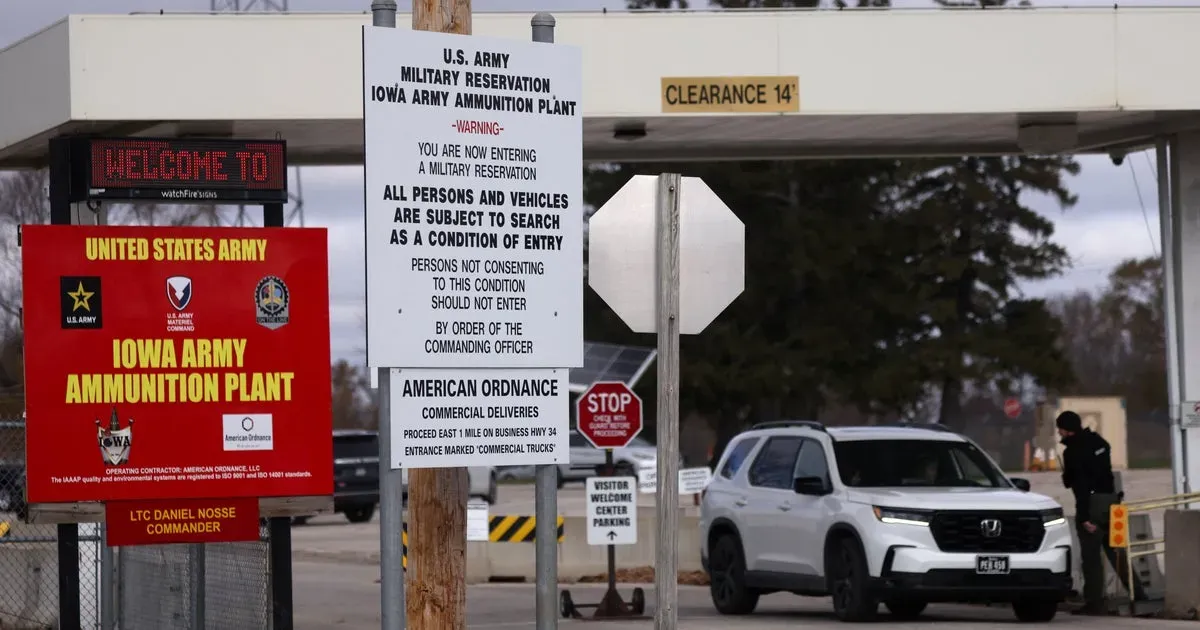
The Army had planned to carry out a massive detonation of unstable explosives at a munitions plant in Middletown, Iowa this week. However, a federal appeals court intervened on Monday, declining to block the action. This decision was made despite concerns raised by local community members about the potential risks associated with the explosive materials.
Community members in the small southeastern Iowa town have been voicing their worries about the risk of toxic particles spreading across Iowa and neighboring Illinois. They are worried that the detonation could release hazardous substances into the environment, causing harm to people and wildlife. The Army had initially cited safety concerns as a reason for proceeding with the detonation.
The federal appeals court's decision allows the Army to move forward with its plans, but it is unclear what impact this will have on the local community. Community members are calling for greater transparency and accountability from the Army regarding the handling of these explosive materials.
A federal appeals court has intervened in the explosive materials situation in Iowa, issuing a stay on Thursday pending further review of an emergency permit granted by the Environmental Protection Agency.
The permit's validity is being challenged, and the Army was initially scheduled to detonate the materials this week before Mr. Trump instructed them to halt operations for now. The president believes there's a significant risk that the explosive material could self-destruct.
Mr. Trump has expressed his preference to detonate the materials as soon as possible, but he's willing to follow the court's decision and wait for the incoming governor-elect's approval, which would be Rob Sand.
The controlled detonation of lead azide materials in Iowa has been put on hold for now, pending further review by incoming officials. The federal government had previously indicated that it needed to conduct the procedure by Tuesday before temperatures drop below freezing.
The decision to delay comes after dozens of drums of lead azide began recrystallization earlier this year, prompting concerns about the storage and handling of the hazardous material. The munitions plant where the lead is stored was built during World War II in a facility that has been used for various purposes since then.
Facts based on reporting originally published by CBS News Politics.
You may republish this story, in full or in part, if you credit News Central Site and link to it (licence CC BY 4.0). Photos are not included.