Groundbreaking discovery of new bird species in Indonesian cave
Researchers have uncovered a previously overlooked 190,000-120,000-year-old bird fossil in a Flores Island cave.
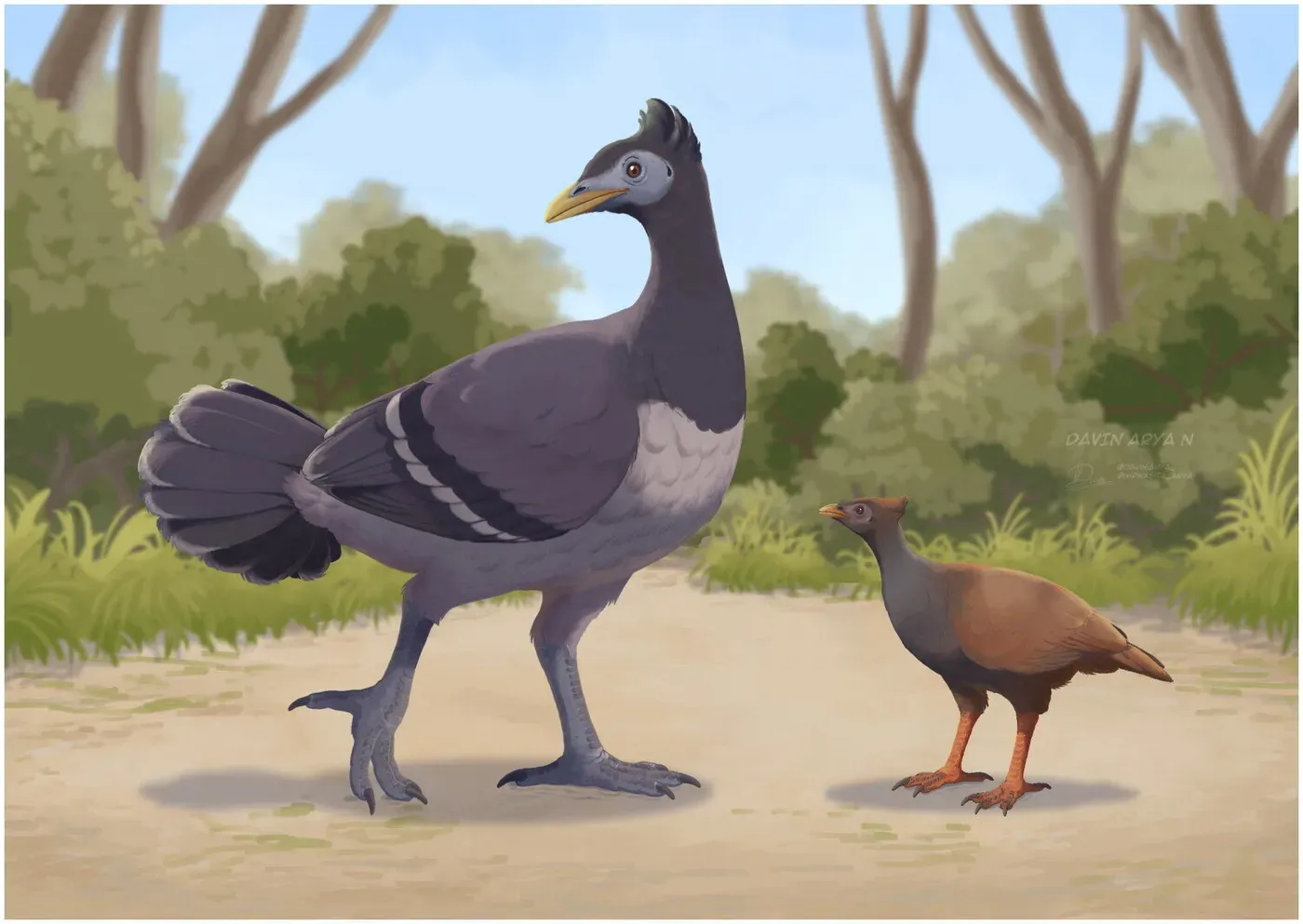
Researchers have made a groundbreaking discovery in a cave on Flores Island, uncovering a new species of ground-dwelling bird that was previously overlooked as it gathered dust for nearly two decades.
The 190,000-120,000-year-old leg bone was initially identified as belonging to a bird but was set aside and forgotten. It wasn't until recently that researchers re-examined the fossil, revealing its true significance. The find is significant not only because of its age but also due to the scarcity of information on birds from this time period.
The newly discovered species belongs to the megapode family, a group of chicken-like birds that are known for their ground-dwelling habits. According to experts, this is the first megapode fossil ever found in Wallacea and one of the largest of its kind. The discovery was made possible through a study published in Alcheringa: An Australasian Journal of Palaeontology.
The emergence of megapodes is believed to have occurred during the Late Cretaceous period, with researchers suggesting that this group first appeared in Australasia before spreading across eastern Indonesia, Melanesia, the Philippines, and Australia. The newly discovered fossil provides valuable insights into the evolutionary history of these birds.
According to Hanneke Meijer, a professor and curator of osteology at the University Museum of Bergen, the discovery is particularly significant due to its age. "It is one of the oldest bird remains we have found at Liang Bua," she said.
The discovery of a new species of ground-dwelling bird in Indonesia's Liang Bua cave has shed light on the evolutionary history of these remarkable birds.
Megapodes are known for their unique reproductive habits, laying eggs in large mounds or burrows and abandoning them to incubate naturally. This behavior is a distinct characteristic of the group, which has been around for millions of years but had never been found in fossil form in Wallacea until now.
A significant find in one of Liang Bua's deepest layers was a fossilized leg bone that lay undisturbed for years before being studied by researchers. By comparing it to living and extinct megapode species, they discovered that it was unlike any other known example.
The fossil's distinctive features include toe joints shaped and positioned differently from those of its relatives, as well as a larger-than-usual leg shape and size. These characteristics suggest that the bird was quite large, setting it apart from other members of the Megapodius genus.
The researchers have given this new species the name Megapodius rokusi in honor of Rokus Due Awe, an amateur zooarchaeologist who first recognized the bones of Homo floresiensis and later identified the fossil as a bird bone.
The discovery of the new species has shed some light on the bird fossil record in Southeast Asia, but there is still much to be learned about this particular creature. Its fossilized remains have provided valuable insights into its characteristics, but without further evidence, many questions remain unanswered.
One such question revolves around the bird's ability to fly. Since no wing bones were found among the fossils, it cannot be determined whether the Megapodius rokusi was capable of flight or not. Additionally, the timing of its extinction is also unclear due to the lack of other fossil evidence.
The study suggests that the Megapodius rokusi may have vanished around the same time as other extinct animals found in Liang Bua cave, including giant storks and dwarf Stegodons. However, it's also possible that it disappeared much earlier than these other species.
Despite the many uncertainties surrounding this new discovery, researchers are optimistic about what it can reveal about the region's rich biodiversity history. Southeast Asia is known for its unique blend of flora and fauna, but experts warn that what we see today is only a fraction of what once existed in the area.
Researchers believe that more megapode fossils may be waiting to be discovered, particularly since bird fossils have often been overlooked in favor of mammal remains. As new evidence comes to light, scientists are eager to continue exploring the mysteries surrounding this and other ancient species found in Southeast Asia.
A groundbreaking discovery has been made in Southeast Asia, where a team of scientists has identified a new species of ground-dwelling bird that is significantly larger than its relatives.
The remarkable find was made in the same cave system on the Indonesian island of Flores that previously yielded the remains of Homo floresiensis, an ancient human species. The newly discovered species, which belongs to the megapode family, is believed to have lived during the Pleistocene era and would have been a substantial presence in its ecosystem.
Facts based on reporting originally published by Phys.org.
You may republish this story, in full or in part, if you credit News Central Site and link to it (licence CC BY 4.0). Photos are not included.