Groundbreaking Discovery Made Using Vera Rubin Observatory
A team of researchers led by Dmitrii Vavilov has made a significant breakthrough in understanding asteroid behavior using the Vera Rubin Observatory.
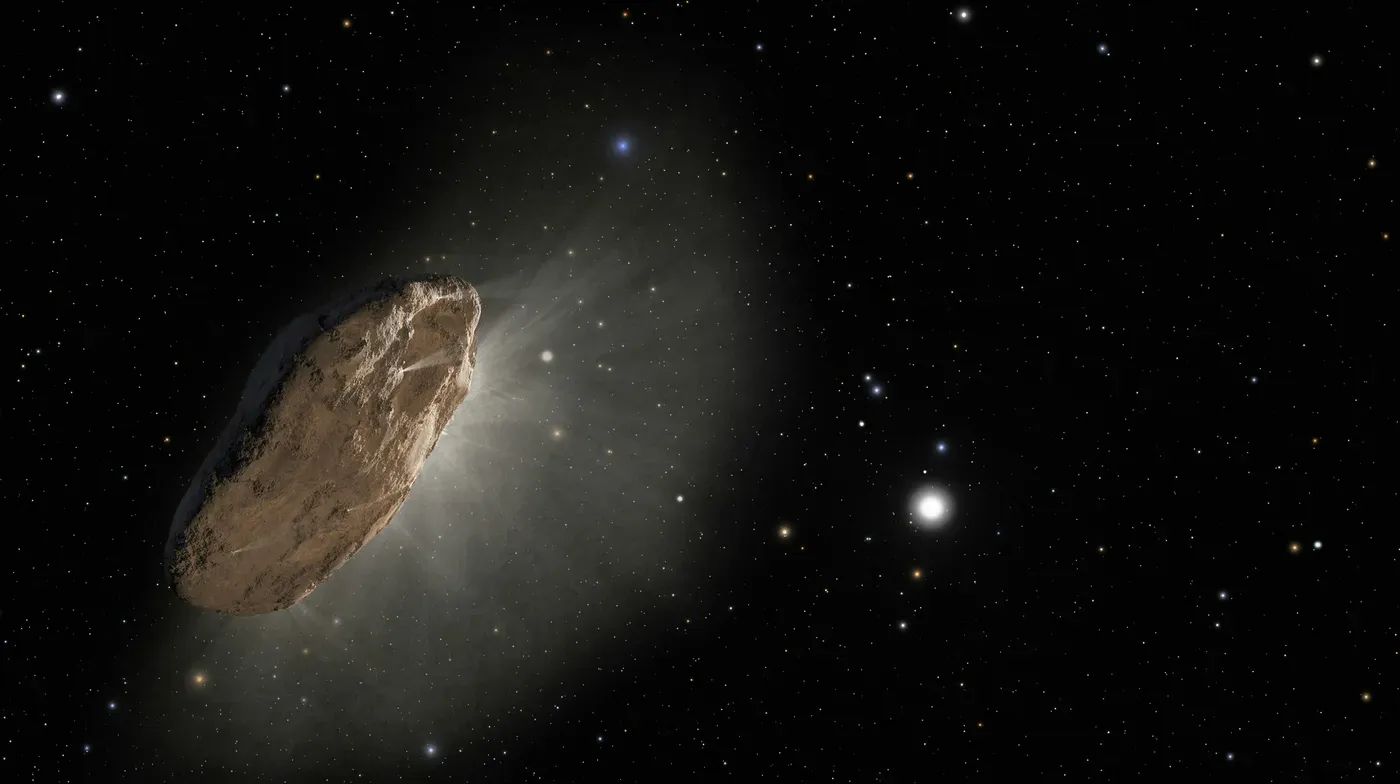
Astronomers have made a groundbreaking discovery using the Vera Rubin Observatory, which has spotted an asteroid that holds the record for being the largest ultra-fast spinning asteroid yet detected.
The team of researchers, led by Dmitrii Vavilov at the University of Washington, developed new software to automatically identify and exclude unreliable measurements of asteroids' spin rates. This innovative approach allowed them to uncover a massive asteroid over 2.5 kilometers in diameter that completes one rotation in just over four minutes.
Asteroids are often composed of loose rock fragments held together by their own weak gravity, which can lead to catastrophic consequences if they rotate too quickly. As a result, larger asteroids typically take more than two hours and twenty minutes to complete a full rotation, known as the "spin barrier. This natural limit suggests that any asteroid exceeding this threshold must be bound together by forces stronger than gravity alone.
The discovery of this ultra-fast spinning asteroid raises intriguing questions about its composition and internal structure. The team's findings suggest that the asteroid is not simply a rubble pile held together by weak gravity, but rather has an internal force that allows it to maintain its shape despite its incredible spin rate.
Further analysis of the asteroid's properties will be crucial in understanding what makes this record-breaking object tick. The Vera Rubin Observatory's observations will provide valuable insights into the asteroid's composition and behavior, shedding light on the mysteries of our solar system's smallest celestial bodies.
The Vera Rubin Observatory's observations have led to a significant breakthrough in understanding asteroid behavior. By analyzing changes in an asteroid's brightness over time, astronomers can estimate its spin rate, which is crucial for studying these small celestial bodies.
Astronomers using the Rubin Observatory have identified 19 asteroids that appear to be spinning at incredible speeds, exceeding what was previously thought possible. These super-fast rotators" are likely to challenge our current understanding of asteroid dynamics and could shed light on the formation processes of our solar system.
However, estimating spin rates is not without its challenges. Since observations by Rubin and other telescopes are often scattered and irregular, it can be difficult to determine a reliable spin rate for an asteroid. This problem becomes even more pronounced when dealing with large numbers of asteroids, as manual checks for errors become time-consuming.
To address this issue, researchers have developed new software that automatically analyzes asteroid brightness measurements. The program takes into account the unique characteristics of each asteroid and identifies gaps in coverage, allowing it to flag suspicious measurements and provide a list of possible spin rates with their corresponding likelihoods.
The team applied their software to data from Rubin's observations, covering 9,417 asteroids. Their analysis revealed 66 potential super-fast rotator candidates, including two large asteroids that spin around once every five minutes, posing new questions about the properties and behavior of these enigmatic objects.
The Vera Rubin Observatory's observations have led to the discovery of several ultra-fast spinning asteroids, and one object in particular has caught scientists' attention due to its remarkable rotation period and size. The asteroid 491384 rotates once every 4.18 minutes, which is a relatively short time frame compared to other known asteroids. With an estimated diameter of 2.53 kilometers (1.57 miles), this asteroid stands out as the largest ultra-fast rotator reported so far.
To maintain its structural integrity despite such rapid rotation, the asteroid must possess significant internal strength, suggesting that it is composed of a single solid rock rather than a loose collection of rubble. This unusual characteristic has sparked curiosity among astronomers and scientists who are eager to learn more about this enigmatic object.
The researchers' software could potentially be improved to automate the study of asteroids across large astronomical surveys, allowing for a more efficient analysis of data. One way to achieve this is by flagging telescope exposures that show inconsistent brightness readings across multiple asteroids, which could indicate issues with the exposure itself.
By developing more accurate and reliable methods of studying asteroids, scientists hope to gain a deeper understanding of how these celestial bodies are formed and evolve over time. This new knowledge may challenge existing theories about asteroid composition and behavior, providing valuable insights into the solar system's history.
The discovery of ultra-fast spinning asteroids like 491384 has significant implications for our current understanding of asteroid properties and behaviors. Further research is needed to fully comprehend the characteristics of these enigmatic objects and their place in the solar system.
The discovery of an ultra-fast spinning asteroid has been made by scientists using data from the Vera Rubin Observatory. This asteroid is notable for its size, measuring 2 kilometers in diameter, and its incredibly rapid rotation period. The object's unique characteristics were identified through a specialized method called the varying Fourier order technique.
Further analysis is required to fully understand this enigmatic asteroid's properties and its place within our solar system.
Facts based on reporting originally published by Phys.org.
You may republish this story, in full or in part, if you credit News Central Site and link to it (licence CC BY 4.0). Photos are not included.