Global Warming Reversal Plan Sparks Debate at COP31 Climate Summit
Negotiators are grappling with the question of how to reverse global warming by relying on carbon removal technology.
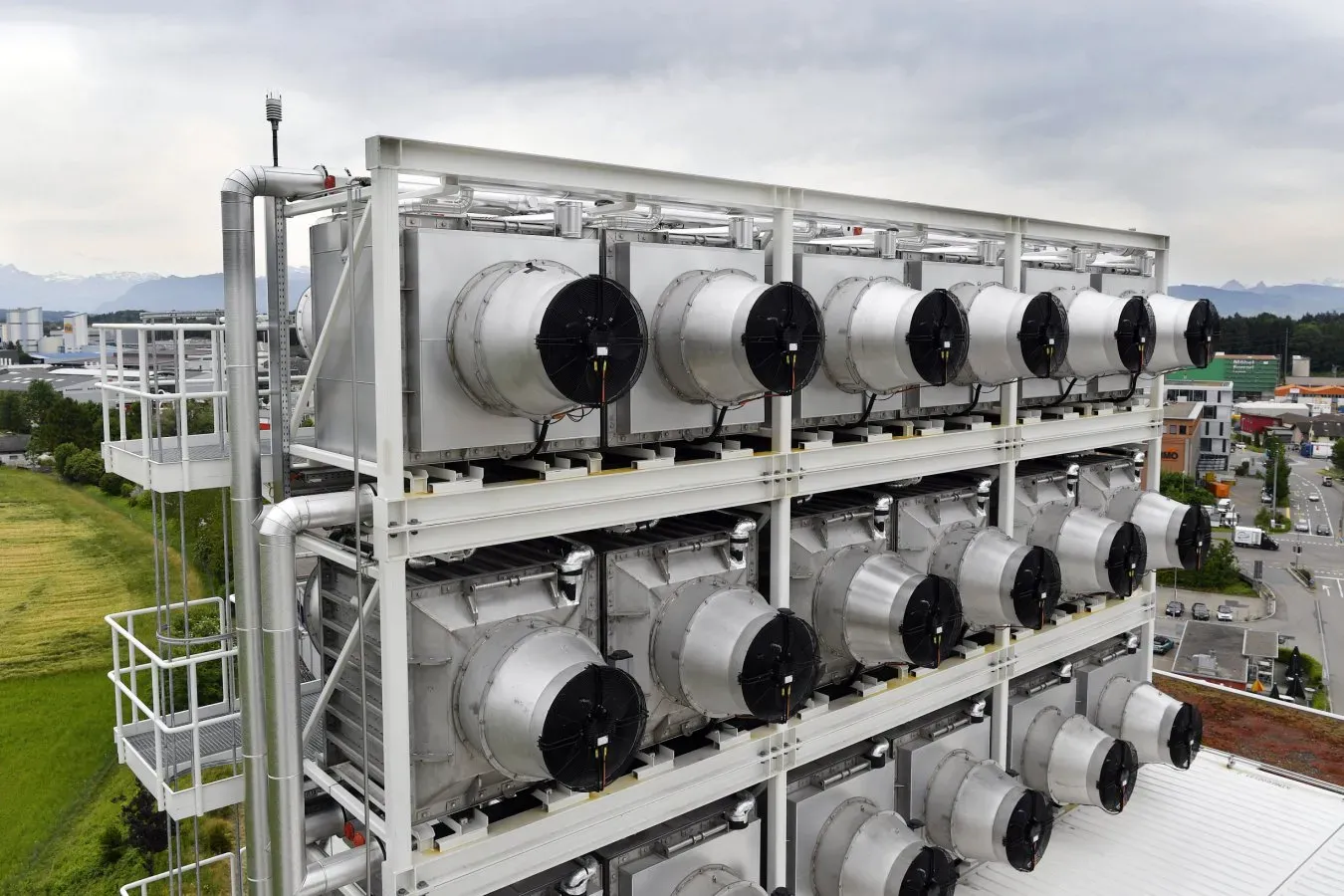
A plan to rely on carbon removal technology has sparked debate at the COP31 climate summit in Turkey, where negotiators are grappling with the question of how to reverse global warming.
The idea is that if more carbon dioxide is removed from the atmosphere than emitted, temperatures should eventually begin to fall, but this would require a massive effort. The draft negotiating text welcomes efforts to accelerate the development and deployment of carbon removal technologies. However, environmentalists are concerned that promoting these technologies could undermine efforts to cut greenhouse gas emissions.
Some proponents of carbon removal believe it can be achieved through various methods, including afforestation and reforestation, which involves planting trees that absorb carbon dioxide from the atmosphere. Others propose using crops that absorb carbon, burning them to produce energy, and capturing the resulting emissions.
The scale at which these technologies need to operate is enormous, with some estimates suggesting 5 gigatonnes of CO2 must be removed annually from the atmosphere. This is particularly challenging in sectors where reducing emissions is difficult or costly, such as heavy industry.
The presence of carbon brokers has been more visible than ever at this year's climate summit in a way that is striking to observers like Aakaluk Adrienne Blatchford from Alaska.
Carbon removal technologies have long been promoted by the fossil fuel industry as a means to address climate change while continuing to extract oil and gas, but there are concerns that these efforts may be motivated by self-interest rather than genuine concern for the environment.
The influence of the fossil fuel industry on the scientific discussion around carbon removal technologies is clear, with evidence showing that they have funded research at prestigious US universities for over 30 years on projects related to these technologies.
Industry representatives have found ways to participate in climate negotiations, and this year's summit has seen a record number of lobbyists from companies involved in carbon capture and utilization (CCUS) technology.
The presence of lobbyists for carbon capture and storage (CCS) technologies at climate talks has reached an all-time high, surpassing the number of delegates from 50 of the smallest national delegations combined.
Key players pushing for carbon dioxide removal (CDR) technology include Brazil, Denmark, the European Union, Saudi Arabia, and the United Kingdom.
These countries are advocating for a plan that would allow them to continue emitting greenhouse gases while promising to remove an equivalent amount of carbon from the atmosphere later on.
Some experts warn that this approach could undermine efforts to reduce emissions in the short term, allowing polluters to maintain business as usual while the rest of the world waits.
The debate surrounding carbon removal technology is intensifying at COP31, with some experts warning that over-reliance on these solutions could hinder efforts to reduce emissions in the short term.
Climate scenarios predict that by mid-century, up to 6 gigatonnes of CO2 will be stored underground annually. However, current technology can only remove and store a fraction of this amount, equivalent to the annual emissions of a single large fossil fuel power plant.
The limitations of carbon removal technology are not limited to its capacity. Kwami Dodzi Kpondzo, a climate campaigner from Togo, is concerned about the potential environmental impacts of bioenergy with carbon capture and storage.
This approach involves growing plants, burning them for energy, and capturing the CO2 emissions for underground storage. However, large areas of land would be required to grow the biomass needed to make a significant impact on carbon removal.
The debate surrounding carbon removal technology and its potential impact on Indigenous communities has been reignited at COP31. Concerns have been raised about the competition for land and water resources, which could lead to further displacement of these groups.
Blatchford emphasizes that reversing global warming is not physically impossible, but rather a matter of timing and urgency in reducing emissions. To mitigate climate change effectively, immediate action is necessary to drastically cut greenhouse gas emissions.
Facts based on reporting originally published by New Scientist.
You may republish this story, in full or in part, if you credit News Central Site and link to it (licence CC BY 4.0). Photos are not included.