Frédéric-Auguste Bartholdi Designed Statue to be Different Color
The original design for the Statue of Liberty called for it to have a reddish-brown coloration that would last for years.
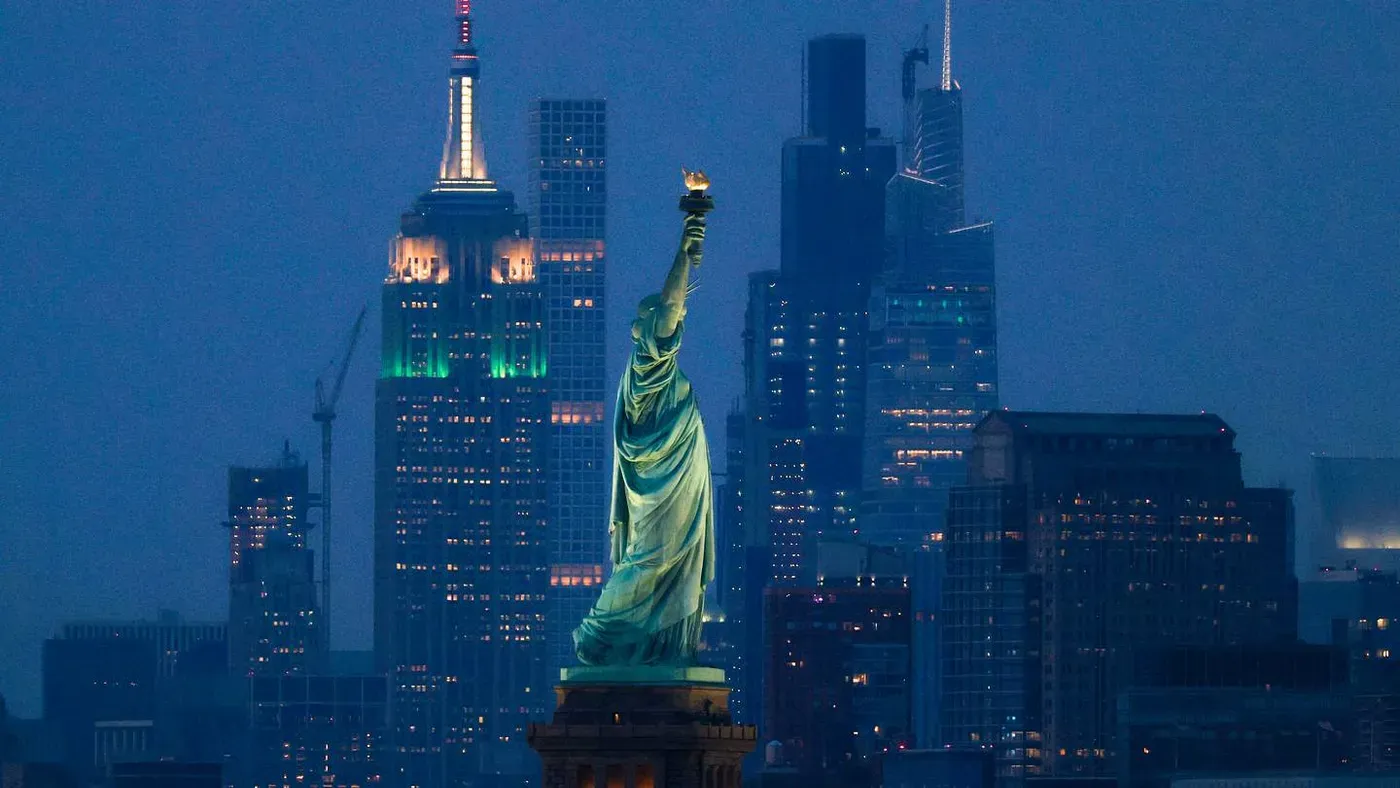
A surprise twist has emerged in the history of one of the world's most iconic landmarks - the Statue of Liberty was originally designed to be a different color from its current copper hue.
French sculptor Frédéric-Auguste Bartholdi created the statue in 1865 with two distinct goals: to honor the centennial anniversary of the Declaration of Independence and celebrate the strong ties between France and America. This ambitious project brought together some of Europe's most skilled craftsmen, including engineer Alexandre Gustave Eiffel.
The construction process was a complex undertaking that required careful planning and execution. Once funding for the massive sculpture was secured, Eiffel played a crucial role in bringing Bartholdi's vision to life. The structure took nearly a decade to complete, with American architect Richard Morris Hunt designing the pedestal on which the statue would stand.
As the framework of the Statue of Liberty neared completion in 1884, it was disassembled into 350 individual pieces and packed into 200 crates for shipment across the Atlantic Ocean. These crates arrived safely in New York City in June 1885, setting the stage for the final assembly of this colossal work of art.
The Statue of Liberty's copper exterior was a deliberate design choice made by its creator, Frédéric Auguste Bartholdi.
This reddish-brown coloration was not just an accident, but rather a feature that was meant to last for years to come.
When the statue made its public debut on October 28, 1886, it stood tall at 305 feet and consisted of hundreds of copper sheets, each about two pennies wide.
These thin sheets were carefully crafted to provide both durability and flexibility.
As the years passed, the Statue of Liberty underwent a transformation, its copper surface gradually darkening to a "darker brown hue" in the 15 years since it was erected in New York Harbor.
The oxidation process accelerated in the early 1900s, resulting in a green coating forming on the statue's exterior. This development was not entirely unexpected, as metals naturally react with their environment through a process of corrosion and oxidation.
Friedrich August Bartholdi, the designer of Lady Liberty, had actually anticipated that his creation would undergo some degree of color change over time. However, he had predicted a dark red hue, whereas the actual outcome was a green patina.
Efforts were made to reverse this transformation, with Congress allocating $62,000 in 1906 for repainting and restoration. The plan was to return the statue to its original copper color, but many saw this proposal as an affront to the monument's integrity.
The maintenance costs of regularly repainting the statue were seen as prohibitively expensive and time-consuming, with estimates suggesting that it would need to be recoated every 25 years to prevent the green from reappearing.
The Statue of Liberty's transformation from its original copper hue to its signature green color was a gradual process that spanned several decades.
By 1910, the statue had already begun to show signs of oxidation, resulting in a mix of copper and greenish blue tones on its surface. Within just 10 years, however, it had fully transitioned into its now-iconic green color.
The installation of amber-colored glass panels in the torch by artist Gutzon Borglum in 1916 added an additional layer of visual interest to the statue's design. These panels allowed for internal illumination, which further enhanced the statue's overall appearance.
By the 1920s, the Statue of Liberty had largely taken on its modern form and coloration, although it would undergo some minor enhancements in subsequent years. The torch was later wrapped in 24-karat gold leaf and the entire structure was illuminated with floodlights for optimal visibility.
The Statue of Liberty's iconic green patina has become synonymous with freedom, but its origins are more complex than one might assume. The copper sheets that make up Lady Liberty's structure were initially a reddish-brown color.
Chemical weathering eventually transformed the surface into the distinctive green hue we associate with the statue today, and surprisingly, this process has also provided protection against corrosion.
Facts based on reporting originally published by Mental Floss.
You may republish this story, in full or in part, if you credit News Central Site and link to it (licence CC BY 4.0). Photos are not included.