European Troops Prepare for Potential Post-Conflict Mission in Ukraine
Thousands of European troops will participate in a military exercise in Poland later this month to test deployment plans and demonstrate regional military capabilities.
Thousands of European troops are set to participate in a military exercise in Poland later this month as part of preparations for a potential post-conflict mission in Ukraine. The exercise, led by Britain and France, aims to test deployment plans and demonstrate the region's growing military capabilities.
However, some experts have expressed doubts about whether such a mission will ever materialize due to ongoing fighting, uncertain American support, and the outcome of upcoming elections in several European countries. These challenges threaten to undermine the success of any post-conflict initiative in Ukraine.
The UK and France are leading a 37-member coalition known as the Coalition of the Willing that supports Ukraine's efforts to rebuild its economy and armed forces. This group aims to provide stability and security guarantees to Kyiv, which is seen as essential for preventing further aggression from Russia.
Ukrainian President Volodymyr Zelenskyy has repeatedly emphasized the need for robust security assurances from Western allies in order to prevent Russian attacks on his country. The European force being prepared could play a crucial role in deterring such aggression and ensuring Ukraine's long-term stability.
The multinational force being prepared by European countries is gearing up for a complex mission in postwar Ukraine. The force, which includes troops from France and Britain, will rehearse transporting people and equipment into Poland as part of its preparation. This exercise will also involve joint command and control drills, as well as the deployment of jets and an aerial refueling tanker to help reopen Ukraine's skies.
The force is expected to play a crucial role in helping to regenerate and strengthen Ukraine's armed forces once a ceasefire is in place. According to Lt. Gen. Tom Bateman, commander of Multinational Force-Ukraine (MNF-U), the force will also provide reassurance needed to open the country's skies and help clear mines in the Black Sea.
The challenges facing this multinational force are significant, particularly given the ongoing hostilities between Ukraine and Russia. The European countries involved in the force have stated that they will only deploy once hostilities cease. However, achieving a ceasefire remains a daunting task due to various factors.
One of the key obstacles is the stalled peace negotiations between Ukraine and Russia. These negotiations were put on hold earlier this year following U.S. President Donald Trump's decision to launch military action against Iran. Furthermore, Trump's subsequent announcement of a deal with Russia to supply diesel fuel to the U.S. ahead of its midterm elections has been seen as a move that benefits the Kremlin.
Meanwhile, Ukraine is facing confusion and inconsistent messaging from Washington regarding the use of Starshield, which is crucial for drone strikes and air defense. This lack of clarity has led to frustration among Ukrainian officials, including President Zelenskyy, who has expressed concerns about the failure to provide warning of incoming Russian ballistic missile attacks.
The resumption of peace talks between Ukraine and Russia has been made conditional on several key issues, including territorial disputes and security guarantees. However, despite efforts to reach a deal, significant differences remain between the two parties. The lack of progress in these negotiations is causing concern among Ukrainian officials.
A lasting ceasefire appears unlikely without a clear commitment from the US to support Kyiv with intelligence and monitoring capabilities. This has led some experts to question whether the US is genuinely committed to supporting Ukraine or if it is instead prioritizing its relationship with Russia. Such concerns have been fueled by recent statements suggesting that the US may be leaning towards supporting Russian interests over those of Ukraine.
The deployment of European troops to Ukraine in a post-conflict scenario will require meticulous planning and coordination. In preparation for such a mission, troops from Britain and France are rehearsing key tasks, including transporting people and equipment into Poland and conducting joint command and control drills. These exercises also involve practicing aerial refueling and flying jets.
The concept of the Coalition of the Willing group of nations was initially designed to provide Ukraine with security guarantees similar to those offered by NATO's Article 5. However, this option was rejected by the US and Germany, leading France and Britain to explore alternative arrangements. As a result, they are now planning a separate European initiative that would see countries willing to support Ukraine in case of need.
This new proposal is seen as an attempt to fill the gap left by NATO's refusal to offer security guarantees to Ukraine. The details of this plan remain unclear, but it is understood that participating nations will discuss how they can work together to respond to potential threats.
The European deployment in Ukraine will not involve offensive operations, but rather aim to help deter future Russian aggression through a presence that's felt on the ground.
This approach is being taken in light of rising concerns about Russian covert activity, including sabotage, espionage, and drone incursions reported by several European nations, including Poland.
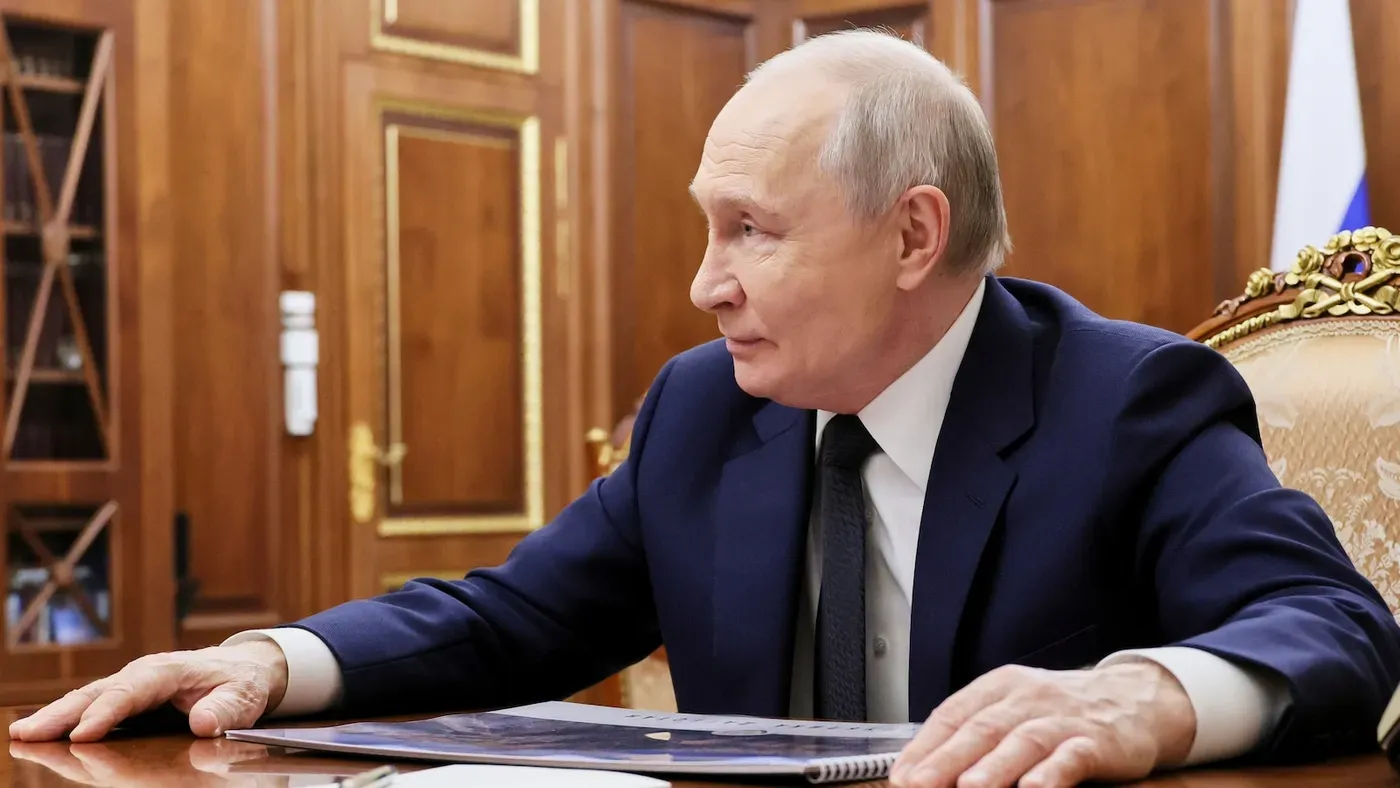
Denmark's Defense Intelligence Service has also warned that Putin may be more likely to launch military attacks against NATO if he believes it won't respond collectively, particularly if the US is seen as unwilling or unable to support European countries in a conflict with Russia.
As a result of this assessment, any deployment must prioritize the force protection of soldiers on the ground, which means being prepared for combat and able to defend themselves from potential threats.
The challenge of providing credible deterrence against Russian aggression has also been raised by some, with questions about whether Europeans would be willing to take direct action, such as shooting down Russian fighter jets or intercepting drones and missiles launched into Ukrainian airspace.
The proposed European force to support a post-war Ukraine mission faces significant challenges in its formation due to upcoming elections in key countries. In France, President Emmanuel Macron's inability to seek re-election next year has raised doubts about the feasibility of the force. Protests have added to the pressures on his government.
Far-right leader Marine Le Pen and her party oppose sending troops to Ukraine, with Le Pen stating that she would end financial assistance to Kyiv after six months in office due to economic concerns. Other presidential contenders, including far-left rival Jean-Luc Mélenchon's party, also express opposition or caution against escalation, citing fears of a wider European conflict.
The force is seen as "a military operation in search of a mission" by some, and its deployment to Ukraine appears unlikely, with the chances estimated at almost "zero".
Facts based on reporting originally published by ABC News International.
You may republish this story, in full or in part, if you credit News Central Site and link to it (licence CC BY 4.0). Photos are not included.