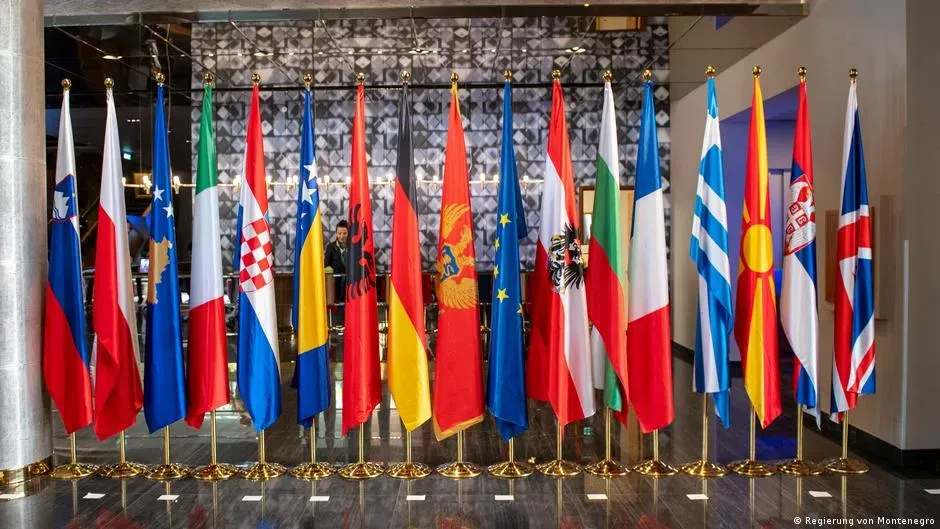
European Commission Unveils Plans to Revitalize Enlargement Process
The European Commission has unveiled plans to revitalize its enlargement process, aimed at welcoming new member states into the bloc.
The European Commission has unveiled plans to revitalize its enlargement process, aimed at welcoming new member states into the bloc. Albania, Montenegro, Moldova, and Ukraine are currently leading candidates for EU membership, with officials expressing optimism that Montenegro could join as early as 2028.
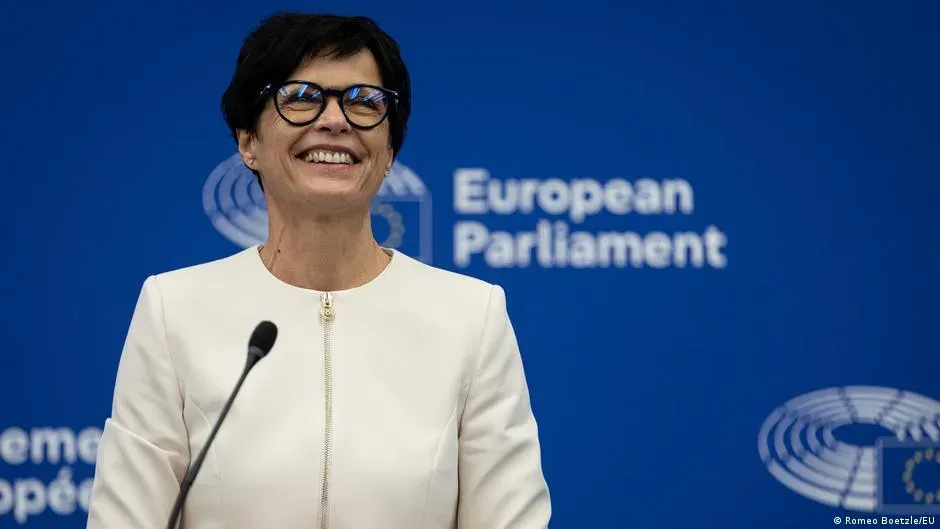
The Commissioner responsible for Enlargement, Marta Kos, emphasized the importance of a larger union in securing Europe's peace, security, and prosperity. This sentiment was echoed by officials who recognize the benefits of expanding the EU's reach and influence. However, there are concerns that integrating new countries may compromise the bloc's stability.
The Commission proposes to address these challenges by implementing reforms that would streamline the accession process while maintaining high standards for candidate countries. By simplifying the decision-making process and removing obstacles in negotiations, the EU hopes to facilitate the integration of new members without jeopardizing its democratic values.
The European Commission has proposed changes to its decision-making processes in preparation for future EU enlargements. One of these reforms involves shifting from the principle of unanimity to qualified majority voting for certain decisions. This change would simplify the process and remove obstacles that can hinder negotiations.
Currently, opening negotiation clusters requires three individual decisions, each subject to unanimous approval from member states. A Commission official described this as "mind-blowing" and emphasized the need for reform in this area. The proposal aims to streamline these processes.
However, a shift to qualified majority voting itself requires a unanimous decision from member states. This could prove challenging given previous attempts to change voting rules that were rejected by some member countries. Tinatin Akhvlediani, head of the enlargement program at CEPS, expressed reservations about achieving unanimous agreement on this matter.
The Commission is also proposing gradual integration for candidate countries. This would allow them to access certain benefits of membership before joining the EU, provided they meet the required criteria. The goal is to accelerate the enlargement process while maintaining a merit-based approach.
Gradual integration is seen as an incentive for reform in candidate countries rather than a substitute for full membership. By offering early access to some member benefits, these countries are encouraged to work towards meeting the EU's standards.
The European Commission has proposed reforms aimed at preparing the EU for new member states by offering them early access to certain benefits in exchange for strategic alignment with the bloc's policies and standards.
This approach is seen as a motivational factor for candidate countries to work towards meeting EU standards, according to research fellow Nina Vujanovic from Brussels-based think tank Bruegel. She notes that rewarding countries for their efforts earlier on can have a positive effect.
Notably, some candidate countries are already participating in certain EU programs, such as the Single Euro Payments Area (SEPA), despite not yet being full members. This precedent suggests that early access to benefits is not entirely new and could be expanded upon.
The Commission's proposal would link early access to benefits with strategic alignment, making it a condition for candidate countries to participate in these programs. A Commission official explained that this measure aims to ensure that candidate countries are genuinely committed to the EU's policies and values.
By requiring alignment on economic security standards as well as foreign and security policy, the EU is seeking to prevent its future members from engaging in activities that undermine trust within the bloc, such as trading gas with Russia.
The European Commission has proposed a 15-year period during which new member states can be sanctioned more easily if they breach democratic rules.
This measure aims to prevent breaches of democratic norms by new member states, particularly those with a shaky record on democratic values. Critics argue that this safeguard would create unequal conditions within the union, as some countries would face different standards than others.
Heather Grabbe argues that it is inherently unfair for some countries to face stricter rules than others, pointing out that this could lead to unequal treatment of member states in the future. She notes that applying similar strict rules to all members would require unanimous approval, which is a difficult hurdle to overcome.
Experts also suggest that the approach taken by the Commission is justified given the fragile state of democratic norms in many current candidate countries.
The European Commission's proposal for new rules related to EU enlargement has been submitted, but its fate ultimately rests in the hands of member states.
The upcoming meeting of the European Council on October 15-16 is crucial, as it will bring together the heads of state or government from the 27 EU member states, along with the European Council president and the president of the European Commission. These leaders will discuss the proposed reforms, which are aimed at preparing the bloc for new members.
The outcome of this meeting will determine how quickly the Commission's new enlargement agenda can move forward, paving the way for countries like Montenegro to potentially join the EU by 2028.
Facts based on reporting originally published by DW English.
You may republish this story, in full or in part, if you credit News Central Site and link to it (licence CC BY 4.0). Photos are not included.