Día de los Muertos Celebrations Underway in Albuquerque
A garland-making workshop led by Aleja Grajeda is part of the festivities in Old Town as people prepare for Día de los Muertos.
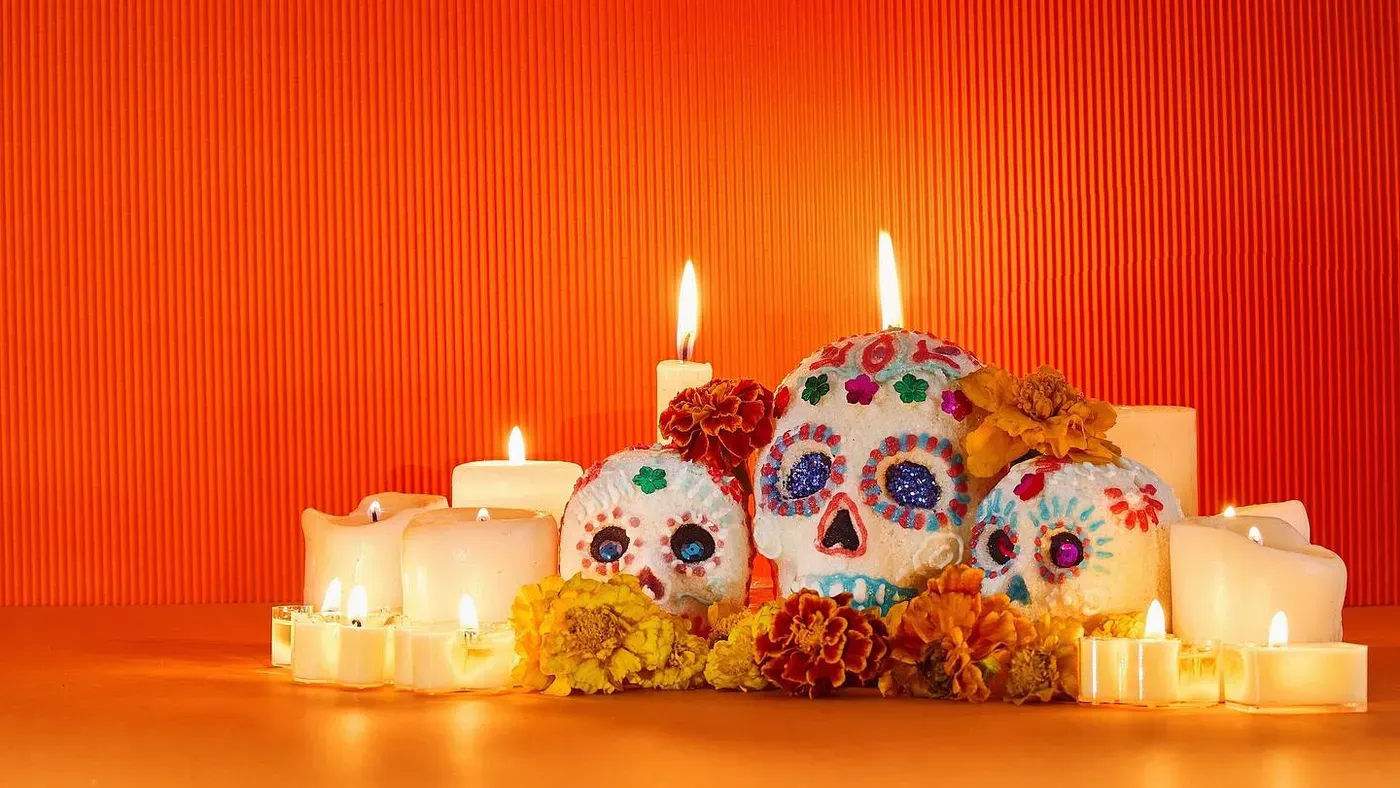
As the holiday season approaches, many communities around the world are preparing for Día de los Muertos, a celebration that honors and remembers loved ones who have passed away. The festive atmosphere is palpable in Albuquerque's Old Town, where locals and visitors alike are busy decorating ofrendas with vibrant flowers, candles, and photographs.
In a small store nestled in the heart of Old Town, a group of people gathered for a garland-making workshop led by Aleja Grajeda, owner of Las Ofrendas, a business that offers postpartum care, folk medicine, and other services. The room was filled with the sweet scent of copal incense and fresh flowers, creating a serene ambiance that seemed to welcome the spirits.
As the participants worked on their garlands, they were surrounded by an assortment of materials, including photos of loved ones, plastic monarch butterflies, and candles. A child's note to a grandmother sat in a frame on one side of the room, adding a touch of warmth and intimacy to the space.
The workshop was just one of many activities taking place in Albuquerque as people prepare for Día de los Muertos. This celebration is deeply rooted in Mexican culture and is traditionally observed from October 31 to November 2. During this time, it's believed that the dead can return to their family homes, and the living leave offerings to guide them on their journey.
As the workshop participants worked on their garlands, they were given a special task: adding marigolds to complete their creations. These vibrant flowers have been associated with Día de los Muertos for centuries, and their sweet scent is said to help guide deceased ancestors back to their family homes.
The store owner brought in a fresh batch of marigolds, which were added to the garlands as the final touch. The bright petals of these flowers add a pop of color to the festive decorations, making them an integral part of the celebration's visual appeal.
Marigolds have been used for centuries in various cultures and traditions to ward off evil spirits and guide the dead on their journey. In the context of Día de los Muertos, they play a significant role in helping deceased ancestors find their way back to their loved ones.
The significance of marigolds in Día de los Muertos is deeply rooted in their fragrance and appearance. The sweet scent of these flowers is believed to guide the dead on their return journey, while their bright petals add a festive touch to the celebrations.
As the workshop came to an end, the participants had completed beautiful garlands adorned with marigolds, candles, and photographs. These delicate creations would soon be placed in homes and public spaces throughout Albuquerque, serving as a reminder of the love and respect that people have for their departed loved ones.
The vibrant marigold, often seen in traditional Día de los Muertos celebrations, has its roots in ancient traditions and folklore.
In the indigenous language Nahuatl, marigolds are referred to as cempasúchil, which translates to "the flower of 20 petals". This name is a testament to the intricate beauty of these flowers, with their layered petals resembling the complexity of traditional stories and legends.
Before Spanish colonization, the Aztecs worshipped a goddess of death named Mictēcacihuātl. Her image was that of a skeleton's face, and she was revered during July and August. Despite the Catholic church's efforts to suppress this worship, it persisted among the Indigenous population.
As time passed, people began incorporating their traditional ways of honoring the dead into the Catholic holidays of All Saints' Day and All Souls' Day. This blending of traditions eventually led to the evolution of Día de los Muertos.
One of the enduring customs that survived this cultural fusion was the use of marigolds and other flowers to aid the dead on their journey home. These bright orange blooms have been imbued with a range of legends and symbolism.
In many cultures, it's believed that marigolds possess the power to guide spirits back to their loved ones. Their strong scent is said to help navigate the soul through the afterlife.
The use of flowers in Día de los Muertos celebrations is also deeply rooted in the idea of welcoming the dead into one's home and community. By placing marigolds in public spaces, people are able to honor and respect their departed loved ones.
Marigolds have become an integral part of Día de los Muertos festivities, symbolizing love, remembrance, and the connection between the living and the dead.
In this way, the humble marigold has transcended its status as a simple flower, becoming a powerful and enduring symbol of cultural heritage.
The cultural significance of marigolds in Mexico's Día de los Muertos celebrations is deeply rooted in ancient mythology.
One legend tells the story of Tonatiuh, the sun god, who gifted the people with these vibrant flowers to honor their loved ones who have passed away.
In another tale, a couple named Xóchitl and Huitzilin are said to have been separated by death, but their love was so strong that it was transformed into a marigold flower.
As long as this flower blooms, the couple's love is believed to endure, making marigolds a powerful symbol of eternal devotion.
The story goes that Tonatiuh turned Xóchitl into a cempasúchil flower, which remained closed until Huitzilin's spirit returned in the form of a hummingbird.
When the flower finally unfurled, its vibrant orange color was revealed to the world, signifying the reunion of the star-crossed lovers.
Today, marigolds play a central role in many Día de los Muertos festivities, where they are often used to create elaborate displays and arrangements.
In Mexican culture, scents are believed to guide the spirits of the dead back to the land of the living, making marigold petals particularly significant during this time.
Marigolds are commonly displayed on ofrendas, in cemeteries, and as garlands, their sweet fragrance filling the air and helping to facilitate the reunion of loved ones.
The marigold's layered petals hold significant meaning during Día de los Muertos celebrations. According to traditional interpretations, the multiple layers represent family and the generations that support one another.
Each layer of petals also symbolizes love, with the new, delicate petals representing fresh emotions and the older, fading petals signifying past relationships. This dual representation highlights the importance of honoring both the living and the deceased.
As part of a Día de los Muertos celebration, marigold garlands are often created to adorn homes and altars. These fragrant flowers are used in various ways, from decorating ofrendas to adorning cemeteries with their vibrant colors.
To make these garlands, participants typically start by sipping traditional Mexican chocolate, a beverage that dates back to Mesoamerican civilizations. This rich drink is flavored with chile peppers, a staple ingredient in New Mexican cuisine.
The warm and spicy flavors of the chocolate help set the tone for the garland-making process. As participants work on threading marigolds onto strings, they are reminded that their efforts will be appreciated by those who have passed on.
During Día de los Muertos, food is left out to welcome ancestors returning from the spirit realm. This gesture acknowledges the long journey these spirits undertake and shows respect for their return.
The process of making garlands involves threading marigolds onto strings alongside other flowers like purple blooms and orange slices. These colorful additions create a vibrant display that communicates celebration and hospitality.
Baby's breath is another flower often used in Día de los Muertos arrangements, as it pays tribute to children who have passed away. The delicate white petals complement the bright colors of the marigolds and oranges, creating a harmonious visual display.
As participants work on their garlands, they are encouraged by the thought that these colorful creations will welcome spirits returning from the afterlife with open arms.
Marigolds are an integral part of Día de los Muertos celebrations in Mexico, but their use is not unique to this holiday. Many cultures around the world have a tradition of honoring the dead and celebrating their return from the afterlife.
In Celtic cosmology, the time between late October and early November is believed to be a period when the veil between the living and the dead is at its thinnest. This idea is also reflected in European traditions such as Samhain, which was once celebrated with bonfires and the carving of faces into turnips.
While these ancient holidays may have been suppressed or replaced by modern celebrations, their legacy lives on in many contemporary customs. Grajeda notes that people around the world have always found ways to honor their dead and connect with loved ones who have passed away.
This universal desire to communicate with those beyond the grave is a common thread that runs through many cultures and traditions. Whether it's through elaborate ceremonies or simple gestures, people from all walks of life are drawn to the idea of bridging the gap between life and death.
In this context, Día de los Muertos can be seen as just one part of a larger tapestry of human experience. It's a celebration that is open to interpretation and participation, inviting individuals to find their own way to honor their loved ones.
While marigolds are an important element in Mexican Día de los Muertos celebrations, they are not the only flowers used during this time. Baby's breath, with its delicate white blooms, is also associated with the holiday and serves as a tribute to children who have passed away.
The use of multiple colors and textures in garlands and other decorations adds depth and meaning to Día de los Muertos celebrations. By combining vibrant hues like yellowish-orange, purple, and gold, participants create a visual representation of welcome and celebration that is both beautiful and powerful.
Ultimately, the true spirit of Día de los Muertos lies not in its specific traditions or rituals but in the universal desire to connect with those who have come before us. Whether through food, flowers, or other gestures, people from all over the world are drawn to this holiday as a way to honor their loved ones and celebrate the cycle of life.
The connection between Día de los Muertos and Halloween is more than just a coincidence. The ancient Celtic holiday of Samhain, which marked the end of the harvest season and the beginning of winter, was also a time to honor the dead.
Like the marigolds used during Día de los Muertos, some traditions from Samhain have persisted and evolved over time. Despite efforts to suppress it, the holiday's reverential roots continue to influence modern-day celebrations.
Facts based on reporting originally published by Mental Floss.
You may republish this story, in full or in part, if you credit News Central Site and link to it (licence CC BY 4.0). Photos are not included.