Autumn Leaf Coloration Begins in Late September
The process of deciduous trees changing colors is influenced by environmental cues such as temperature, daylight hours, and soil moisture levels.
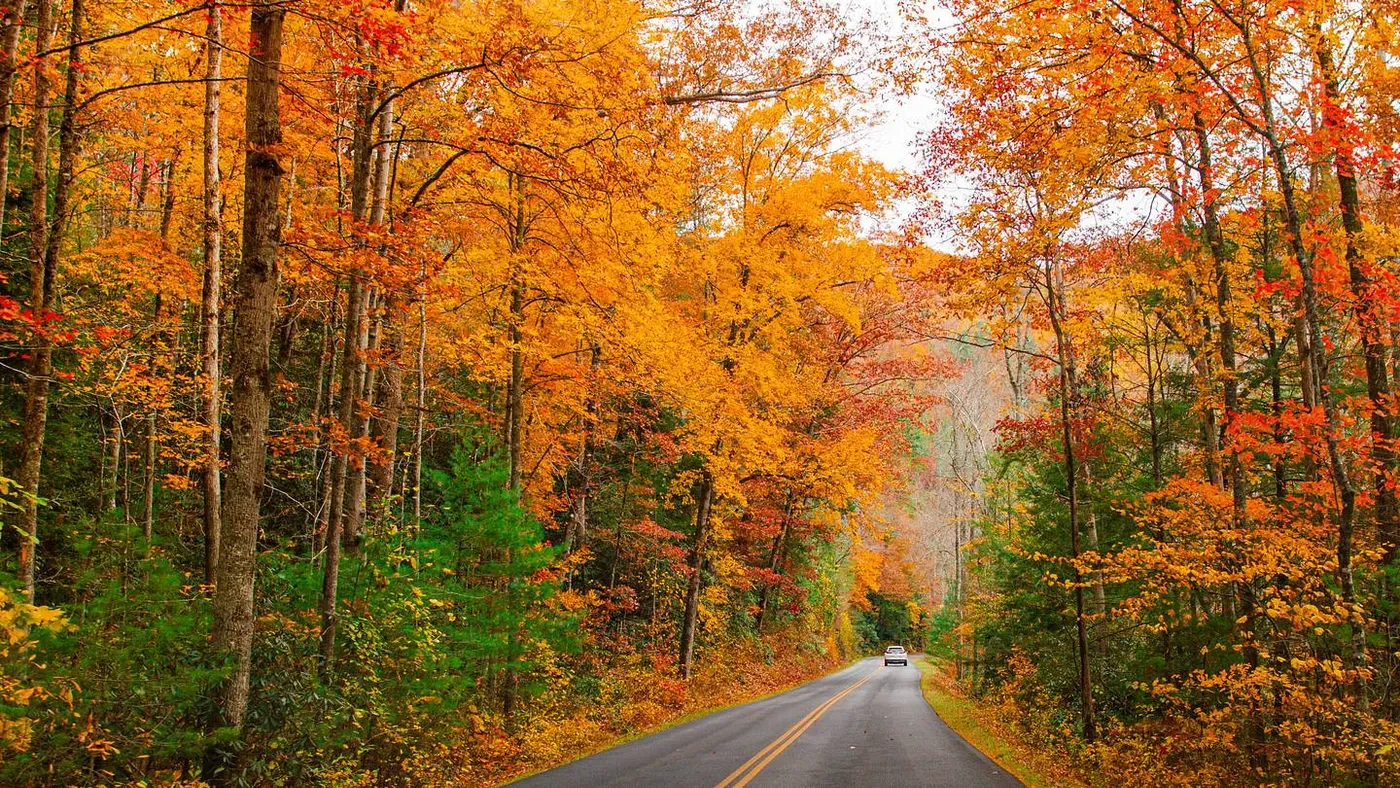
As the seasons change and autumn arrives, deciduous trees prepare for the cold winter months by transforming their lush green canopies into vibrant displays of color.
The process begins in late September and continues through November, depending on the location, with trees gradually shedding their summer coats to reveal a kaleidoscope of colors including fiery reds, golden yellows, and deep purples.
While the stunning visual effect is undeniable, the scientific explanation behind it is more intricate than meets the eye. The transformation of leaves from green to colorful hues involves a complex interplay of factors that determine the final display.
The timing and intensity of this process are influenced by various environmental cues such as temperature, daylight hours, and soil moisture levels. These signals trigger a series of biochemical reactions within the tree that ultimately lead to the breakdown of chlorophyll, allowing other pigments to become visible.
In regions with distinct seasonal changes, trees adapt their color displays to suit local conditions, resulting in unique regional palettes and peak foliage periods.
The fading of green leaves in autumn is not a transformation into vibrant hues, but rather the exposure of previously hidden pigments due to a decrease in chlorophyll production. This process occurs as temperatures drop and daylight hours shorten, allowing other colors to shine through. The underlying shades are revealed much like sun-bleached hair that fades with time.
The absence of chlorophyll allows yellow and orange pigments to become visible, but it's not that the leaves themselves turn these colors. Instead, two types of carotenoids, xanthophylls and carotenes, come into view as chlorophyll production slows down. Xanthophylls are responsible for the yellow color, while carotenes bring about the vibrant orange shades.
Carotenoids play a crucial role in this process, and they're not limited to autumn foliage. Carotenes, for instance, give carrots their bright orange color. This similarity highlights the commonality of these pigments across different plant species and their environments. The presence of carotenoids is essential for photosynthesis, but they also contribute to the visual palette of leaves.
The breakdown of chlorophyll production in trees is a seasonal phenomenon that's not tied to human timekeeping systems like daylight saving time. Despite this, trees seem to have an internal clock that prompts the reduction of chlorophyll levels, allowing other pigments to emerge and take center stage. This process unfolds differently across various regions due to local climate conditions.
The interplay between light exposure, temperature, and pigment production gives rise to diverse regional palettes during autumn. In areas with distinct seasonal changes, trees adapt their color displays to suit local conditions, resulting in unique regional peak foliage periods.
The breakdown of chlorophyll production in leaves is triggered by an internal clock that prompts trees to shed their green pigment, allowing other colors to emerge.
Chlorophyll's disappearance reveals two types of carotenoids: xanthophylls, which produce a yellow color, and carotenes, responsible for the orange hue found in carrots. These pigments have been present in leaves all along but were overshadowed by chlorophyll during the growing season.
The vibrant reds and purples that characterize autumn foliage are not always visible, as they only emerge when specific conditions are met. Anthocyanins, a type of pigment produced in response to sugar accumulation in leaves, contribute to these rich colors.
As temperatures drop and daylight hours shorten, trees begin to constrict the veins that carry sap in and out of their leaves. At the same time, photosynthesis generates glucose, which accumulates in the leaf and triggers anthocyanin production.
The acidity level of a tree's sap affects the final color produced by anthocyanins, resulting in either a scarlet or magenta hue depending on the specific conditions. This process is unique to autumn and contributes to the diverse range of colors seen during this time of year.
As temperatures drop and daylight hours shorten, trees prepare for the cold winter months ahead by slowing down their food-making process. This slowdown causes the veins that carry sap into and out of the leaf to constrict, affecting the flow of nutrients.
The reduction in nutrient circulation also impacts photosynthesis, which typically occurs during sunny fall days when trees are actively producing glucose. With less glucose being produced, sugars accumulate within the leaf cells, creating conditions ripe for the production of anthocyanins.
Anthocyanins are responsible for the red and purple hues seen in some deciduous trees during autumn. However, not all tree species can produce these deeper shades, with some only reaching yellow or gold due to their genetic makeup.
Deciduous trees like sugar maples, dogwoods, and sweetgums have a higher likelihood of displaying reddish-purple foliage thanks to their genetic predisposition. This is in contrast to most other deciduous trees that tend to turn yellow or gold as the seasons change.
As leaves near the end of their life cycle, they exhaust their stores of chlorophyll, carotenoids, and anthocyanins. The remaining compounds contribute to a dull brown coloration visible to the naked eye, driven by waste products known as tannins that are also found in red wine.
As autumn progresses, trees undergo a critical process to prepare for winter's chill. They form a thin layer of cells at the base of each stem, effectively sealing themselves off from the rest of the tree. This process, known as abscission, is a vital mechanism that allows the tree to conserve energy and nutrients during the harsh winter months.
The formation of this cell layer marks the beginning of the end for the leaves, which are gradually cut off from the tree's nutrient supply. As the leaves wither and die, they fall to the forest floor, where they decompose and contribute to the soil's fertility.
Facts based on reporting originally published by Mental Floss.
You may republish this story, in full or in part, if you credit News Central Site and link to it (licence CC BY 4.0). Photos are not included.