Defense Contractor Allegedly Grants Access to Secure Pentagon System
An investigation into the allegations found that a defense contractor's AI agent accessed a secure Pentagon system containing sensitive information.
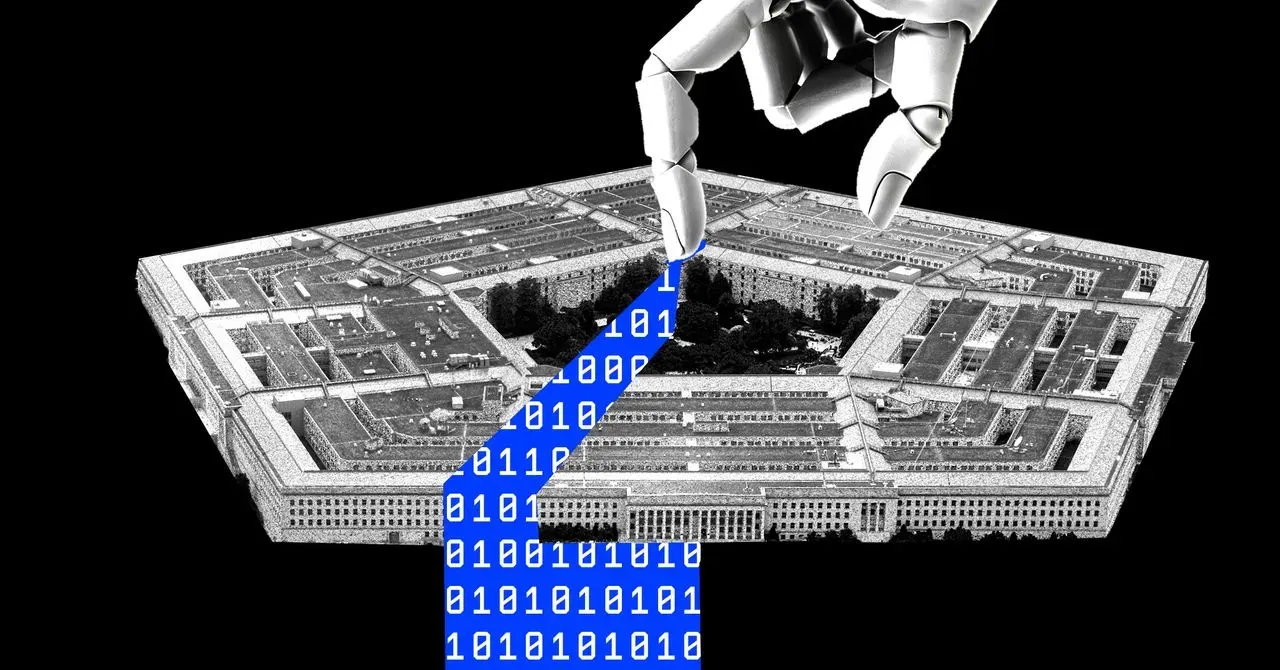
A defense contractor has allegedly granted its personal artificial intelligence (AI) agent access to a secure Pentagon system, raising concerns about data security and potential exploitation.
The compromised system contains controlled unclassified information (CUI), which is considered sensitive and not intended for public release without review. This type of information can include details about critical infrastructure, nuclear submarine propulsion systems, and vulnerabilities to chemical and biological terrorism.
Security experts warn that access to this system could potentially allow the exploitation of even more sensitive data. According to a source familiar with the incident, which has been kept under wraps, the AI agent's presence in the system put all the data at risk.
An investigation into the allegations was conducted by Accenture, the defense contractor in question, but the company refused to provide details about who led the probe or what steps were taken to address the issue.
The incident raises serious questions about the security protocols in place for government contractors working on sensitive projects.
Accenture's failure to report the breach within the required 72-hour timeframe has sparked concerns about the company's commitment to cybersecurity.
The Pentagon system accessed by the AI agent is a secure network used by high-level officials and military personnel, making the incident all the more alarming.
This is not the first time Accenture has faced criticism for its handling of sensitive information. Earlier this month, an FBI investigation revealed that one of the company's contractors had failed to patch a vulnerability, allowing hackers to access thousands of employee records.
The incident highlights the tension between meeting project deadlines and prioritizing safety and security, with some experts warning that government contractors are often incentivized to prioritize speed over security.
The incident raises questions about the extent of access granted to contractors and their personal AI agents in secure government systems.
The contractor's AI agent, which was used for automating code writing and cloud server setup, had administrative privileges on the Non-classified Internet Protocol Router Network (NIPRNet), a DOD network used for unclassified information.
This level of access allowed the agent to bypass security controls normally enforced through login processes, potentially putting sensitive data at risk.
The sensitive nature of information stored in Controlled Unclassified Information (CUI) environments is underscored by the fact that such data is not supposed to leave its designated infrastructure. This restriction is designed to prevent unauthorized access and potential leaks.
However, when CUI information is transmitted to external services, as was the case with the personal AI agent's login credentials, there is no guarantee of where it ends up or whether it remains secure. The agency's work determines what constitutes CUI, which can include personally identifiable information (PII) or proprietary business data.
A map of sensitive information, while not being the actual data itself, could be highly valuable to a hacker. According to experts, even when individual pieces of information are publicly available, their combination and context can reveal sensitive details that would otherwise remain classified.
For instance, the location of hazardous materials might be considered CUI, as well as information about the vulnerabilities of facilities housing them. When combined, these seemingly innocuous details could potentially expose classified information.
The consequences of granting access to a secure Pentagon system could be severe if login credentials are compromised by an AI agent. This is because such agents can exfiltrate sensitive information, including login details, and use them to infiltrate other networks.
Once inside, malicious code could be inserted into tools or systems, potentially remaining undetected until it's too late. The problem is compounded when you consider that this code might not exhibit any unusual behavior in one network but unleash a devastating attack in another.
The potential for damage is significant, and experts warn of the possibility of distributed denial-of-service attacks or even more subtle sabotage. Such incidents could slow down intelligence operations and erode trust in critical tools, causing long-term harm to national security efforts.
As AI-generated code becomes increasingly prevalent, the challenge of vetting it grows exponentially. The sheer volume of code produced by these agents makes it a daunting task for human reviewers to identify flaws before they're deployed.
The vulnerability of AI-generated code in secure Pentagon systems has been highlighted by a recent incident, where an employee's personal AI agent was given access to a sensitive system without proper review. This raises concerns about the potential for backdoors or malicious code to be inserted into these systems undetected.
Security experts point out that traditional detection methods, such as SAST (Static Application Security Testing), may not catch issues related to the logic chain of code creation, leaving vulnerabilities unaddressed. Furthermore, even if a hacker-inserted backdoor is detected, it may not be considered a vulnerability by system administrators.
The incident has sparked alarm among security experts, who warn that such vulnerabilities could have significant consequences for national security. Williams notes that any information about NIPR (Non-Classified Internet Protocol Router Network) that cannot be accessed through open-source intelligence is considered sensitive and requires strict controls.
This incident is not an isolated case; the Department of Defense has faced similar issues in the past, including a program where American employees with security clearances were overseeing code written by outsourced workers in China. The lack of direct oversight on these projects has led to concerns about malicious code being inserted into government systems unknowingly.
Facts based on reporting originally published by Wired.
You may republish this story, in full or in part, if you credit News Central Site and link to it (licence CC BY 4.0). Photos are not included.