Decline in prized salmon populations affects Alaskan fishing communities
A 64-year-old charter boat operator, Bob Candopoulos, attributes the decline to industrial vessels targeting pollock in Alaska's waters.
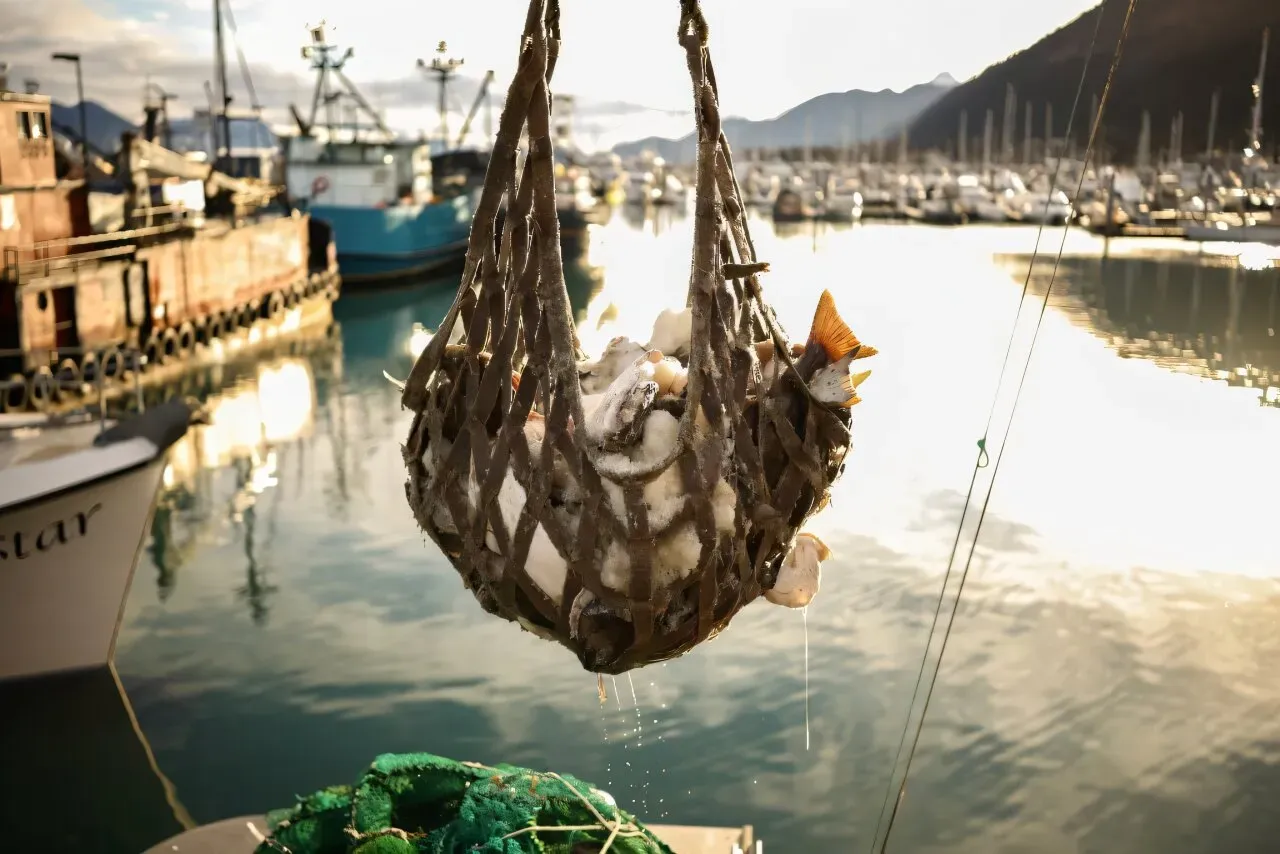
A decline in prized salmon populations has become a pressing concern for Alaska's fishing communities. Fishermen like Bob Candopoulos are struggling to maintain their livelihoods as king salmon numbers dwindle. This is evident from Candopoulos' own experiences on the water.
Candopoulos, who has operated a charter boat business for years, recalls a time when it was possible to catch limits every day just ten years ago. However, now his boats often return empty-handed or with minimal catches. The 64-year-old fisherman attributes this decline to the impact of massive industrial vessels that scour the Gulf of Alaska and the Bering Sea.
These trawlers target pollock for use in products such as breaded fish sticks and imitation crab products worldwide. However, their massive nets also inadvertently catch thousands of tons of non-pollock fish each year. The sheer scale of these vessels is staggering, their nets are as wide as four commercial airliners.
The impact on king salmon populations has been significant. With fewer fish to hunt, local fishermen like Candopoulos are left struggling to make ends meet.
The issue of bycatch in Alaskan waters is a pressing concern for local fishermen and conservationists alike. When salmon are caught as bycatch, they often die in the ocean instead of returning to their native rivers to spawn.
Years of restricted fishing practices among Indigenous communities along the Yukon and Kuskokwim rivers have failed to address this problem effectively. The lack of regulations has resulted in a significant amount of waste, with many salmon being killed inadvertently by trawlers.
Local fishermen are frustrated that the economic benefits of the pollock fishing industry often flow outside Alaska's borders, while the state bears the environmental costs. In Seattle, Washington state, most of the trawlers are based and roughly two-thirds of the industry's output is generated there.
The economic impact of declining salmon populations is a pressing concern for Alaska's communities.
Towns heavily reliant on the fishing industry are particularly vulnerable to the decline in fish processing activities.
If those processors weren't bringing in that revenue, they might struggle to stay open, said Miller, highlighting the precarious financial situation facing local businesses.
The fate of these processors has become an election issue in Alaska's Senate campaign.
Climate change is a major factor behind the decline of Chinook salmon populations, with research pointing to its role in rendering waters inhospitable for the fish's prey in the Bering Sea.
A study by NOAA found that marine heat waves have led to a significant decrease in the number of Chinook salmon reaching their breeding grounds.
Brett Watson, an economist at the University of Alaska Anchorage, expressed reservations about implementing a trawling ban as a solution to the problem.
He noted that such a measure could have unclear effects on salmon runs and would be difficult to implement effectively.
Commercial fishermen like Ian Raab are concerned that Alaska's prized salmon populations are declining due to a lack of attention from politicians.
While oil production generates revenue for residents in the form of annual dividends, the impacts of climate change on salmon runs remain largely unaddressed by lawmakers. Instead, they focus on regulating trawlers. This oversight is puzzling given the importance of the fishing industry to Alaska's economy.
The Trump administration's budget cuts to NOAA have further exacerbated concerns among fishermen like Raab. Reduced research and less reliable marine weather forecasts make it more challenging for them to manage fish stocks effectively.
Facts based on reporting originally published by Phys.org.
You may republish this story, in full or in part, if you credit News Central Site and link to it (licence CC BY 4.0). Photos are not included.