Commercial Kitchens Exceed Health Guidelines for Air Pollution and Heat
A new study has found that commercial kitchen environments often exceed recommended health guidelines for air pollution and heat, posing serious risks to employees.
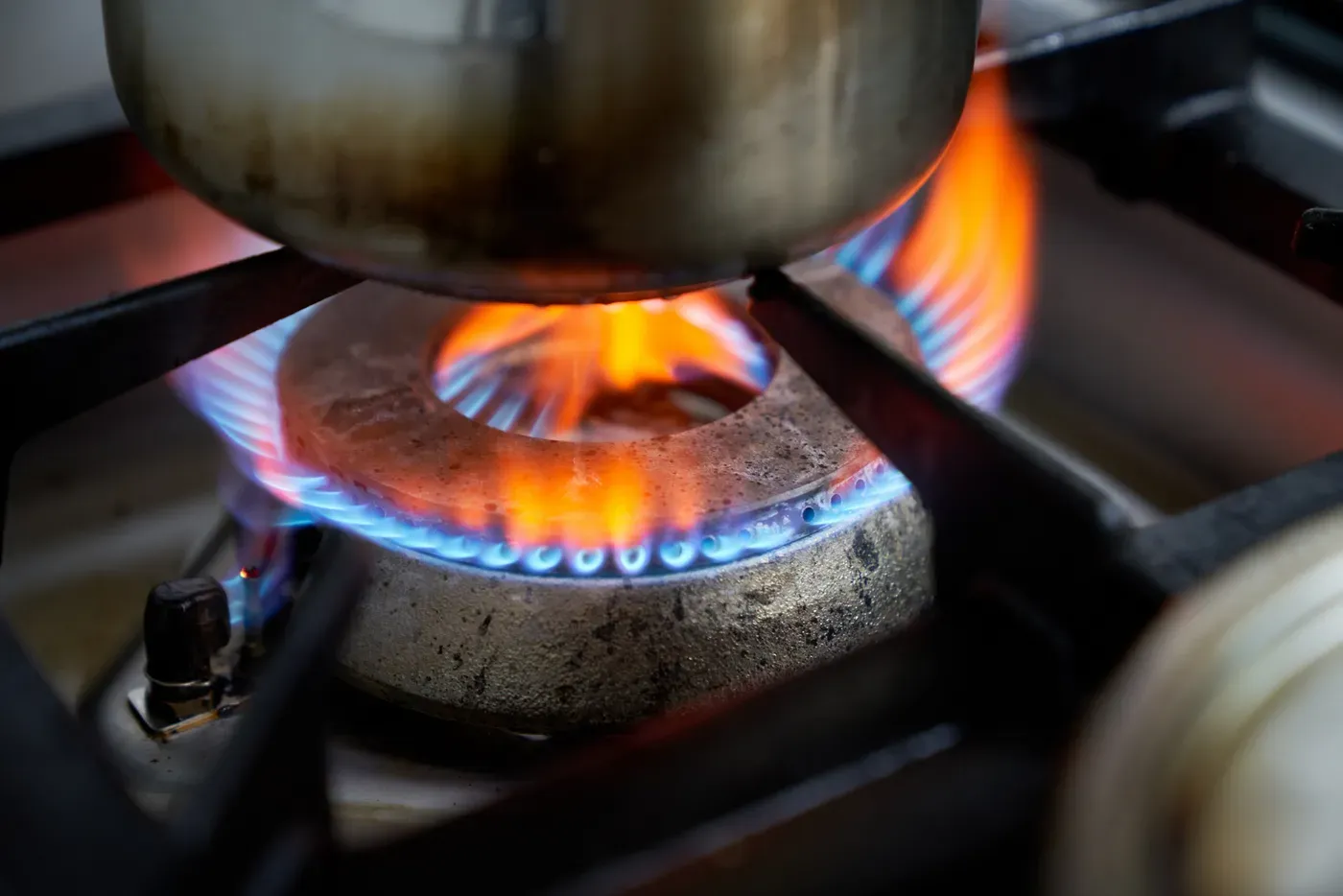
A new study has shed light on the air pollution and heat levels faced by workers in commercial kitchen environments, particularly those using gas and propane appliances. The research found that these conditions often exceed recommended health guidelines, posing serious risks to employees.
The food service industry employs a significant number of Americans, with over 15.7 million people working in this sector according to the National Restaurant Association. These individuals are now facing growing concerns about their workplace environment, as the study's findings reveal alarming levels of air pollution and heat exposure.
A team of researchers from various institutions collaborated on the study, including the Stanford Doerr School of Sustainability and the New York University Grossman School of Medicine. They worked in partnership with chef Christopher Galarza to investigate the air quality and heat levels in commercial kitchens using different types of appliances.
The study is part of a larger initiative focused on uncovering the health risks associated with methane sources, as well as mitigating their impact on public health and the environment. This research aims to provide valuable insights that can inform policy decisions and improve workplace safety for employees working in commercial kitchens.
Researchers collected data from 21 gas kitchens, three propane kitchens, and three all-electric kitchens across California, New York, and Pennsylvania, measuring air temperature and pollutants such as methane, nitrogen dioxide, carbon monoxide, carbon dioxide, and benzene.
Kitchens that rely on gas or propane appliances can pose significant health risks for staff members if proper ventilation is not maintained. According to Drew Michanowicz, a principal scientist at PSE Healthy Energy, employees often work in environments where pollutants build up and cause adverse health effects.
Researchers conducting the study found that in kitchens with gas or propane appliances, at least one pollutant exposure guideline was exceeded during cooking hours. This indicates that indoor air pollution is a significant concern for workers in these establishments.
Gas kitchens in particular seem to be major contributors to indoor air pollution. Approximately 70% of them surpassed the US Environmental Protection Agency's 1-hour outdoor air standard for nitrogen dioxide, which is used as a proxy because there is no comparable indoor standard in the US.
Nitrogen dioxide levels were also found to exceed guidelines set by other reputable health organizations. For instance, about 170 cumulative hours were recorded across gas and propane kitchens where nitrogen dioxide concentrations exceeded the World Health Organization's hour-averaged exposure recommendation, which roughly equates to the EPA's outdoor standard for the general population.
In addition to nitrogen dioxide, another pollutant of concern is carbon monoxide, which was found to exceed California's 1-hour exposure guidelines in about three gas kitchens. Prolonged exposure to this toxic gas can cause a range of symptoms, from mild headaches and dizziness to more severe effects such as passing out or even death.
Furthermore, benzene levels were also found to be problematic in five gas kitchens, surpassing California's 1-hour exposure guidelines. Benzene is a known carcinogen that has been linked to an increased risk of leukemia and other blood cell cancers. These findings are particularly worrying given the long-term exposure that kitchen staff may experience.
Interestingly, none of the all-electric kitchens monitored during cooking hours exceeded health guidelines for pollution exposure. This stark contrast highlights the potential benefits of transitioning away from gas-fired appliances in commercial settings.
When gas appliance pilot lights remain lit and ventilation is turned off overnight, cleaning crews and early-arriving staff are at risk of exposure to pollutants. The study found that 71% of gas kitchens with overnight monitoring recorded higher levels of nitrogen dioxide, carbon monoxide, carbon dioxide, methane, and benzene during these hours compared to service times.
High concentrations of methane can have serious health implications, including displacing oxygen in the air, which can cause fatigue, rapid breathing, vomiting, collapse, convulsions, organ damage, and even death. Given that commercial gas appliances are also used in hospitals, schools, and other buildings, the potential health risks extend far beyond restaurant kitchens.
The study analyzed temperature data from both all-electric and gas kitchens, revealing a stark contrast in heat levels.
While none of the all-electric kitchens exceeded pollutant guidelines overnight, nearly two-thirds of the gas kitchens surveyed did exceed 90 degrees Fahrenheit when it came to heat health guidelines.
This discrepancy persisted even on cooler days, with 10 out of 13 gas kitchens reaching temperatures above 90 degrees Fahrenheit when the outside temperature was below 75 degrees Fahrenheit.
The study also used wearable temperature monitors to track the average temperature experienced by chefs during a 5-hour cooking session, which averaged 92 degrees Fahrenheit and peaked at 106 degrees Fahrenheit.
Researchers noted that occupational health guidelines for workplaces are often higher than those for the general population due to considerations of industry cost and technical feasibility.
The study's findings are limited by its reliance on voluntary participation, which may introduce selection bias due to the involvement of professional partnerships. This could skew the results towards kitchens with better working conditions, rather than providing a representative sample of commercial cooking facilities.
To account for different worker roles in the kitchen, sampling locations were chosen strategically. However, this approach still has limitations, as pollutant measurements may vary depending on factors such as movement, health, posture, and proximity to emission sources during each measurement cycle.
The study's scope is further restricted by its focus on only three states, which may not accurately reflect conditions in the broader US commercial cooking industry. Additionally, sampling locations were not continuously monitored; instead, they were sampled for short periods of 5-12 minutes per cycle.
Particulate matter and WBGT (a measure of occupational heat stress) were not included in the study's pollutant measurements. This omission means that a more comprehensive understanding of the hazards faced by commercial kitchen workers remains elusive.
The study suggests that maintaining proper ventilation systems is crucial for mitigating pollution and excess heat in commercial kitchens. However, even with functioning ventilation, direct exposure to pollution and heat can still occur before pollutants reach the system.
The study's findings have sparked discussions about the need for better ventilation systems in commercial kitchens to reduce exposure to pollutants.
Michanowicz highlighted additional benefits of improved ventilation, including increased worker productivity due to more comfortable kitchen temperatures and reduced cleaning times.
During off-hours, when pilot lights are still on, it is essential that ventilation systems be turned on for workers who arrive early in the morning, as pollution will have built up overnight.
To reduce gas combustion pollution at home, Kashtan recommends eliminating the source by switching to electric radiant or induction stoves if possible.
Facts based on reporting originally published by CNET.
You may republish this story, in full or in part, if you credit News Central Site and link to it (licence CC BY 4.0). Photos are not included.