Atari 2600 Wireless Controller Released in 1982
The Cynex Game Mate 2 is widely regarded as one of the first wireless console-compatible gamepads ever made.
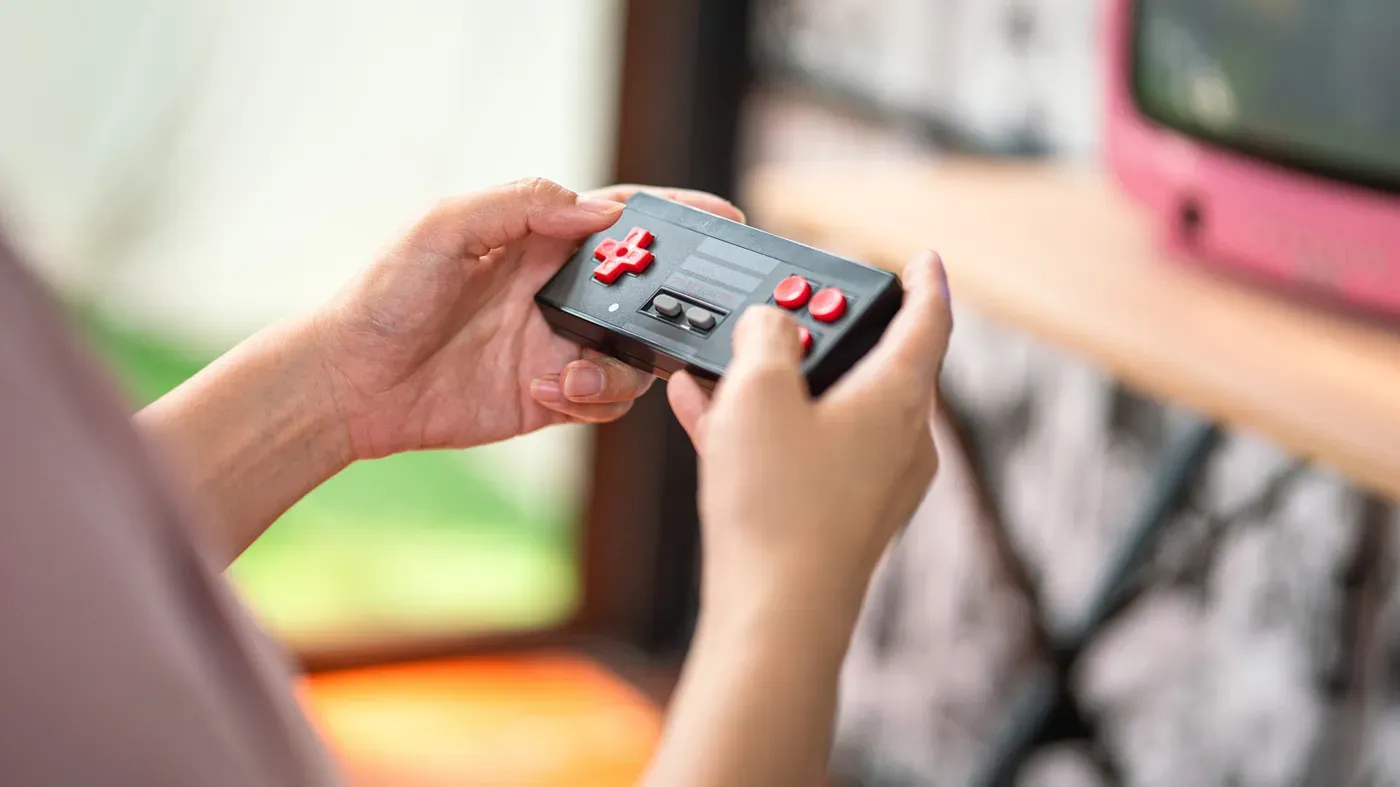
Wireless gaming controllers have been around for longer than you might think. The concept of a cordless gamepad has its roots in the early days of home console gaming. One notable example is the Cynex Game Mate 2, which was released around 1982 as an accessory for the Atari 2600.
The Cynex Game Mate 2 is widely regarded as one of the first wireless console-compatible gamepads ever made. Its release predates many people currently working in the gaming industry. Despite its age, this pioneering device marked the beginning of a new era in gaming technology.
Early attempts at creating wireless controllers were often met with limited success and high latency issues. However, these early innovations laid the groundwork for future developments. The Cynex Game Mate 2's design was likely influenced by earlier experiments with wireless peripherals.
The evolution of wireless gaming controllers has been a gradual one, with significant improvements made over the years. As technology advanced, so did the capabilities and accuracy of cordless gamepads. This progress paved the way for modern wireless controllers that are now an integral part of console gaming.
The Game Mate 2 was a pioneering wireless gaming controller that utilized radio frequencies to offer gamers more freedom than its infrared counterparts. This innovative approach allowed for greater flexibility and range, as users didn't need to point the controller directly at the console for it to be recognized.
Unlike early infrared pads, which were prone to losing signal if objects obstructed their line of sight, the Game Mate 2's RF technology performed well even in cluttered environments. Its reported range of up to 20 feet was a significant improvement over its predecessors, providing gamers with a more seamless experience.
However, despite these advancements, the Game Mate 2 had some notable drawbacks. It was a bulky device, consisting of a standard Atari 2600 controller mounted on top of a heavy base. This made it cumbersome to use and also contributed to its relatively short battery life, which required frequent recharging.
When Atari took over distribution of the Game Mate 2, it was rebranded as the CX42 Remote Control Wireless Joystick. This change in branding didn't seem to have any significant impact on the device's performance or functionality.
The GameCube's release in 2002 marked an important milestone for wireless gaming controllers, as it introduced the WaveBird, a mainstream wireless pad that didn't compromise on performance or usability. The WaveBird offered gamers greater convenience and flexibility, paving the way for future innovations in wireless gaming technology.
The WaveBird controller was a bulky but iconic device that added serious girth to the GameCube's standard controller. It required matching a channel with sliders on each unit, which connected via an equally chunky receiver plugged into the console.
This wireless gamepad marked the first time radio 2.4G frequency technology was used in a controller, allowing for a range of around 20 feet at minimum. The freedom from being tethered to a console was a significant innovation, enabling players to move around while gaming without restriction.
The trade-off for this added flexibility was the absence of rumble support, which was sacrificed to maximize battery life. As a result, the WaveBird could run for up to 100 hours on two AA batteries, providing extended gameplay sessions.
Despite these limitations, the WaveBird controller paved the way for future wireless gamepads from leading manufacturers such as Sony and Microsoft. Its impact can be seen in the numerous wireless controllers that have been released over the past quarter-century, offering gamers greater convenience and flexibility.
The introduction of wireless gaming controllers has had a profound impact on the industry, offering gamers greater convenience and flexibility in their playtime.
Before the PS3 era, it's easy to assume that Sony was at the forefront of wireless controller technology, given its dominance in the console market since 1995. However, this isn't entirely accurate, as Sony didn't release its first wireless peripheral until the PS3 era.
The Sixaxis controller, released in 2006, is often cited as one of the most infamous controllers in gaming history. Its decision to drop rumble functionality was initially met with skepticism and criticism from gamers, who felt that this feature was essential for an immersive gaming experience.
Phil Harrison's statement at the time, attributing the omission of rumble to it being a "last-generation feature," was seen as bold but also somewhat disingenuous. As President of Sony Computer Entertainment Worldwide Studios, he likely knew better than to dismiss the importance of rumble in gaming.
The backlash against the Sixaxis controller ultimately led to its downfall, with titles like Lair and Resistance: Fall of Man failing to adequately utilize its motion controls. It wasn't until later that Sony released the DualShock 3, which brought back the rumble functionality that gamers had grown accustomed to.
Facts based on reporting originally published by Engadget.
You may republish this story, in full or in part, if you credit News Central Site and link to it (licence CC BY 4.0). Photos are not included.