Cells find key molecular switch for efficient recycling of cellular components
Researchers at the University of Basel have discovered a crucial process controlling the loading of recyclable cargo into transport vesicles.
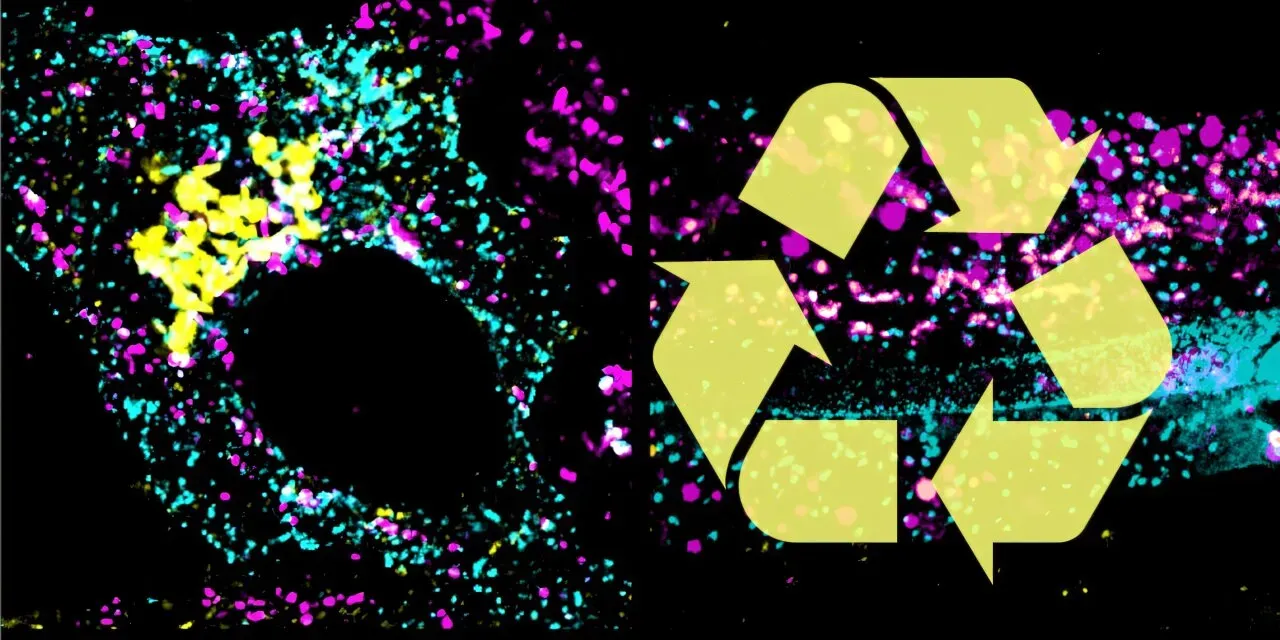
Cells are constantly recycling proteins and other cellular components to maintain their internal balance. However, it's a complex task ensuring that the right cargo ends up in the right recycling vesicle. Researchers at the University of Basel have identified a key molecular switch controlling this process.
A team led by professor Anne Spang has discovered that the small protein ARF-1 plays a crucial role in loading recyclable cargo into transport vesicles and returning them to the cell's surface. This efficient system is essential for cells to maintain their internal balance and function properly.
Cells have developed an intricate sorting system to recycle proteins and other components taken up from the cell surface. These proteins are first delivered to endosomes, which serve as the cell's sorting stations. Endosomes then decide the fate of these proteins: some are sent for degradation while others are recycled back to the cell membrane.
The team's earlier work revealed a protein machinery called FERARI that plays a central role in this recycling process. Recycling vesicles can dock onto sorting endosomes, partially fuse with them, and detach again without losing their contents, a process known as "kiss-and-run."
The sorting process for proteins being loaded into recycling vesicles is a complex one, and researchers have been trying to understand how cells decide which proteins make it inside. A key piece of this puzzle has now been identified by scientists who have found that a small regulatory protein called ARF-1 plays a crucial role in controlling the sorting process.
ARF-1 operates as a molecular switch, constantly cycling between an active and inactive state. This on-off cycle is essential for proper recycling to occur, as researchers discovered when they observed what happened when ARF-1 remained permanently switched on or off - recycling was disrupted. The constant switching ensures that proteins are loaded into the recycling vesicles efficiently.
The mechanism by which ARF-1 controls sorting involves its interaction with another protein called AP-1. When ARF-1 is active, AP-1 can bind to the cargo being transported, but when ARF-1 is inactivated, AP-1 releases the cargo, allowing it to enter the recycling vesicle and be captured again. This process directly links the on-and-off cycle of ARF-1 with the transfer of cargo.
The discovery provides new insights into how cells manage their waste and recycle proteins. The study's findings have significant implications for understanding cellular processes, particularly in relation to diseases that involve protein misfolding or aggregation.
Cellular recycling involves multiple rounds of cargo exchange to ensure accurate sorting, rather than a single step process.
This iterative approach allows cells to correct errors and refine their cargo sorting over several cycles, much like a recycling facility would check and re-sort materials before processing them further.
The study found that disrupting the activity of ARF-1, a key protein involved in this process, slowed down cellular recycling, while both under- and over-expression of ARF-1 impaired cargo transport.
This mechanism appears to be conserved across different species, including yeast, mammalian cells, and even the roundworm C. elegans, indicating that basic principles of cellular recycling have been reused and adapted in various contexts throughout evolution.
The cell's recycling process is crucial for its survival, allowing it to reuse receptors and transport proteins instead of constantly producing them anew.
This efficient system involves a complex network of transport pathways, which have been linked to various diseases when disrupted. Research has shed light on how certain molecular components work together to ensure the right cargo reaches its destination.
The discovery highlights the intricate coordination between FERARI endosomal recycling hubs and the ARF-1 protein, with AP-1 playing a supporting role in this process.
Facts based on reporting originally published by Phys.org.
You may republish this story, in full or in part, if you credit News Central Site and link to it (licence CC BY 4.0). Photos are not included.