Camp Century Climate Study Reveals Warmer Summers in Ancient Greenland
A previously unknown chapter in Greenland's climate history has been unearthed by researchers studying ancient sediment samples from a former U.S. military base, revealing warmer summers approximately 416,000 years ago.
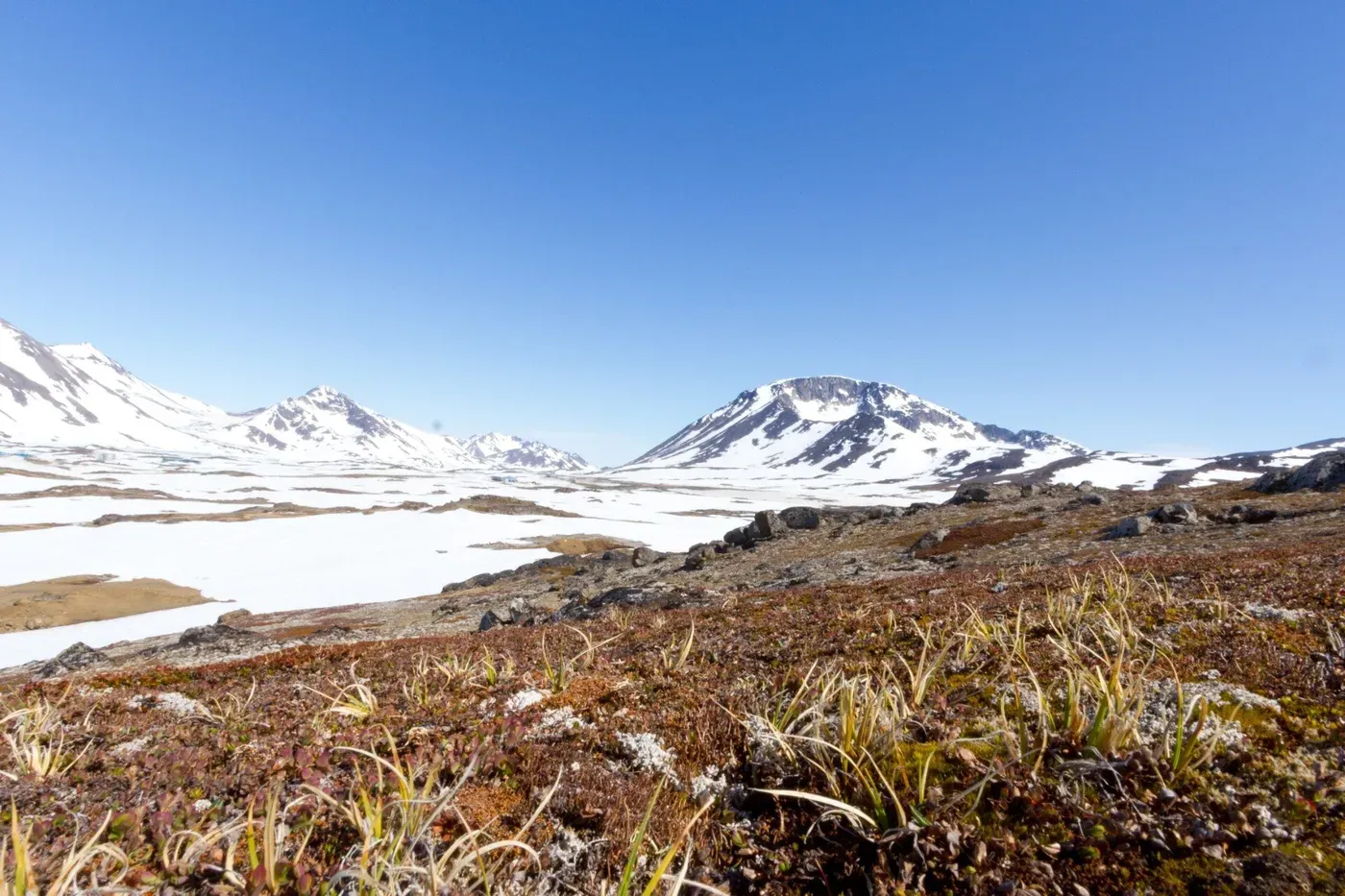
A previously unknown chapter in Greenland's climate history has been unearthed by researchers studying ancient sediment samples from a former U.S. military base. The site, known as Camp Century, was once home to a secret Cold War operation aimed at concealing nuclear missiles beneath the ice sheet.
According to a new study led by the University at Buffalo, the area around Camp Century experienced warmer summers during an ice-free period that occurred approximately 416,000 years ago. The researchers found that summer temperatures were significantly higher than they are today, with temperatures averaging 4.7 degrees Celsius (8.5 degrees Fahrenheit) above modern levels.
The discovery is significant because it suggests that the Greenland Ice Sheet would have had to retreat by more than 60 miles (97 kilometers) from its current edge for the site to be ice-free. This finding has important implications for our understanding of past climate conditions and how they compare to those of today.
The researchers' findings also highlight the complex relationship between temperature and ice sheet coverage, with moderately warmer temperatures coinciding with substantial retreats of the ice sheet.
The study's findings come as scientists project significant warming across the Arctic region in the coming decades. According to the Intergovernmental Panel on Climate Change (IPCC), average annual Arctic temperatures are expected to rise by anywhere from 3.3 to 10 degrees Celsius by the end of the century, depending on emissions.
The researchers' work aims to provide a better understanding of how ice sheets respond to sustained warming and what may be possible in the future. By studying the sediment samples pulled up from beneath the ice sheet during the failed Project Iceworm, they can gain valuable insights into ancient climates at Camp Century.
The sediment has revealed that the area was once ice-free approximately 416,000 years ago, when it was last exposed to sunlight. This new information is crucial for understanding the region's climate history and how it may respond to future warming.
The researchers have used the sediment samples to reconstruct summer temperatures at Camp Century during this ancient warm period. It appears that this is the first quantitative estimate of land-based summer temperatures in Greenland during this time, which has proven challenging to obtain due to subsequent erosion by advancing ice sheets.
Researchers analyzed fatty molecules produced by bacteria in sediment samples from Greenland's Camp Century, a Cold War-era research base.
These molecules change type and proportion depending on temperature, allowing scientists to estimate past temperatures by comparing them with similar molecules found in modern Arctic lakes.
The team was surprised by their findings, which revealed that Greenland experienced warm summers around 5,000 to 10,000 years ago, following the last ice age, yet Camp Century remained under ice at this time.
This discovery suggests that temperature duration is just as important as magnitude when assessing climate impact, with prolonged warming potentially giving ice sheets more time to melt.
The study's findings should not be seen as reassuring, according to experts, who emphasize that current human-caused warming exceeds that of the warmer period 400,000 years ago and may persist for hundreds or thousands of years.
The sediment samples from Greenland's Cold War base have been a part of the University at Buffalo's (UB) history since 1975, when they were first brought to the university by Chester Langway.
These samples remained in UB's Central Ice Core Storage Facility and Information Exchange until Langway's retirement in the mid-1990s. For over two decades, they lay largely forgotten, eventually making their way to the University of Copenhagen in Denmark.
The sediment samples only recently regained attention due to a chance freezer cleanout in 2018. Since then, researchers have been studying them, with Thomas from UB and her collaborators from the University of Vermont working closely together on this project.
Thomas notes that interpreting the results was particularly challenging due to changes in land elevation over time, which impact temperature comparisons across different periods. This analysis took years to complete, much like the journey these sediment samples undertook before reaching their current destination.
The study of sediment samples from a Cold War-era base in northwestern Greenland has uncovered evidence of warmer summers during an ancient ice-free period. The analysis revealed that the climate conditions during Marine Isotope Stage 11 were remarkably similar to those experienced during the current Holocene era.
This similarity suggests that the region's summer temperatures may have been more stable and less variable than previously thought.
Facts based on reporting originally published by Phys.org.
You may republish this story, in full or in part, if you credit News Central Site and link to it (licence CC BY 4.0). Photos are not included.