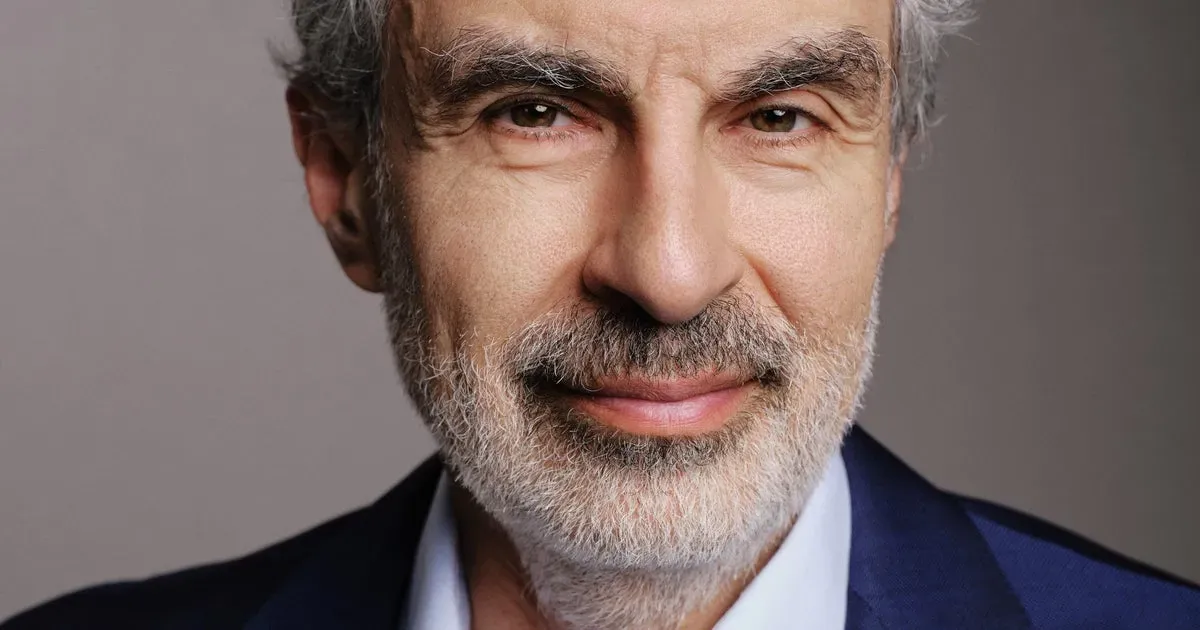
Artificial Intelligence Predictions from Former OpenAI Researcher
Leaked investor letter reveals Leopold Aschenbrenner's bold predictions for various industries' future transformations due to AI.

Leaked investor letter reveals a former OpenAI researcher's bold predictions for the future of various industries.
The letter, penned by Leopold Aschenbrenner in 2024, outlines his vision for how artificial intelligence will disrupt and transform several key sectors. According to Aschenbrenner, AI is set to revolutionize the economy at an unprecedented pace, leaving many experts in its wake. He argues that this rapid transformation will have far-reaching consequences across various industries.
Art collectors may be particularly pleased with Aschenbrenner's prediction that the value of Renaissance paintings and other art pieces is poised for a significant surge. This forecast comes as part of a broader assertion that AI will render traditional assets like gold obsolete, making way for new forms of wealth creation.
Aschenbrenner's predictions also extend to the tech sector, where he foresees Nvidia experiencing a decline while Anthropic rises in prominence. Furthermore, Aschenbrenner anticipates that cities will lose their economic significance as industries shift towards remote locations driven by automation and robotics.
The author of this letter is Leopold Aschenbrenner, who once worked at OpenAI before going on to found the hedge fund Situational Awareness.
The letter from Leopold Aschenbrenner's hedge fund Situational Awareness has been making waves in financial circles, particularly after it was saved by Ken Griffin's Citadel at the last minute, losing a significant portion of its public equity portfolio in the process.
As Aschenbrenner navigates his company's comeback, he's made some bold predictions about the impact of AI on the economy. One area where he sees significant change is in the traditional safe-haven asset gold. For decades, investors have turned to gold during times of market uncertainty due to its perceived value and scarcity.
However, Aschenbrenner believes that this perception will soon be upended by advancements in asteroid mining, which he predicts will become more practical by the early 2030s. This would lead to a surge in the supply of cosmic gold, causing its price to plummet.
Aschenbrenner has also made predictions about the impact of AI on real estate values. He suggests that the existence of AI-powered robots will render location and quality irrelevant when it comes to valuing properties like skyscrapers.
Aschenbrenner's investor letter suggests that NVIDIA may not remain profitable due to advancements in AI technology. The existence of recursive self-improvement in AI models will enable them to design and build chips at a lower cost. This shift could render the engineering expertise currently held by NVIDIA obsolete.
The process by which AI models improve themselves is a key factor in Aschenbrenner's bearish prediction for NVIDIA's future profitability. He believes that AI models will eventually be able to design and build chips more cheaply, making NVIDIA's current business model unsustainable. This transformation will make the engineering expertise at NVIDIA equivalent to mathematicians.
Aschenbrenner has a vested interest in Anthropic, as his wife works there. Despite this, he remains bullish on the company, calling it a nexus of top AI talent with a more scalable product than OpenAI. He predicts that Anthropic's models will become even more efficient and intelligent, consuming less compute power while providing more intelligence.
Aschenbrenner believes that Anthropic could become the most profitable company in the world by EOY27 due to its optimized models and scalable product. This prediction is based on his analysis of the company's potential for growth and innovation in the field of AI.
Facts based on reporting originally published by Business Insider.
You may republish this story, in full or in part, if you credit News Central Site and link to it (licence CC BY 4.0). Photos are not included.