Austria Experiences One of Its Worst Droughts in History
Research published in Science journal suggests that global warming may not necessarily lead to increased water availability, as recent heat waves have been accompanied by decreased water resources.

Austria recently experienced one of its worst droughts in history, with rainfall falling short by a third from January to October 2026. As a result, river flows and groundwater levels plummeted. This severe water scarcity raises important questions about the relationship between global warming and water availability.
According to new research published in the journal Science, this intuitive connection may not be as straightforward as it seems. Led by Günter Blöschl from the Institute of Hydraulic Engineering and Water Resources Management at TU Wien, a team of researchers examined global trends in water resources and found a striking decline in 2023 and 2024.
These two years saw record-breaking heat waves worldwide, but despite this increased atmospheric moisture capacity, water availability actually decreased. "A warmer atmosphere can hold more water vapor," Blöschl explains, but that doesn't necessarily translate to more water being available for us.
The study's findings are based on an analysis of discharge measurements from 150 major river basins and satellite data from over 1.2 million lakes and reservoirs worldwide.
These datasets were used to reconstruct global water availability between 1991 and 2025 using hydrological models and machine learning methods, revealing a striking trend in recent years.
In 2023 and 2024, global river discharge was found to be approximately 5.7% below the long-term average, while the active water volume in lakes and reservoirs plummeted by as much as 9.5%.
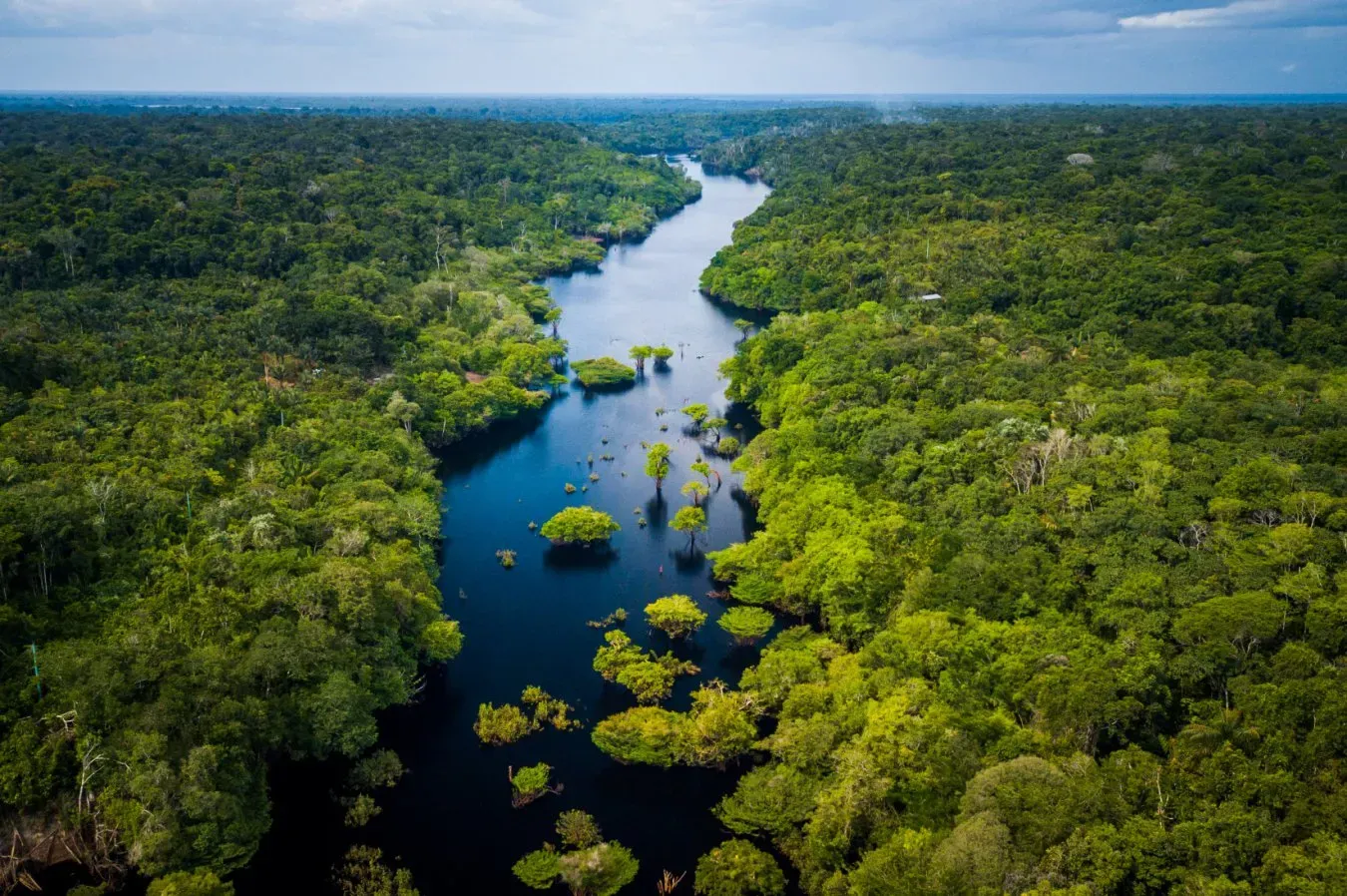
South America was particularly hard hit by this downturn, with regions typically accustomed to high rainfall levels experiencing severe drought.
The researchers attribute these extreme conditions to a rare combination of climate phenomena: a strong El Niño event in the Pacific and an unusually warm tropical North Atlantic, which disrupted atmospheric circulation patterns and drew moisture away from South America.
The extreme drought and heat that struck Lago Tefé in the Brazilian Amazon region last fall had a devastating impact on its ecosystem. More than 200 pink river dolphins perished due to water temperatures soaring above 40 degrees Celsius. This catastrophic event serves as a stark reminder of the complex consequences of climate change. The unusually high water temperature was likely exacerbated by the strong El Niño event in the Pacific.
A closer examination of the data reveals an interesting paradox: despite increased precipitation over oceans, land areas experienced a decrease in rainfall. From a global perspective, this may suggest that the water cycle is becoming more intense, but it also means that less water is available in rivers and lakes. This finding has significant implications for our understanding of climate change's impact on freshwater resources.
Research conducted by Blöschl and his team at TU Wien sheds further light on this phenomenon. A comprehensive study of over 3,200 time series of water levels and discharge in European rivers found that hydrological droughts manifest differently across various regions. While river flows are increasing in some areas of northern Europe, declining trends dominate central and southern Europe.
The disparities in regional responses to climate change are particularly evident when examining global water availability trends. Previous research by Blöschl has highlighted the growing issue of water scarcity, with a marked increase in shortages observed in the Southern Hemisphere.
Recent events in Austria have underscored the significance of these findings. According to GeoSphere Austria, the period from August 2025 to July 2026 was one of the driest on record, dating back to 1850. The prolonged drought continued into autumn, further exacerbating water scarcity concerns.
Austria's unique atmospheric mechanisms differ significantly from those found in the Amazon region, but the underlying message remains the same: water availability is not solely determined by precipitation.
The intricate dance between rainfall, evaporation, snow storage, and soil moisture plays a vital role in determining river flows in Austria, highlighting the importance of considering these processes together.
Research has shown that unusual combinations of climatic conditions can have a profound impact on water availability, emphasizing the need to take into account even the most unexpected weather patterns.
Global river flows had largely recovered to their long-term average by 2025, indicating that the extreme decline in 2023 and 2024 was not solely due to high temperatures but also to an exceptional interplay of various climatic phenomena.
As ongoing global warming continues to exacerbate extreme drought events, regions previously considered to have abundant water supplies may suddenly find themselves affected by severe drought.
As regions face severe droughts, it becomes increasingly clear that a warmer atmosphere does not automatically translate to more water in rivers. The changing climate is introducing new challenges for the water sector, which must adapt to potentially more pronounced fluctuations.
The need for better understanding and prediction of water availability has become pressing. We need to be able to anticipate when and where water will be available, says Blöschl. To achieve this, researchers are shifting their focus towards a comprehensive analysis of the entire water cycle, from oceans through the atmosphere to soil, rivers, and lakes.
A key aspect of this research will involve examining the complex interactions between different components of the water cycle. This knowledge is crucial for informing strategies in the water sector, including supply, agriculture, and energy generation.
Facts based on reporting originally published by Phys.org.
You may republish this story, in full or in part, if you credit News Central Site and link to it (licence CC BY 4.0). Photos are not included.