AI Assistants Failing Working Mothers' Needs
A growing number of working mothers are expressing a desire for an AI assistant that can anticipate their needs.
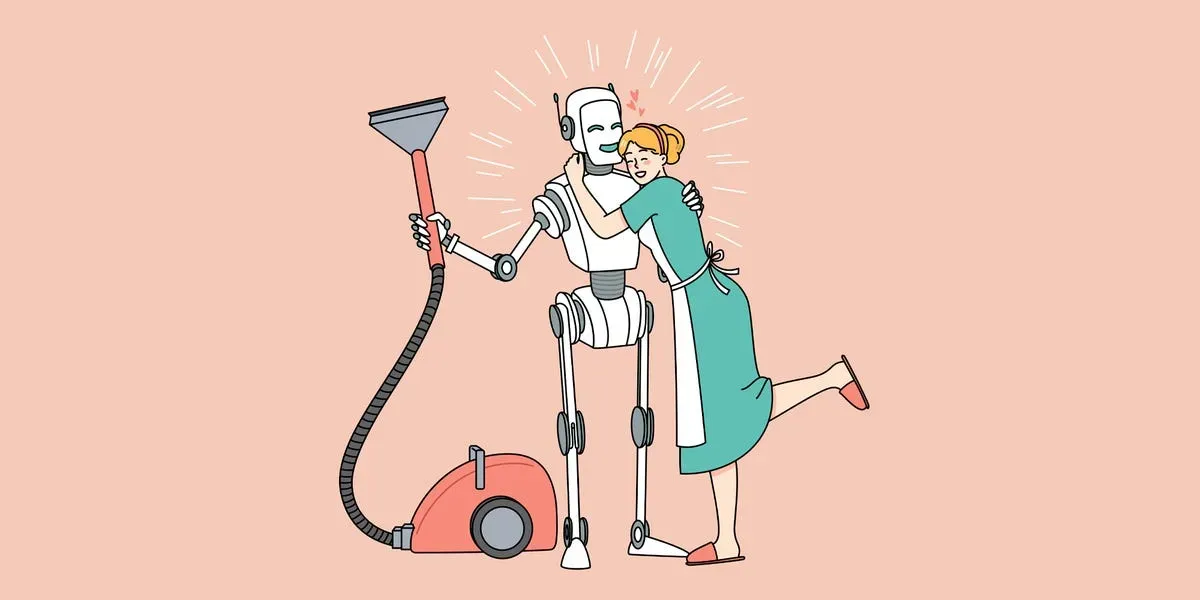
A growing number of working mothers are expressing their desire for an AI assistant that can anticipate their needs and take care of responsibilities in a more intuitive way.
The concept of an "AI wife has gained traction on social media after Sonia Baschez, a marketing entrepreneur and podcaster, went viral with her comment. According to Baschez, current AI agents are failing to meet the needs of users like herself who require a more proactive and anticipatory assistant.
While many people have dutiful partners who share household responsibilities, Baschez notes that even egalitarian husbands often fall short of providing the emotional support and mental load management that an ideal partner would. This is particularly challenging for working mothers who often juggle multiple roles simultaneously.
The idea of an AI wife being able to anticipate needs has sparked a conversation about what it means to have someone look after one's well-being in addition to completing tasks. It also raises questions about the current limitations of AI technology and whether it can be programmed to understand human emotions and relationships.
Baschez's comment has resonated with many working mothers who feel that their partners, no matter how supportive, cannot fully comprehend their responsibilities and emotional burdens.
The notion that AI agents can serve as personal assistants has been touted by some as a game-changer for busy professionals. However, this concept is often based on the assumption that these tools are capable of handling complex tasks, such as managing schedules and correspondence.
In reality, many people find that AI agents are most useful when it comes to more mundane tasks, like keeping track of paperwork and scheduling appointments related to family activities. For instance, a parent might use an AI agent to keep tabs on their child's school events or sports commitments.
While some may dream of having an AI assistant who can anticipate and meet their needs without requiring detailed instructions, this vision is often at odds with the current capabilities of these tools. At present, most AI agents require input and guidance from users in order to function effectively.
For many working parents, the idea of having an AI agent that can seamlessly manage family tasks is a tantalizing prospect, one that echoes Baschez's notion of wanting an AI wife who can anticipate and fulfill their needs without requiring constant input.
The reality of current AI capabilities falls short of expectations for many users. Despite its potential to save time on specific tasks, Muse still requires extensive human intervention to complete more complex assignments. This limitation is evident when comparing it to a traditional household chore distribution model, where one person often takes the lead in completing tasks.
Baschez's concept of an AI wife highlights the discrepancy between what users want and what current technology can deliver. Many women, in particular, envision an AI that can take on a significant workload, freeing up time for personal pursuits or simply allowing them to recharge. This is not about assigning domestic duties to AI, but rather about leveraging its capabilities to alleviate the burden of mundane tasks.
Baschez notes that her idea has resonated with many women who share similar expectations from AI assistants. While some individuals may misinterpret her metaphor as reinforcing outdated stereotypes, Baschez emphasizes that it's actually a reflection of the current state of human-AI relationships. She acknowledges that not all partnerships adhere to traditional gender roles, but rather seeks to highlight the practical implications of AI capabilities.
In discussions with Baschez, it becomes clear that the concept of an AI wife" is more about functionality than societal norms. Users want AI to assume a significant role in managing household tasks, allowing them to reclaim their time and energy. This expectation underscores the need for more advanced AI capabilities that can seamlessly integrate into daily life without requiring constant human oversight or intervention.
The concept of an AI agent as a personal assistant has been normalized to the point where people can easily imagine its utility in their daily lives.
However, some users are taking this idea a step further by treating their AI agents as surrogate partners or caregivers, raising interesting questions about the boundaries between technology and human relationships.
This phenomenon is evident in the way some individuals, such as dads, consider using AI to take on responsibilities traditionally associated with family members, like reading to a baby.
Facts based on reporting originally published by Business Insider.
You may republish this story, in full or in part, if you credit News Central Site and link to it (licence CC BY 4.0). Photos are not included.