Vice Chancellor J. Travis Laster certifies appeal to Delaware Supreme Court over Cloudflare decision
A recent decision from Delaware's Chancery Court has sparked controversy in corporate circles, with implications for businesses and investors alike.
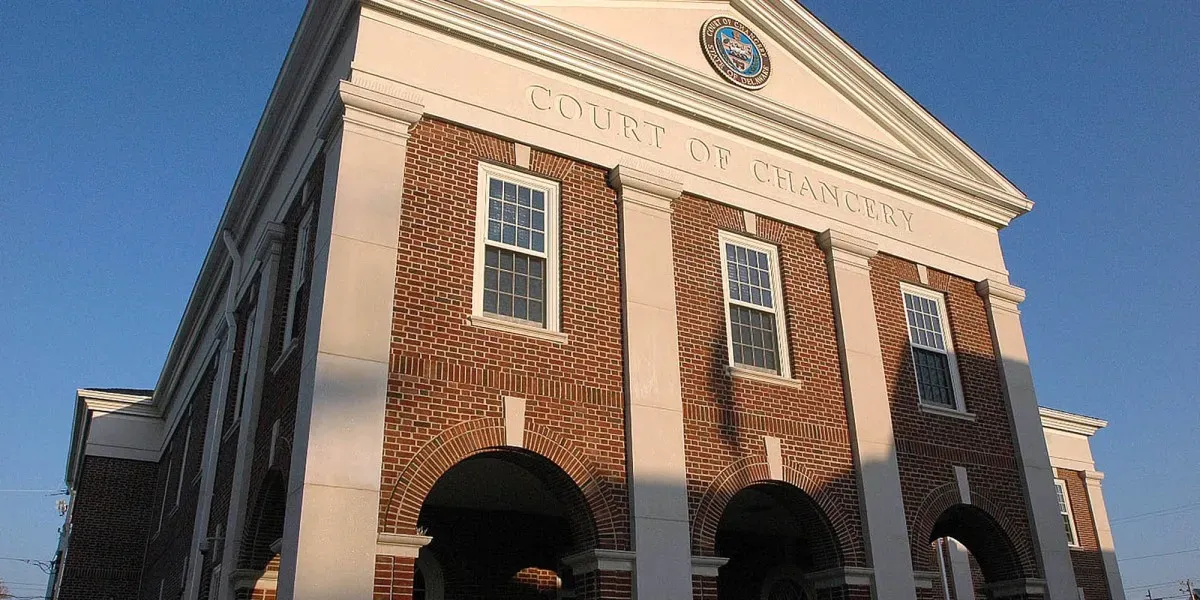
A recent decision from Delaware's Chancery Court has sparked controversy in corporate circles, with implications for businesses and investors alike.
Vice Chancellor J. Travis Laster's ruling on a case involving cloud-based security firm Cloudflare was met with swift action from the court itself, as Laster certified an interlocutory appeal to the Delaware Supreme Court just one day after the decision was made public.
The appeal is necessary due to Laster's unorthodox interpretation of "good faith in his ruling, which allowed him to enjoin the Cloudflare board's decision on its capital structure. This move has raised eyebrows among corporate observers and experts.
In an effort to stem a growing exodus of companies from the state, Delaware passed Senate Bill 21 (SB 21) in March 2025. The legislation was designed to address concerns that activist rulings from the Chancery Court were driving businesses away by introducing new protections for boards of directors who follow established procedures.
The key provision of SB 21 is that if a board routes a potentially conflicted deal through an independent committee with real authority, it will be considered legitimate and shielded from injunctions or damages. Laster's opinion in the Cloudflare case concedes the validity of this new framework.
Laster went so far as to acknowledge that the Cloudflare directors met all the requirements outlined in SB 21, holding them to be independent and not negligent in their decision-making process.
The Delaware Chancery Court's decision in this case has sparked debate over the interpretation of a key provision in SB 21, which governs the actions of special committees formed by independent boards to consider mergers and acquisitions.
In a surprising move, Chancellor Laster chose to enjoin the transaction on the grounds that the committee did not act with good faith, despite acknowledging that they met all the requirements outlined in SB 21. This decision has raised questions about the court's interpretation of the statute and its intent.
The term good faith is a crucial concept in this context, as it implies a certain level of diligence and loyalty on the part of the committee. However, Laster's ruling introduced a novel twist by redefining what good faith entails, which some argue goes against the legislative intent behind SB 21.
Laster pointed to several factors in support of his decision, including the fact that the board used Signal to communicate about sensitive strategic information. This move was seen as an attempt to keep competitors from obtaining valuable information, and Laster implied that this demonstrated a lack of good faith on the part of the committee.
However, critics argue that Laster's interpretation of good faith is overly broad and ignores the context in which SB 21 was passed. The legislative history suggests that the Delaware legislature aimed to drive greater predictability and deference to independent boards, rather than introducing more stringent scrutiny.
The court's decision has also been questioned on its reliance on a CEO's temperament as evidence of the committee's lack of good faith. This argument is seen as tenuous at best, as the entrepreneur's personality is not directly relevant to the committee's actions.
Ultimately, Laster's ruling has left many wondering whether he was truly applying the statute or inventing a new standard for evaluating special committees' behavior. Regardless, the decision has significant implications for companies and investors seeking clarity on the role of these committees in merger and acquisition transactions.
Laster's interpretation of good faith has departed significantly from its traditional meaning in Delaware law. The existing definition of bad faith is rooted in scienter, which requires a showing that individuals acted with knowledge and intent to engage in wrongdoing. In addition, each board member must be assessed individually to determine whether they intentionally acted in bad faith.
This understanding of good faith was reaffirmed by the Delaware Supreme Court in 2006, when it defined bad faith as intentional dereliction of duty or a conscious disregard for one's responsibilities. The court also clarified that gross negligence alone cannot constitute bad faith. Furthermore, the same year saw the Stone v. Ritter decision, which solidified good faith as a subsidiary element of the duty of loyalty.
In practice, however, Laster's opinion has largely set aside this traditional definition. A board's use of Signal to discuss sensitive strategic information or a CEO with a known temper is deemed insufficient evidence of scienter. The opinion also criticizes the committee for not obtaining a fairness opinion, despite acknowledging that Delaware courts have stated there is no duty to do so.
This inconsistency raises questions about the reliability of Laster's interpretation. If a process that could have been better is merely a matter of care rather than loyalty, as per Lyondell, then why fault the committee for its decision? The lack of clarity in this area creates uncertainty for companies and investors seeking guidance on merger and acquisition transactions.
The Delaware definition of bad faith has historically required a showing of intentional wrongdoing or conscious disregard. In contrast, Laster's opinion relies more heavily on process-oriented criteria, rather than actual intent or knowledge. This shift away from the traditional understanding of good faith has significant implications for corporate governance in Delaware.
Laster's decision has created an environment where companies must navigate complex and often contradictory guidelines. The reliance on process-oriented criteria rather than actual intent or knowledge creates uncertainty and confusion among boards and committees. As a result, it is unclear how this ruling will be applied in future cases, leaving many to wonder about the long-term implications for corporate governance in Delaware.
The ruling in the case highlights the inconsistency in applying Delaware's safe harbor statute, which is intended to shield boards of directors from liability when making decisions that benefit the company.
This discrepancy raises concerns about the reliability of trial judges in determining whether a board has acted in good faith or not.
As a result, companies are left without clear guidelines on what constitutes bad faith behavior by their directors.
The uncertainty surrounding this issue is causing many corporations to consider reincorporating elsewhere, seeking more stable and predictable governance frameworks.
A disputed record from the case is now headed to the Supreme Court for review, where it will be scrutinized alongside the trial court's account of events.
The trial judge's certification of facts has been challenged by parties who argue that they have been misrepresented in key areas, including the involvement of an academic expert and the financial advisors' conclusions on dual-class shares.
The lengthy and complex litigation history in this case is a stark reminder of the costly distractions that can ensue when disputes are repeatedly remanded between courts.
The Delaware Supreme Court's reversal of a decision by Chancery Court Judge Laster in 2019 was notable for its scathing criticism of the judge's approach. The court's rebuke suggested that Laster's opinion had been driven more by personal frustration than a rational reading of the case, and that it had injected due process and fairness problems into the proceedings.
Despite this reversal, the Delaware Supreme Court has not seen fit to reassign remanded cases to a different judge in Chancery Court. This decision allows Judge Laster to continue presiding over cases he had previously handled, undermining the court's own reversal of his original opinion.
Certifying an appeal does not provide the same level of predictability as a well-established legal regime, and it is precisely this lack of clarity that drives companies to leave Delaware in search of more stable and reliable governance. Until the Supreme Court clarifies what constitutes good faith in the actions of independent boards, directors will continue to face uncertainty.
The question remains: who guards the guardians? In other words, how can we ensure that those responsible for overseeing corporate governance are themselves held accountable for their actions?
As a result of Cloudflare's appeal being certified, the company's special committee has sought our expertise as governance scholars. We have presented research on dual-class share structures to inform their deliberations, but we have not opined on the terms of Cloudflare's proposed reclassification.
Our analysis is based on a comprehensive review of major firms with dual-class share arrangements, and we take no position on the design of Cloudflare's structure. Our relationship with Vice Chancellor Laster is limited, and we do not have any involvement in his decision-making process.
The lack of clarity surrounding what constitutes good faith" in corporate governance continues to create uncertainty for directors. Until the Supreme Court provides clearer guidance, companies will remain vulnerable to arbitrary and unpredictable decisions by Chancery Court judges.
The ongoing controversy surrounding Delaware's Chancery Court has left companies vulnerable to unpredictable decisions by its judges. The court's lack of clear guidelines on issues like corporate governance and mergers and acquisitions has created uncertainty for businesses operating in the state.
This ambiguity will persist until the Supreme Court intervenes with clearer guidance, leaving companies exposed to arbitrary judgments.
Facts based on reporting originally published by Fortune.
You may republish this story, in full or in part, if you credit News Central Site and link to it (licence CC BY 4.0). Photos are not included.