US President Donald Trump unleashes barrage of attacks on Democratic congresswoman Ilhan Omar
US President Donald Trump has launched a series of verbal assaults against Democratic congresswoman Ilhan Omar, targeting her with unprecedented ferocity.
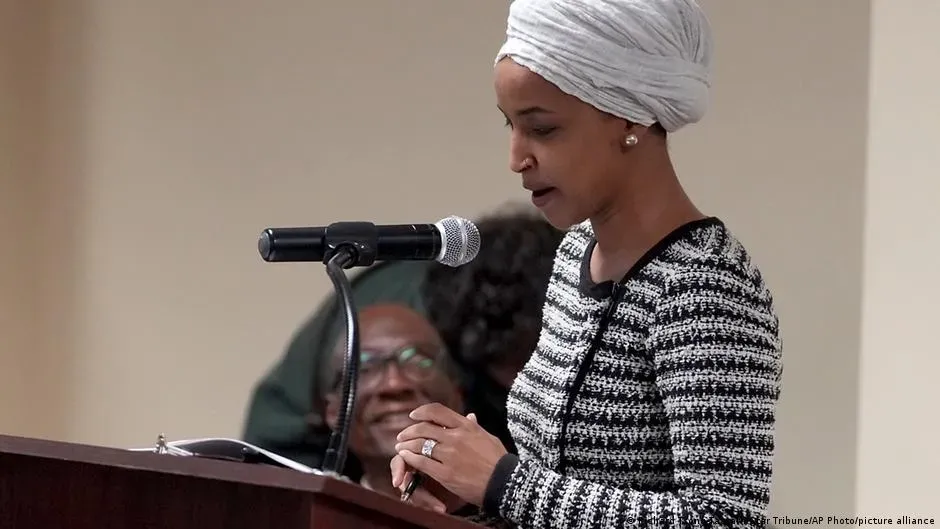
US President Donald Trump has unleashed a barrage of attacks on Democratic congresswoman Ilhan Omar, targeting her with unprecedented ferocity.
Trump's verbal assaults against Omar have been relentless and multifaceted. He has repeatedly labeled her "garbage and accused her of doing nothing but complaining about the US system. In one instance, he claimed she comes from a country without laws or governance, where violence is rampant.
Omar was born in Mogadishu, Somalia's capital city, during a time of civil war that forced her family to flee as a child. She spent four years in a refugee camp in Kenya before arriving in the US with her family at just 12 years old in 1995.
After becoming a naturalized citizen in 2000, Omar joined the Democratic Party and began building a career in politics on its left wing. Her election to Congress as a representative for Minnesota marked a significant milestone in 2019, making her one of the first two Muslim women ever to take their seat in the US legislature.
Despite her background as a refugee and immigrant, Trump's attacks have focused on Omar's perceived disloyalty to the US system rather than any actual policy disagreements. The ferocity of his verbal assault has left many wondering why he has chosen to single her out for such hostility.
Omar's election to Congress was seen as a testament to the diversity and inclusivity of the US democratic process, which allows individuals from all backgrounds to participate in government.
Ilhan Omar's election to Congress was seen as a testament to the diversity and inclusivity of the US democratic process, which allows individuals from all backgrounds to participate in government.
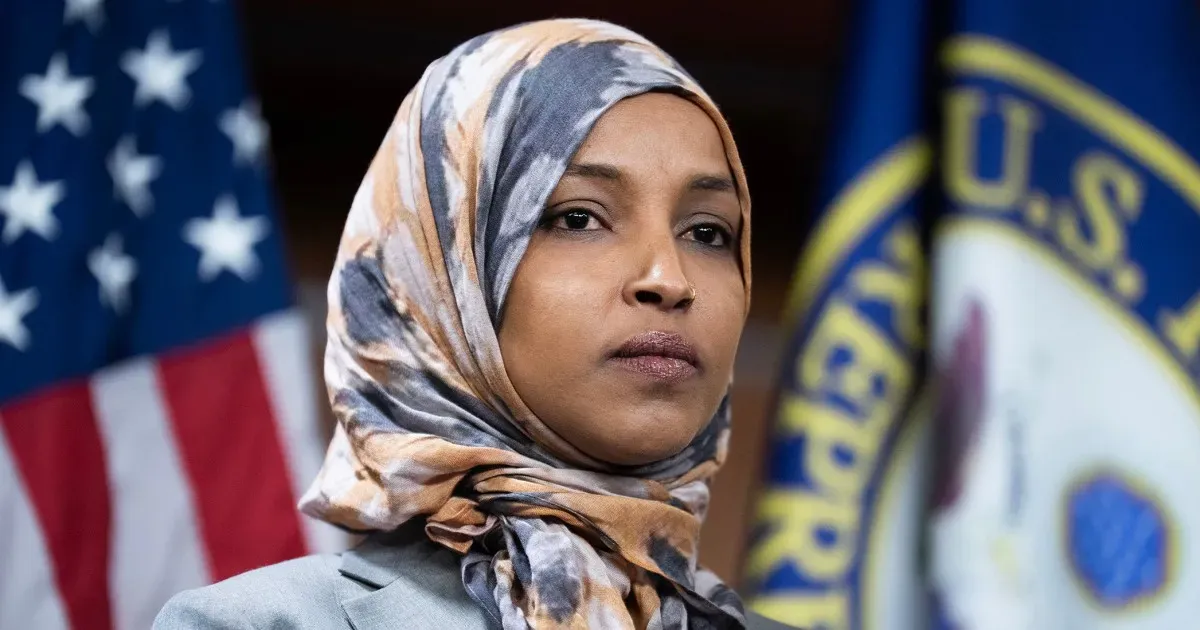
As a practicing Muslim who wears a hijab, Omar faced an unusual challenge when she entered the House of Representatives: a 180-year-old rule prohibiting head coverings in the chamber had to be altered for her. This change was seen as a significant step towards greater inclusivity and respect for diverse backgrounds within the institution.
Omar's political platform is centered on progressive values, including universal health insurance, increasing the minimum wage, climate protection, and the cancellation of student debt. These issues resonate with many Americans who feel left behind by the current economic and social systems.
As one of Donald Trump's most vocal critics, Omar has repeatedly accused him of racism and fomenting hatred against minorities, immigrants, and Muslims. She has also condemned raids by ICE as a militarized campaign of fear and accused the president of corruption in office.
Omar's outspoken nature has made her a polarizing figure within her own party, with some critics accusing her of being too confrontational and divisive. However, others see her as a champion of social justice and human rights who is unafraid to speak truth to power.
Omar's strong stance on Israel and the BDS movement has also drawn controversy, with some accusing her of antisemitism for supporting boycotts of Israeli businesses. In response, she has defended the right of Americans to engage in non-violent protest and freedom of expression through organizations like BDS.
Omar has faced intense scrutiny for comments she made in 2021, where she appeared to draw parallels between US and Israeli actions and those of terrorist groups like the Taliban and Hamas.
Critics have seized on these remarks as evidence of Omar's supposed anti-American and anti-Israeli sentiments. However, her supporters argue that she was simply highlighting the need for accountability and justice for Palestinian civilians affected by ongoing conflict in the region.
In another controversy surrounding Omar, several individuals were convicted of corruption related to a government-funded program aimed at feeding children during the pandemic. The scheme saw around $250 million misappropriated from funds intended for vulnerable families. Notably, many of those implicated hailed from Minnesota's Somali community.
Omar had previously spoken out against strict eligibility rules governing the food assistance program, advocating for more lenient guidelines to ensure that as many children as possible received aid during a time of great need. Her efforts to relax these regulations were seen by some as evidence of her supposed ties to those involved in the scandal.
Federal authorities have been scrutinizing Omar's immigration history, with allegations emerging that she made false statements or entered into a fraudulent marriage to secure her own visa. On October 12, officials conducted a search of her home as part of an investigation into these claims.
The intense scrutiny on US Representative Ilhan Omar has raised questions about the Trump administration's motives in targeting her.
Leading Democratic politicians have spoken out against what they see as an abuse of power by the Justice Department and Department of Homeland Security, accusing them of weaponizing these institutions to silence political opponents.
Former immigration officials have pointed out that a house search over a relatively minor issue from 26 years ago is highly unusual, suggesting that the government already had access to relevant documents.
Critics argue that the timing of the raid, just weeks before the Congressional elections in which Omar is standing for re-election, is deliberately provocative and aimed at influencing the outcome of her campaign.
The fact that this practice has been ignored in Omar's case has led many to accuse the Trump administration of election interference.
The Trump administration's attacks on Muslim politicians have continued unabated, with Abdul El-Sayed, a Democratic candidate in Michigan's Senate election, being the latest target.
At a rally in Tennessee last weekend, President Trump referred to El-Sayed as Mohammed, despite being corrected by someone in the audience that his actual name is Abdul. This move has been seen as another example of Trump's divisive rhetoric and Islamophobia. The president claimed he could call El-Sayed whatever he wanted because he was the president.
El-Sayed, a 41-year-old epidemiologist, has denied any extremist connections despite being labeled a radical jihadist" by Trump. Born and raised in Michigan, El-Sayed attended university there before winning a prestigious Rhodes scholarship to Oxford University. He gained a doctorate in public health and later served as the health director of Detroit for many years.
El-Sayed's campaign has focused on issues such as food prices, expensive rents, and failed policies in Washington, which he blames squarely on the administration. By targeting El-Sayed, Trump is attempting to capitalize on voter concerns and distract from his own party's struggles ahead of the midterm elections.
The targeting of El-Sayed is seen as a calculated move to shift attention away from Republican Party struggles ahead of the midterm elections. By focusing on a prominent Democrat, Trump aims to exploit voter concerns and create a sense of urgency.
This strategy allows Trump to sidestep his party's internal issues and rally support among conservative voters. The outcome is a polarized electorate with heightened tensions between Democrats and Republicans.
Facts based on reporting originally published by DW English.
You may republish this story, in full or in part, if you credit News Central Site and link to it (licence CC BY 4.0). Photos are not included.