US President Establishes Super Intelligence Force
President Donald Trump has announced plans to establish a task force aimed at harnessing the power of artificial intelligence (AI) for national security and economic gain.
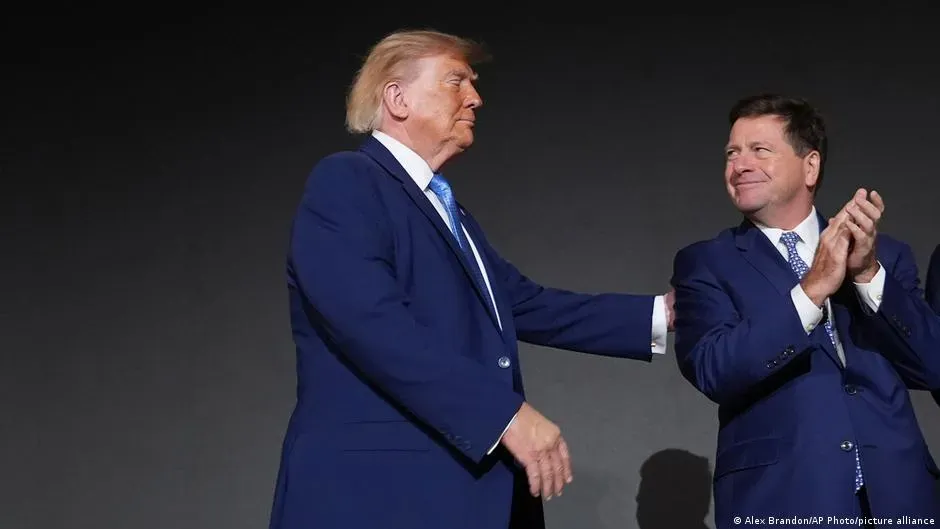
US President Donald Trump has announced plans to establish a "Super Intelligence Force, a task force aimed at harnessing the power of artificial intelligence (AI) for national security and economic gain.
The move follows intense pressure from business leaders and politicians who have warned about the unregulated development of AI, which they fear could lead to significant job losses and other negative consequences. Trump has reportedly met with top AI executives in September to discuss the potential benefits and risks of this technology.
According to reports, the Super Intelligence Force will be led by Jay Clayton, a newly appointed director of national security who has been tasked with coordinating the government's efforts to stay ahead in the rapidly evolving field of AI. The force is expected to play a key role in ensuring that the US continues to lead the world in this area.
The establishment of the Super Intelligence Force comes just before midterm elections in November, and Trump has made it clear that he does not want regulation to stifle" progress in the AI industry. This stance is reflected in a charter for the group, which reportedly aims to prevent overregulation and regulatory capture.
Details about the Super Intelligence Force are still scarce, with the White House releasing limited information about the task force's responsibilities. However, reports suggest that a copy of the charter has been obtained by certain media outlets, providing some insight into the goals and objectives of this new initiative.
The scope of the US Super Intelligence Force's task is far-reaching, encompassing various sectors including biosecurity and water supply safety, two areas that have come under threat in recent times.
Reports suggest that hackers have been targeting critical infrastructure in the United States, raising concerns about national security.
The task force will collaborate with key government agencies such as the Pentagon, Justice Department, Homeland Security, and Federal Trade Commission to develop recommendations for new laws aimed at enhancing government responses to emerging challenges.
A proposed requirement for AI labs to inform the government of any breaches, hacks, or jailbreaks is also under consideration, as well as a system of automatic alerts to ensure timely notification.
The charter's broad remit includes sectors such as finance, energy, transportation, agriculture, and emergency services, underscoring the significance of this initiative.
The US government has established a high-level task force to examine the risks associated with artificial intelligence (AI). This initiative comes as AI continues to grow in importance across various sectors, including finance and energy. The task force is expected to submit its findings within 120 days.
Jay Clayton, appointed AI czar by President Trump, will chair the task force. In his previous role at the Securities and Exchange Commission, Clayton oversaw the development of risk models for the financial industry, which he believes can be applied to AI mechanisms. He envisions a collaborative approach to developing these models.
The reported charter lists three vice chairs who will assist Clayton in leading the task force. One of them is Ferguson, who will focus on consumer interests and advocacy groups. This appointment comes as the Federal Trade Commission (FTC) investigates several prominent AI companies over concerns about rogue agents with malicious intentions.
Michael, a former tech consultant, has been named to oversee coordination with AI companies. Kupor will be responsible for working with critical infrastructure providers and other industry stakeholders. The task force's membership also includes key members of the Trump Cabinet, such as Vice President JD Vance and Secretary of Defense Pete Hegseth.
The task force's external members include David Sacks, who previously served as Trump's AI czar, and Condoleezza Rice, a former secretary of state under President George W. Bush. The task force will report its findings to President Trump and White House Chief of Staff Susie Wiles.
The establishment of the Super Intelligence Force has raised eyebrows among some Republican lawmakers who claim they were not briefed on the plans before President Trump's announcement.
This move comes as key Republican Senators are working on legislation aimed at mitigating the risks associated with Artificial Intelligence (AI).
Critics from the Democratic side have also expressed their concerns, with Representative Lori Trahan stating that the president's proposal lacks a clear strategy for congressional authorization. This has led to accusations that Trump is using the announcement as a way to delay more substantial action.
Representative Josh Gottheimer has also voiced his skepticism, questioning whether the president's motives are genuine or merely an attempt to deflect criticism and protect his family's interests in AI-related investments.
Facts based on reporting originally published by DW English.
You may republish this story, in full or in part, if you credit News Central Site and link to it (licence CC BY 4.0). Photos are not included.