Elon Musk Documentary Released Amid Controversy Over Portrayal of Tech Executive
A new documentary on Elon Musk has been released, sparking controversy over its portrayal of the tech executive's business practices and personal life.
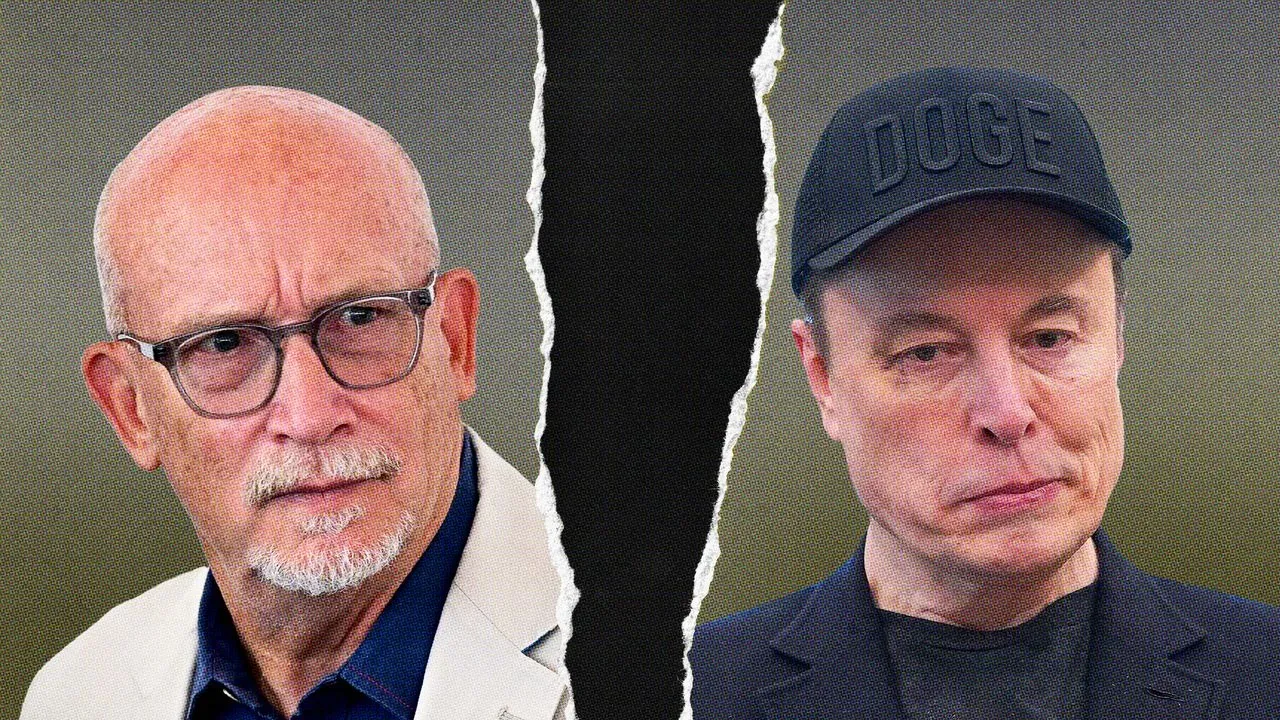
A new documentary on Elon Musk's life and career has been released, sparking controversy with its unflattering portrayal of one of the most influential figures in the tech industry.
The four-hour film, directed by Alex Gibney, is based on extensive research into Musk's life and features in-depth interviews with people who have been close to him over the years. These include his ex-wife Justine Musk, social media influencer Ashley St. Clair, and his father Errol Musk.
Gibney's film presents a damning picture of Tesla's business practices, alleging that the company has manipulated key data on its cars, including battery mileage, and exaggerated the capabilities of its full self-driving mode. This could have potentially deadly consequences for drivers who rely on these features.
Musk's relationship with government funding is also scrutinized in the documentary. Despite his vocal criticism of wasteful spending, Gibney argues that Musk has benefited greatly from government investment, often through a process he calls "reward hacking." This refers to the way artificial intelligence agents can find loopholes in their prompts to deliver results that score well but don't actually achieve the intended goal.
Gibney's documentary also delves into Musk's personal life, including his many children with various women. Some of these women were involved in contractual arrangements with non-disclosure agreements (NDAs), which St. Clair attests to in an interview.
The film's investigation into Tesla's practices has been met with resistance from the company, but Gibney is undeterred. He argues that Musk's actions have real-world consequences and that it's essential to hold him accountable for his decisions.
Gibney's team was unable to secure access to Musk himself, so they opted for a creative workaround. They gathered audio recordings of Musk speaking and created an animated avatar of him to speak directly to the audience. This bold choice helps to bring the viewer into Musk's world.
The documentary also explores Musk's fascination with the idea that our reality might be a simulation. Gibney uses video game-style graphics and sequences to create a surreal atmosphere, plunging the audience into a world inspired by Musk's musings on this topic.
The documentary film about Elon Musk delves into the consequences of unchecked power and wealth in American society and politics.
A key aspect of the film is its exploration of the Great Man Theory, which posits that an individual with unique qualities can have a profound historical impact.
Director Alex Gibney acknowledges the validity of this theory, citing examples such as Stalin, Mao, and FDR, who all wielded significant influence within their respective contexts.
However, Gibney also emphasizes that these individuals operated within a broader framework of social forces that ultimately shaped their actions and decisions.
The film suggests that Musk's rise to power coincided with a vulnerable moment in history, making him particularly adept at exploiting existing systems for his own gain.
In this sense, the documentary can be seen as a profile not just of Musk, but also of the society that enabled him to accumulate such vast influence.
As I delved deeper into Elon Musk's world, I found myself drawn to his charisma and conviction. I recall installing Tesla solar panels and a Powerwall at my own home, thinking it was a superior solution to traditional gas-burning generators in case of power outages.
Musk's early days were marked by an impressive ability to inspire loyalty and dedication from those around him. He reminded me of Steve Jobs before the latter refined his public persona, with Musk still finding his footing as a leader.
Over time, however, I noticed that individuals like Musk often justify extreme measures in pursuit of their goals, believing that any means can be justified if it helps achieve their noble objectives.
This mindset is closely tied to Musk's notion that the world may exist only as a simulation. While this idea comes up later in the film, it highlights his tendency to think outside conventional boundaries and question established norms.
One area where Musk has been remarkably successful is in attracting top talent to his companies. His sense of mission has proven to be a powerful draw for skilled engineers who share his vision for revolutionary technologies like electric cars and space exploration.
For instance, many individuals at Tesla and SpaceX were initially motivated by a desire to make a difference, whether it was by colonizing Mars or creating sustainable energy solutions. They saw Musk's companies as more agile and effective than traditional institutions like NASA.
Musk has also benefited from significant government support throughout his career, with an estimated $38 billion in contracts, subsidies, and loans secured according to the Washington Post.
The film portrays Musk as a complex figure who has exploited his genius for reward hacking, a term coined by author Cory Doctorow, to build his vast fortune.
This wealth is largely built on taxpayer support, with an estimated $38 billion in government contracts, subsidies, and loans secured throughout his career.
While some libertarians interviewed in the film view Musk as a master con artist who has duped the public, others acknowledge his innovative spirit and ability to drive technological advancements.
However, as Tesla's fortunes rise, so does the suspicion that the public is not getting a fair return on its investment. The documentary suggests that taxpayer dollars are being used to prop up Musk's companies without sufficient benefits for the broader population.
One of the most striking aspects of the film is its portrayal of Musk's detachment from the collective society and his employees. He is shown lavishly praising his SpaceX workers in early footage, but as his fortunes grow, so does his sense of self-importance and isolation.
Musk's disregard for worker safety during the COVID-19 pandemic is a stark example of this attitude, with hundreds of Tesla employees reportedly testing positive for the virus after the company reopened its Fremont factory despite local orders to the contrary.
The documentary raises questions about the role of companies in society, suggesting that their primary purpose is not just to enrich shareholders but also to serve customers and protect employees.
As we allow wealthy individuals like Elon Musk to accumulate vast power and influence, we often tell ourselves a story about their greatness. We see them as symbols of success and genius, and believe that they will lead us to a brighter future.
However, this narrative is also driven by our own desires for luxury and innovation. We're drawn to the sleek designs and cutting-edge technology of products like Tesla's electric cars, which make us feel like we're living in the future.
But beneath the surface, this obsession with luxury and status can have unintended consequences. Instead of investing in politicians who will take a principled stand against global warming, we opt for expensive gadgets that give us a false sense of environmental responsibility.
The documentary raises questions about our complicity in perpetuating this narrative. How much do we enable wealthy individuals like Musk by buying into their vision and ignoring the darker aspects of their character?
When researching the film, the team was keenly aware of the need to balance the complexities of Musk's personality with the harsh realities of his actions. They had to navigate a web of contradictory ideas about public responsibility and personal ambition.
The parallels between Musk and other high-profile figures like Steve Jobs are striking. While Jobs was known for his ability to take risks and challenge conventional wisdom, Musk has been criticized for his authoritarian leadership style and willingness to surround himself with sycophants.
As the team delved deeper into their research, they began to see Musk as a symbol of a broader cultural problem, one that prioritizes luxury and status over principle and accountability.
The documentary sheds light on why Elon Musk's public image has such a profound impact on people, making them emotional and invested in his story.
Despite being a businessman, Musk's ability to tap into the public's emotions is noteworthy, particularly when considering how he has been able to navigate the complexities of politics with ease.
Musk's ability to adapt to changing circumstances and switch between supporting different political parties is a testament to his cunning business sense, but also raises questions about accountability and principle.
The documentary explores how Musk has benefited from favorable policies implemented by the Obama administration, which paved the way for Tesla and SpaceX's success.
However, this success comes with its own set of challenges, including concerns about accountability and transparency in the private sector taking over public space programs.
Ultimately, the documentary leaves viewers to ponder whether the efficiencies gained through privatization are worth the risks and uncertainties that come with it.
Facts based on reporting originally published by GQ.
You may republish this story, in full or in part, if you credit News Central Site and link to it (licence CC BY 4.0). Photos are not included.