US Congress Composition Shows Women Hold Only 28.4% of Seats
Despite making up nearly half of the US population, women hold a significant minority of seats in Congress.
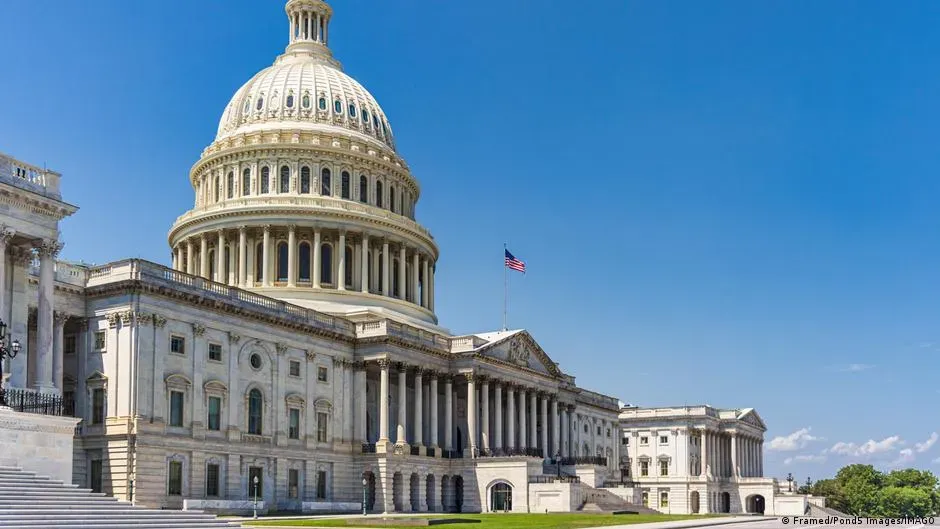
Women are significantly underrepresented in the US Congress despite making up nearly half of the country's population. The current composition of Congress shows that women hold just 28.4% of the seats, a stark contrast to their proportion within the overall population.
The number of female representatives has been steadily increasing over time, with a record-breaking 152 women currently serving in both the House of Representatives and Senate. Additionally, there are more women than ever before holding governorships across the country's 50 states - 14 out of the total number of governors are women.
According to Kelly Dittmar, director of research at the Center for American Women and Politics at Rutgers University, structural barriers within the political system contribute to the low representation of women in Congress. These obstacles include rules and processes that make it difficult for newcomers to break into politics.
The unique electoral cycle of Senate seats, which come up for election every six years, also plays a role in limiting opportunities for new female representatives. Meanwhile, members of the House of Representatives can stand for reelection indefinitely, potentially allowing them to remain in office for decades.
In the US, election campaigns can be costly affairs, and historically, women have had less access to networks of wealthy donors, who are often men themselves. This has limited their ability to fund their own campaigns and compete on an equal footing with male candidates.
The upcoming midterms will determine whether more or fewer women will hold seats in the US Congress over the next two years. All 435 House of Representatives seats and 35 Senate seats are up for election, along with governorships in 36 states.
Currently, women make up a quarter of the representatives in the House, but their numbers vary between parties. There are more female Democrats than Republicans in both the House and gubernatorial posts. Specifically, 95 Democrats and 30 Republicans have seats as representatives.
Women's representation is unevenly distributed across the two major parties. According to Dittmar, organizations that recruit, train, and fund women candidates tend to be Democrat-aligned or non-partisan. This disparity suggests a lack of support for female candidates within the Republican Party.
The reasons behind this imbalance are complex, but Dittmar points out that many Republican party leaders do not see an electoral incentive to recruit more women. In contrast, Democrat voters place greater value on seeing women among their elected representatives, which may explain the emphasis on diversity in the Democratic Party.
Party loyalty and voter expectations play a significant role in shaping the composition of elected officials. As Dittmar notes, cultural biases also contribute to the underrepresentation of women in politics, perpetuating stereotypes about what women can or should do.
The Speaker or majority leader position in the US House of Representatives is currently held by Mike Johnson, a Republican. This powerful post has been occupied by one woman before: Nancy Pelosi, who led the Democrats as Speaker from 2007 to 2011 and again from 2019 to 2023.
Women make up 27% of the US Senate, with 16 Democrats and 11 Republicans holding seats. Each state is represented by two senators, giving them a longer term of office than representatives in the lower house. This means that many more voters are represented by officials in this chamber.
According to research, it's particularly challenging for women to secure a seat in the Senate. The opportunity to run comes up every six years, with only a third of the 100 seats available for election at any given time. This limited window creates an obstacle for female candidates who haven't previously held a Senate position.
A state-wide senatorial campaign is also more expensive than a House of Representatives seat, and studies indicate that women often have lower financial resources than their male counterparts.
Peggy Flanagan's bid for a Senate seat in Minnesota has significant historical implications. As an Ojibwe Native American, she would be the first woman from this indigenous group to hold a position in the US Senate.
Flanagan is currently serving as lieutenant governor of Minnesota and polls indicate that her chances of winning are promising. Her Republican rival, Michele Tafoya, has a background in sports reporting and has previously advised conservative politicians.
The current crop of female governors in the US reveals a partisan divide, with ten Democrats holding office compared to four Republicans. Six of these 14 governors are seeking re-election, including Sarah Huckabee Sanders, who served as President Trump's press secretary during his first term.
In Minnesota, a notable race is underway for governor, where Democrat Amy Klobuchar and Republican Lisa DeMuth are vying for the seat left vacant by Tim Walz. Meanwhile, in Georgia, Black Democrat Keisha Lance Bottoms is running for governor against an unnamed opponent.
In Minnesota, Democratic challenger Amy Klobuchar is running against an unnamed opponent in a state considered solidly Democrat. Kelly Dittmar, a political scientist, believes this will be an easy win for Klobuchar, who has been representing the state in the US Senate since 2007.
The situation in Georgia is more unpredictable, with Democratic candidate Keisha Lance Bottoms facing off against Republican Rick Jackson in a closely contested race. According to Dittmar, Bottoms "absolutely has a chance to be the first Black woman governor," and she has significant backing from former President Barack Obama, while President Trump has thrown his support behind her opponent.
Facts based on reporting originally published by DW English.
You may republish this story, in full or in part, if you credit News Central Site and link to it (licence CC BY 4.0). Photos are not included.