Uluṟu-Kata Tjuṯa National Park Plants Face Unprecedented Decline Due to Climate Change
The unique plant species of Uluṟu-Kata Tjuṯa National Park in Australia are facing a significant decline due to climate change, with the park's animals also suffering as a result.
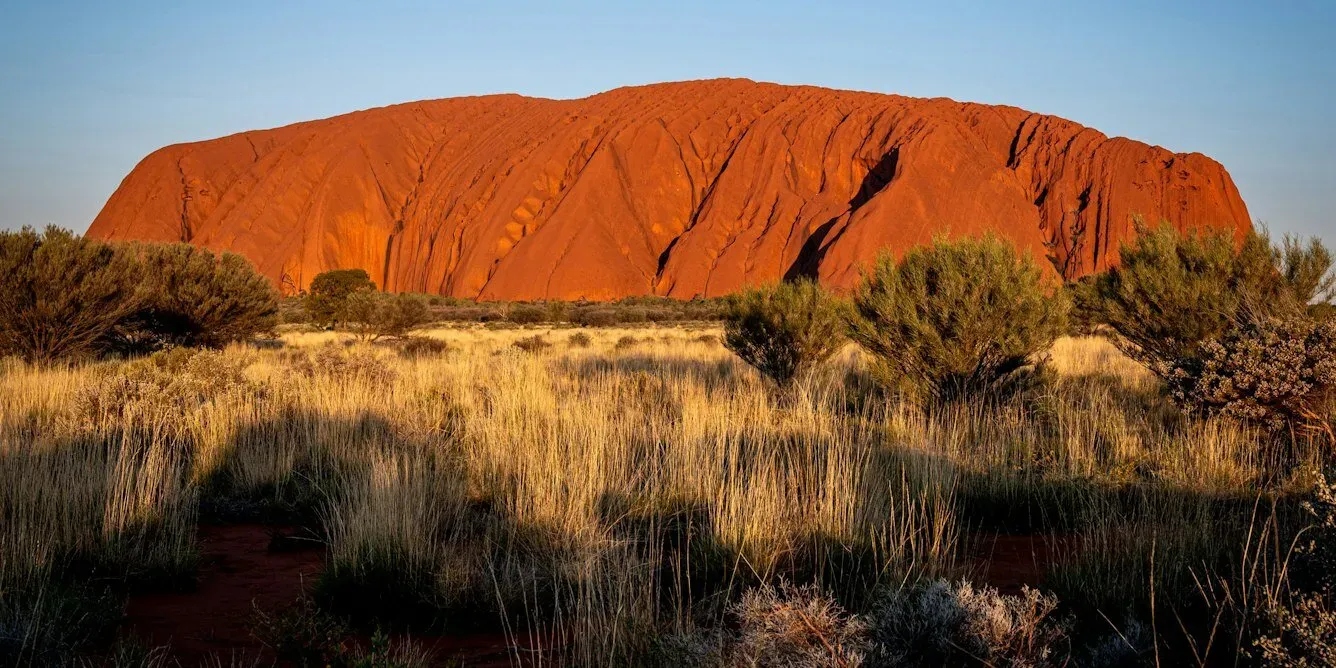
In a worrying trend, the unique plant species of Uluṟu-Kata Tjuṯa National Park in Australia's red heart are facing unprecedented decline due to climate change. The park, a UNESCO World Heritage site, is home to an incredible array of flora and fauna that have captivated visitors from around the world for decades.
This week marks the 41st anniversary of the official handback of Uluṟu-Kata Tjuṯa to its traditional custodians, the Aṉangu people. As joint managers of the park with Parks Australia, the Aṉangu bring their deep understanding and knowledge of the land, accumulated over tens of thousands of years.
Under their care, the park has flourished, but recent observations have revealed a disturbing trend - the local plants are dying off at an alarming rate. The decline is not just limited to the plants, as the animals that depend on them for survival are also suffering.
Aṉangu Muṯitjulu Mala Ranger Natalie Ray expressed her concern about the situation, stating that when they venture out to inspect the park, they notice a significant decrease in plant numbers. The Aṉangu have no idea what is happening elsewhere in Australia or globally, but it's clear their plants and animals are struggling.
The decline of Uluṟu-Kata Tjuṯa's unique flora has left many questions unanswered, including what specific factors are contributing to this crisis and how to reverse the trend. As a symbol of Australia's rich biodiversity, the park's fate is being closely watched by conservationists and scientists worldwide.
The Uluṟu-Kata Tjuṯa park in Australia has been experiencing its most severe drought on record between 2018 and 2021. This period has seen temperatures soar to unprecedented levels, leading to longer and more frequent heat waves than any other time in recorded history.
This extreme weather has had a devastating impact on the park's plant life, with many species showing signs of stress and mass mortality. The kurkaṟa or desert oak, wanaṟi or mulga, and pukaṟa or desert heath myrtle have all been affected, despite being typically robust plants.
A workshop was held in 2020 between Parks Australia and the Aṉangu community to discuss climate change and its effects on Uluṟu-Kata Tjuṯa. Since then, Aṉangu has collaborated with scientists from various organizations, including CSIRO and universities, to study how climate change is impacting plants at the park.
The Muṯitjulu Mala Rangers have played a crucial role in this partnership, working alongside experts to better understand the effects of hot droughts on the region's unique ecosystem.
Scientists and researchers have been using innovative 360-degree imaging technology in conjunction with the Muṯitjulu Mala Rangers to map the extent of plant dieback within Uluṟu-Kata Tjuṯa National Park.
Their efforts have revealed widespread death of leaves, shoots or roots covering hundreds of square kilometers. This has raised concerns among Aṉangu traditional owners and researchers about the impact of hot droughts on the region's unique ecosystem. The Muṯitjulu Mala Rangers played a crucial role in this partnership, working alongside experts to better understand the effects of hot droughts.
Further research was conducted with the help of the Aṉangu community, who co-designed and implemented several linked projects to investigate how different plant species respond to drought conditions. The goal was to identify any patterns or correlations that might explain why some plants were more resilient than others.
The results showed significant differences in survival rates among various plant species. While 78% of kurkaṟa plants managed to survive, only 10% of pukaṟa plants were still standing after the hot drought. This variation has sparked further investigation into the underlying factors that contribute to these disparate outcomes.
Studies suggest that plant species with low rates of dieback tend to slow down their growth and conserve water within their tissues during severe drought conditions. In contrast, those more likely to perish continue using water for growth even in the absence of rainfall, leading to rapid dehydration and death.
The mass death of plants in Uluṟu-Kata Tjuṯa has significant consequences beyond just the loss of biodiversity. When native plant species die out, it can create an opportunity for other species to move in and establish themselves.
One such invasive weed is buffel grass , Cenchrus ciliaris, which is spreading rapidly through Uluṟu-Kata Tjuṯa and crowding out native plants. This not only alters the ecosystem but also affects the availability of waterholes, making it harder for animals to survive.
The impact on wildlife is evident, with Aṉangu observing a decline in hardy desert lizards and birds dropping from trees during extreme heat waves. The loss of these species can have far-reaching consequences for the entire food chain.
Aṉangu are using research findings to inform management decisions for Uluṟu-Kata Tjuṯa, but they recognize that tackling this issue requires collaboration with scientists and governments.
Climate change is having a devastating impact on the plant life of Uluṟu-Kata Tjuṯa, a UNESCO World Heritage site in Australia's Red Centre.
Management decisions for the site are being informed by research findings, but tackling this issue requires collaboration between traditional owners and governments to develop effective conservation strategies.
Facts based on reporting originally published by Phys.org.
You may republish this story, in full or in part, if you credit News Central Site and link to it (licence CC BY 4.0). Photos are not included.