UK Government's Ban on Palestine Action Sparks Row Over Book Sales
British bookstores are facing a dilemma after Irish novelist Sally Rooney announced that her books can no longer be sold in the UK due to her financial support for Palestine Action, a group recently banned as a terrorist organization by the UK government.
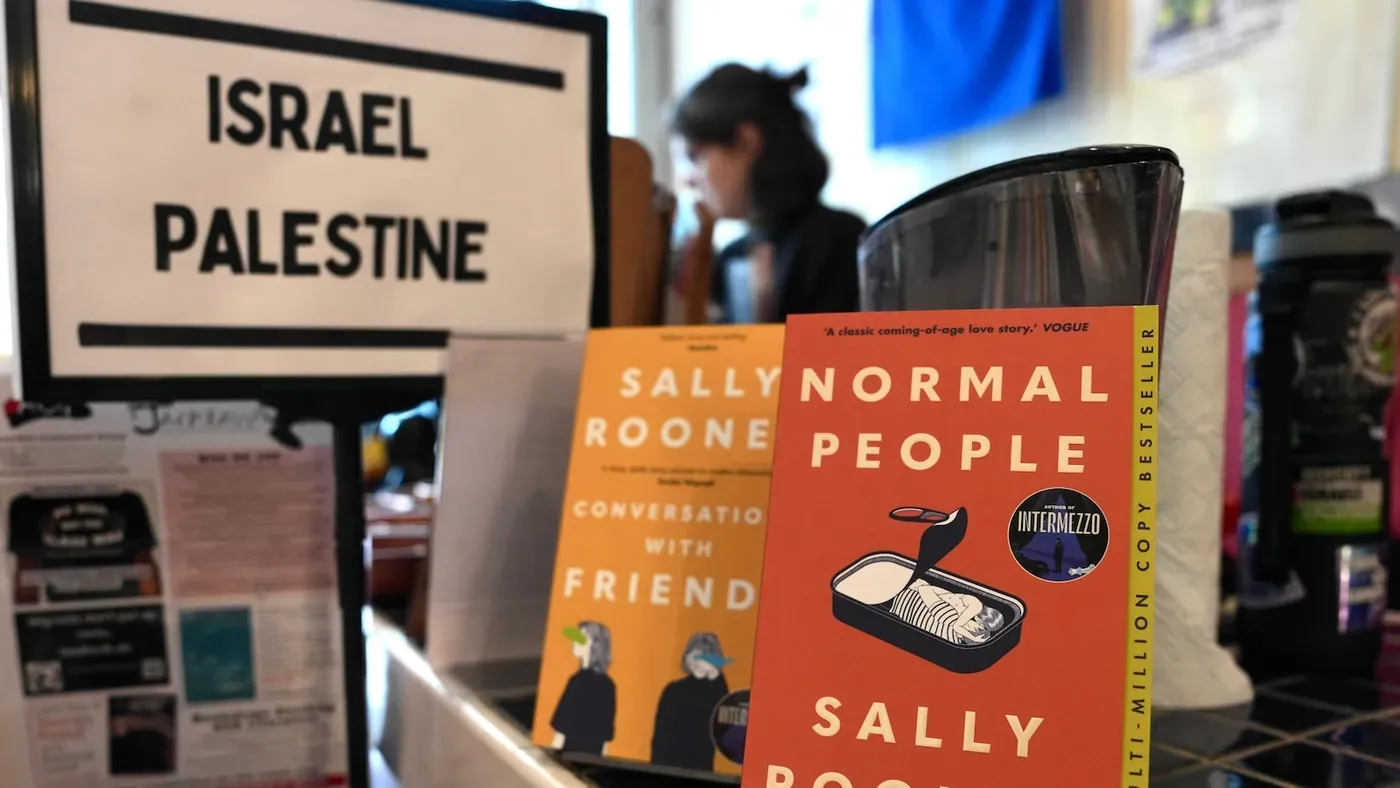
British bookstores are facing a dilemma after Irish novelist Sally Rooney announced that her books can no longer be sold in the UK due to her financial support for Palestine Action, a group recently banned as a terrorist organization by the UK government.
The decision by Rooney's British publisher not to distribute her books has reignited debate over the UK government's ban on Palestine Action. The ban makes membership in or support for the group a crime punishable by up to 14 years in prison, sparking concerns about free speech and censorship.
Rooney is a critically acclaimed author known for her thought-provoking novels, which have sold millions of copies worldwide. Her books include "Conversations with Friends", "Normal People", "Beautiful World, Where are You" and "Intermezzo", all of which have received widespread critical acclaim and commercial success.
Her support for Palestine Action is part of a broader stance on the Israeli-Palestinian conflict, specifically her backing for the Boycott, Divestment and Sanctions movement. This movement calls for boycotts of Israeli businesses, universities and cultural institutions in response to Israel's treatment of Palestinians, which is seen as an attack on the legitimacy of the Jewish state by some.
The controversy surrounding Rooney's books and the UK government's ban on Palestine Action has sparked intense debate over the balance between free speech and national security.
The controversy surrounding Rooney's books has taken a turn as her UK publisher, Faber, announced that it can no longer supply her works in the country due to the terror ban on Palestine Action.
Faber stated that paying royalties to Rooney could potentially violate the ban, prompting the decision to withdraw her novels from the market. The move was made with Rooney's agreement, according to the publisher.
Rooney had previously expressed her intention to use proceeds from her books and their TV adaptations to support Palestine Action, a stance that has been met with criticism in some quarters. Her statement on the matter highlights her commitment to transparency regarding her beliefs and intentions.
The Booksellers Association has since clarified that British bookstores can continue to sell existing stock of Rooney's novels within the UK market, despite Faber's decision to withdraw new orders. However, this news came too late for some stores that had already attempted to stock up on her popular titles.
Some booksellers, such as Lucy Burke at Camden Town Bookshop in London, have expressed frustration over the sudden shortage of Rooney's novels, citing their enduring popularity and the limited availability of existing stock.
The sudden withdrawal of Sally Rooney's novels from UK bookstores has left some booksellers frustrated and questioning the reasoning behind this decision. The move appears to be linked to Rooney's support for Palestine Action, a group that aims to stop British military support for Israel, which it claims is committing genocide against Palestinians.
According to its founders, Palestine Action seeks to disrupt corporate enablers of the Israeli military-industrial complex by targeting their operations in the UK. In 2024, activists broke into an Elbit Systems UK factory, causing significant damage with sledgehammers and crowbars. This was not the group's first high-profile action, as they had previously broken into a Royal Air Force base in June 2025.
The British government has taken a strong stance against Palestine Action, accusing them of carrying out acts of terrorism and promoting violence. The Home Office has stated that the group's actions are being probed under anti-terrorism laws, but emphasized that this does not restrict lawful protest in support of the Palestinian cause.
A police officer suffered serious injuries during one of the group's break-ins, with a fractured spine resulting from being hit with a sledgehammer. This incident highlights the potential consequences of such direct action tactics and has led to concerns about the impact on public safety.
Thousands of people have taken to the streets to test the law and exercise their right to protest by silently holding signs showing support for Palestine Action.
The scale of arrests has been significant, with over 3,000 people detained so far, while more than 1,200 have been charged under the Terrorism Act.
Notably, the detainees include individuals from all walks of life, including retirees in their 80s and 90s, which has put pressure on the government to reconsider its stance.
The Labour Party government, led by Prime Minister Andy Burnham, is facing criticism over the handling of this situation, particularly given its efforts to rebuild bridges with pro-Palestinian supporters since taking office.
The government's formal recognition of a Palestinian state and ban on goods from Israeli settlements in the occupied West Bank have been seen as steps in the right direction, but the continued proscription of Palestine Action has sparked ongoing controversy.
The controversy surrounding Sally Rooney's novels in UK bookstores has taken a new turn as the Palestine group's lawyers prepare to take their case to the country's top court.
Next month, the lawyers will submit a request to quash the ban on goods from Israeli settlements in the occupied West Bank, which was imposed by the Home Office. John Clegg, a bookseller at London Review Bookshop, believes Rooney's stance could be a catalyst for change.
Facts based on reporting originally published by ABC News Entertainment.
You may republish this story, in full or in part, if you credit News Central Site and link to it (licence CC BY 4.0). Photos are not included.