Lincoln in the Bardo Opera Set to Premiere
A new opera based on George Saunders' novel is set to premiere, bringing the story of Abraham Lincoln's grief over his son's death to life on stage.
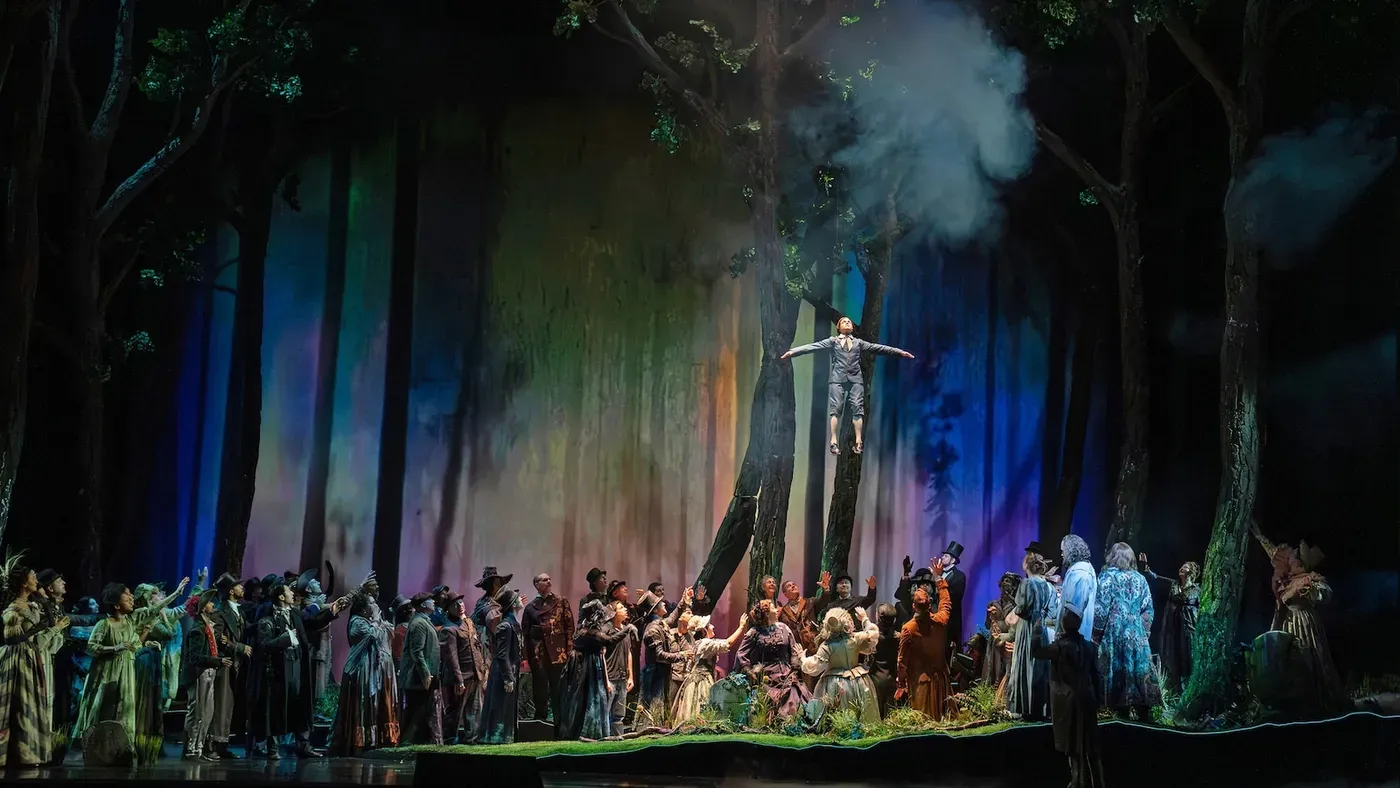
A new opera, "Lincoln in the Bardo, is set to premiere, bringing George Saunders' Booker Prize-winning novel to life on stage.
The story takes place in a graveyard where almost all of the characters are deceased, with Abraham Lincoln being the sole living figure amidst this sea of death. His presence serves as a poignant reminder of his own grief over the loss of his 11-year-old son. This somber atmosphere might suggest a heavy and mournful experience for audiences.
However, according to Royce Vavrek, the librettist behind composer Missy Mazzoli's work, this opera is not just about mourning but also has moments that are effervescent and even hilarious. The creators aimed to capture the essence of Saunders' novel in a way that balances heartbreak with joy.
The concept of the bardo, the period between physical death and rebirth in Tibetan Buddhism, serves as the inspiration for both the novel and the opera. This idea is central to understanding the characters and their experiences, particularly those who are trapped between worlds and unable to accept their circumstances.
In the story, the ghosts residing in Georgetown's Oakhill Cemetery refer to their coffins as sick-boxes, highlighting the arbitrary nature of death and the need for acknowledgment before finding peace.
The opera Lincoln in the Bardo delves into the lives of various characters, each with their own unique stories that are both heartwarming and heartbreaking.
According to director Lileana Blain-Cruz, the work aims to showcase the fullness of life by highlighting its complexities and imperfections. She emphasizes that people's experiences are not solely defined by tragedy, but also encompass moments of joy, humor, and vulnerability.
In the midst of this emotional landscape, Willie Lincoln, a young boy who has succumbed to typhoid fever, is introduced along with his grieving father, who pays a poignant visit to his son's crypt. This encounter marks a turning point for both characters, as Willie comes to terms with his fate and his father must find a way to move forward.
Composing the score for this opera proved to be a daunting task for Missy Mazzoli, particularly given its focus on the death of a child. She reflects on the challenge of inhabiting the character of Willie Lincoln, who becomes an integral part of her creative process during the writing phase.
As Missy Mazzoli delved deeper into the writing process of her new opera, 'Lincoln in the Bardo', she found herself immersed in the world of the story. One key aspect was Willie Lincoln's character development, particularly his transformation as he comes to terms with his own mortality.
Willie's realization that death brings freedom from earthly constraints is a pivotal moment in the narrative. Mazzoli highlights this turning point through Willie's poignant aria, where he expresses the newfound liberation that comes with being dead. He sings of the limitless possibilities now available to him, including attending parties and flying out windows.
The opera's creative team has made deliberate choices to convey the emotional depth of the story. By focusing on the positive aspects of death, Mazzoli avoids becoming overwhelmed by the more sorrowful elements of the narrative. This approach allows her to maintain a delicate balance between the somber and uplifting themes.
The production is set to open on October 19, with renowned conductor Yannick Nezet-Seguin at the helm. The cast features an impressive ensemble, including baritone Peter Mattei as Lincoln and soprano Christine Goerke in a unique role reversal as the Reverend.
The cast of Lincoln in the Bardo features an impressive ensemble, including baritone Peter Mattei as Lincoln and soprano Christine Goerke in a unique role reversal as the Reverend. Vocally, the Reverend's part encompasses her full range, from high C down two octaves, presenting a dramatic challenge.
The Reverend knows he is dead but resists his fate due to a vision that he believes has doomed him to eternal damnation. In contrast to other ghosts in the opera, the Reverend's character makes a heroic sacrifice that may ultimately redeem him.
Mazzoli's score showcases moments of playfulness, starting with the prologue where the chorus members blow into kazoos. The composer's use of non-virtuosic instruments in virtuosic settings adds an unexpected layer to the opera's soundscapes.
The production team has incorporated a range of visual elements, including pyrotechnics, puppetry, and a black mustang named Zeus who carries a Lincolnesque figure back toward the White House at the final curtain.
The opera Lincoln in the Bardo has marked a significant milestone for composer Missy Mazzoli and librettist Royce Vavrek, who have collaborated on this production as part of their sixth joint effort.
Their latest project follows the success of The Galloping Cure," which premiered to great acclaim in Edinburgh and will soon make its US debut in San Francisco. The Metropolitan Opera's general manager Peter Gelb has already indicated that there are plans for more Mazzoli productions at the Met in the future. Meanwhile, George Saunders, author of the book on which the opera is based, is also working on a feature film adaptation, with Tom Hanks set to star as Lincoln and Duke Johnson directing.
Facts based on reporting originally published by ABC News Entertainment.
You may republish this story, in full or in part, if you credit News Central Site and link to it (licence CC BY 4.0). Photos are not included.