Trapped-ion simulator enables complex quantum system studies
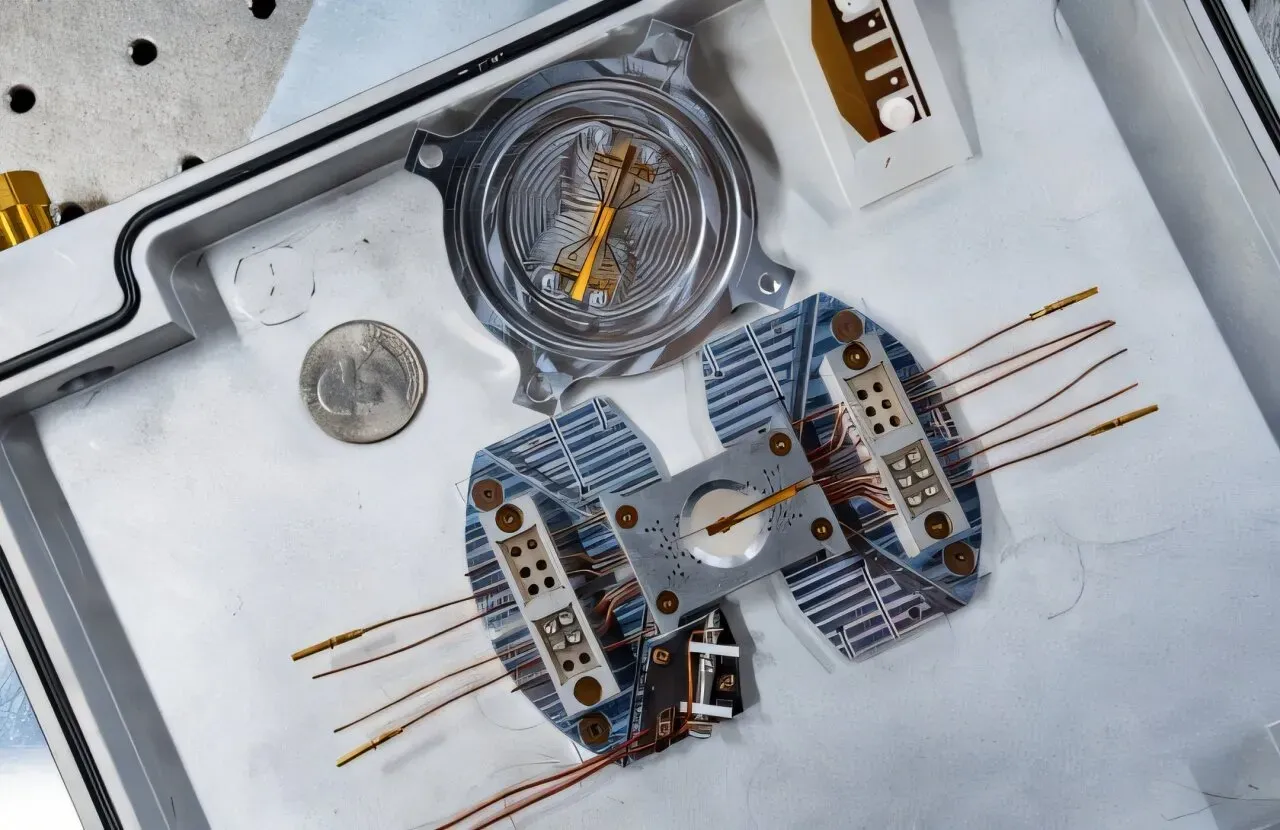
A team of researchers from Rice University and collaborators at Duke University and Translume Inc has developed a monolithic segmented 3D ion trap.
Researchers have been struggling to simulate certain quantum systems due to their complexity, which even powerful supercomputers cannot handle efficiently. To overcome this challenge, scientists are turning to quantum simulation, a technique that involves creating a controllable quantum system in the lab and tailoring it to mimic the one being studied.
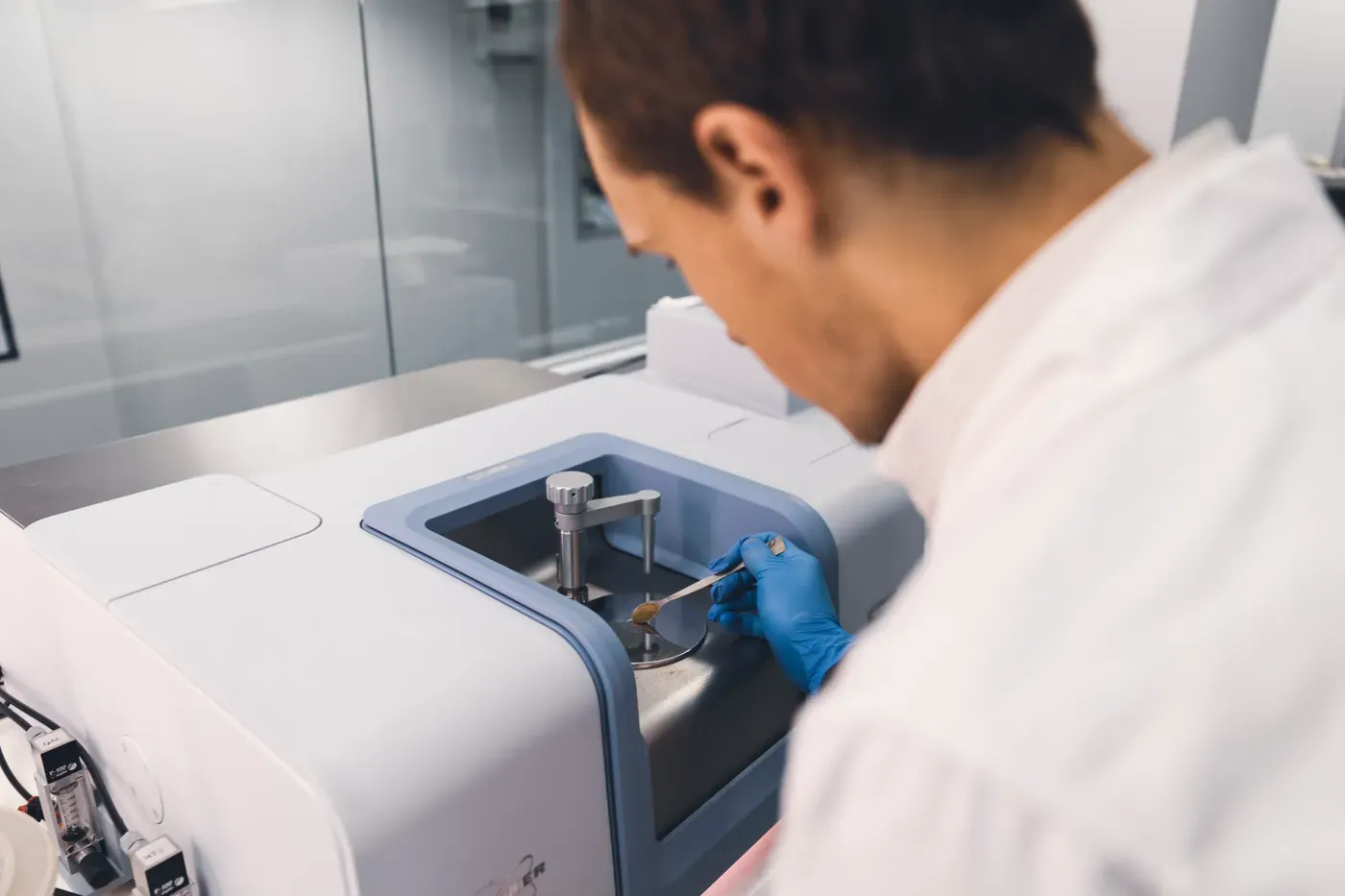
In a trapped-ion simulator, individual charged atoms or ions are held in place by electric fields within an ion trap device. Lasers are then used to make the ions interact in a manner that simulates the desired quantum system. The information encoded in the ions is later measured to reveal the system's properties.
A team of researchers from Rice University and collaborators at Duke University and Translume Inc. has developed a new type of trapped-ion simulator called a monolithic segmented 3D ion trap. This innovative device enabled the team to study complex systems using heavy ions like ytterbium, which is typically difficult to simulate due to its unique properties.
The development of this monolithic segmented 3D ion trap marks an important breakthrough in the field of quantum simulation and has opened up new possibilities for researchers seeking to understand complex quantum systems.
The development of new ion traps has been crucial in advancing our understanding of complex quantum systems, and researchers have now made significant strides in creating a more versatile device.
Ion traps can be categorized into two main types: blade-style traps and microfabricated chip traps. Blade-style traps offer high performance but are limited by their precision and difficulty to reproduce due to the manual assembly process involved.
On the other hand, microfabricated chip ion traps provide greater geometric precision and modularity, making them easier to replicate. However, they often fall short of blade-style traps in terms of performance.
Researchers sought to bridge this gap by developing a monolithic three-dimensional ion trap that combines the strengths of both types. This new design aims to overcome engineering challenges associated with integrating features in a compact microfabricated architecture.
The researchers' goal was to create an ion trap that could handle heavier ions while retaining the scalability and modularity of microfabricated chip traps, making it more accessible for various quantum technologies.
The researchers started by designing a block of fused silica glass as the foundation for their monolithic ion trap. Using lasers and chemicals, they carefully created channels for the ions to pass through and trenches for the electrodes that would be installed next. The trenches were crucial in isolating the electrodes from each other, preventing electrical shorts during the gold coating process and dielectric breakdown under high-voltage conditions.
The design was not a straightforward one, with several iterations required before achieving success. Menon noted that the team's first generation had significant thermal and electrical management issues. When subjected to high radio-frequency voltage in a vacuum, the trap began to glow visibly due to excessive heating. This problem was eventually addressed in subsequent generations of the design.
However, other challenges arose as the team worked to balance competing demands on their ion trap. They needed to maintain sufficient spacing between ions while minimizing system voltage and keeping ion heating rates under control. By doing so, they could preserve the qualities that made the ion trap useful for laboratory research.
The process was iterative and involved learning from each failed attempt. The second generation of the design improved upon its predecessor but introduced new problems, such as considerable axial micromotion and high ion-heating rates. It wasn't until the third iteration that the team achieved a viable ion trap.
This monolithic design is crucial for its scalability and modularity, making it more accessible to researchers working on various quantum technologies. The ability to handle heavier ions in this setup could open up new possibilities for simulations and experiments.
The design of the third-generation ion trap incorporated several key improvements to enhance its performance and efficiency. A better heat sink was integrated into the setup to effectively move heat away from the ion trap, minimizing thermal fluctuations that could impact the ions' behavior. Additionally, the axial micromotion of the ions was minimized, reducing unwanted vibrations that could compromise the accuracy of the simulations.
The design's plasma-based surface treatment also played a crucial role in reducing ion-heating rates, allowing for more precise control over the ions' interactions. This combination of innovations enabled the researchers to create an ion trap with improved stability and reduced noise levels. By refining these aspects of the ion trap's design, Pagano's lab aimed to make trapped-ion simulators more accessible and user-friendly.
The monolithic trap's performance was thoroughly tested by both Pagano's lab and their collaborators at Duke University. The results confirmed that the ion traps functioned as intended and that their behavior aligns with previously run computer simulations. This validation is essential for ensuring the accuracy of the research findings produced using these devices.
The development of this monolithic trap has significant implications for researchers working on quantum problems, allowing them to simplify complex issues and map them onto more manageable problems. As Roman Zhuravel notes, the monolithic trap's suitability for various applications opens up new avenues for scientists interested in tackling these challenges.
The new monolithic ion trap design has made quantum simulations more accessible to researchers worldwide. This breakthrough is expected to accelerate the development of applications in fields such as chemistry, materials science, and quantum computing.
The increased accessibility of this technology will enable scientists to tackle complex challenges, including understanding chemical reactions and optimizing material properties. By making these simulations more widely available, researchers can explore new avenues for innovation and discovery. The impact of this development is poised to be significant.
Facts based on reporting originally published by Phys.org.
You may republish this story, in full or in part, if you credit News Central Site and link to it (licence CC BY 4.0). Photos are not included.