Train Crash Leaves at Least 68 Dead in Spain
A devastating high-speed train collision in Spain has left at least 68 people dead and over 100 injured.
A devastating high-speed train collision in Spain has left at least 68 people dead and over 100 injured, sparking concerns about the country's rail safety record.
The accident occurred when a Renfe service crashed into a stationary train on Wednesday, with rescuers working tirelessly to search for survivors amidst the mangled wreckage. This tragic incident marks Spain's second fatal high-speed train crash this year, raising questions about the effectiveness of safety measures in place.
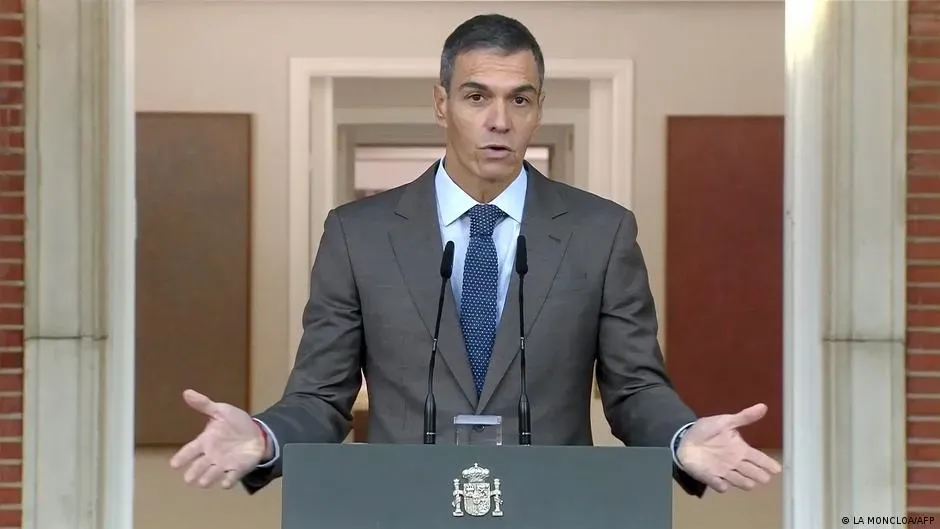
Prime Minister Pedro Sanchez has expressed his condolences to the families of the victims, saying that "all of Spain is mourning the loss of life. Transport minister officials have confirmed that a red signal was active at the time of the collision due to a technical issue with communication systems between trains.
The Renfe train had been authorized to proceed despite the active warning, but an error led to its continued movement into the stationary train. Oscar Puente, speaking in Madrid, explained that a computer communications failure caused the red signal to be issued, which would have normally halted traffic.
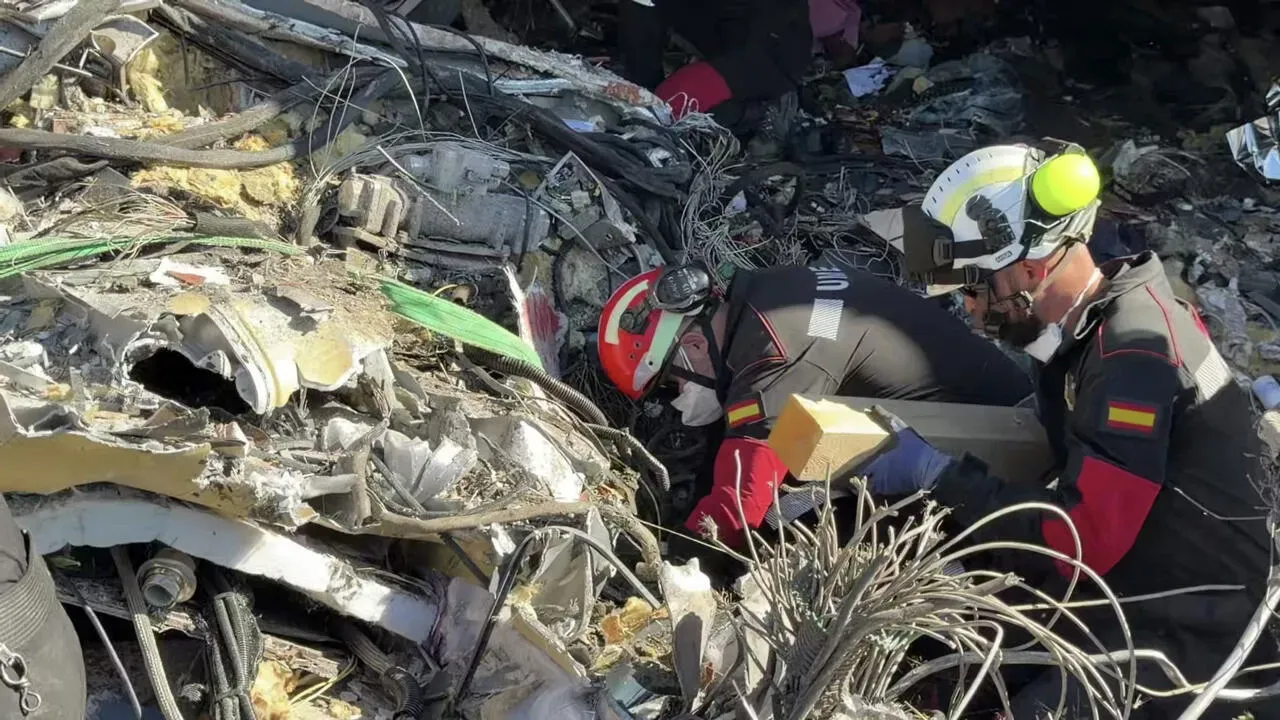
Emergency responders and rescue teams worked tirelessly at the crash site in rural Castilla-La Mancha, where one of the trains had derailed onto an embankment. The twisted metal and wreckage scattered across the area were a grim reminder of the devastating impact of the accident. Ambulances, funeral home vans, and helicopters were on hand to assist with the rescue efforts.
The regional government's head, Emiliano García-Page, confirmed that the death toll had risen to 68, as rescuers continued to search for other potential victims. With darkness falling, it remained unclear how many fatalities might still be discovered once the carriages are moved from the crash site. The number of injured passengers was also a growing concern.
Spain's health minister, Monica Garcia, revealed that at least 80 people had been hurt in the accident, with 15 suffering serious injuries. Many passengers were seen being evacuated along a nearby road, some of them visibly shaken and others bandaged or splattered with blood. The scene was one of chaos and confusion, with survivors struggling to make sense of what had happened.
As rescuers worked to reach those trapped in the wreckage, eyewitnesses described the harrowing scenes inside the train carriages. One passenger, Salvador Arriza, recounted how he narrowly escaped being trapped by the sheer force of other people breaking windows to get out. He described the desperate bid for freedom as like a nightmare.
The investigation into the high-speed train crash in Spain is likely to focus on the sequence of events leading up to the collision. Renfe has stated that its train continued on its journey after being authorized to do so, but ultimately crashed into a stationary Iryo train.
The exact reasons for why the Iryo train remained stationary are currently unknown, according to Renfe's statement. The investigation will aim to establish the traffic conditions and circumstances surrounding the impact.
Renfe has released a statement explaining that its train continued on its way as instructed, resulting in a collision with the Iryo train. The company emphasized the need for an investigation to determine the exact sequence of events.
The crash occurred at approximately 9am (0800 GMT), derailing two carriages from the Iryo train and causing significant damage.
Witnesses described the impact of the crash as very strong", sending them flying from their seats while having breakfast on board.
A woman named Ana was at a school in Urda where relatives had gathered, anxiously awaiting news of her husband Pepe who remains unaccounted for despite police having found their dog Trece. The authorities have set up a special line for families of victims to receive updates and support. Ticket sales on the Madrid-Andalusia high-speed corridor have been suspended until December 13.
A preliminary investigation into January's accident pointed to defects in the track, rail or a weld between two sections of track as a possible cause, although other factors were still being considered.
Railway safety figures show an increase in accidents on Spanish tracks over recent years. According to the country's railway safety authority, there were 45 reported incidents in 2016, rising to 57 in 2024 and 69 last year.
The number of passengers using high-speed trains in Spain has dropped by around 14% compared with the same period last year, according to an analysis of data from the Spanish competition authority. This comes as European Commission figures reveal that Spain's maintenance investment for its extensive network of high-speed lines lags behind other major European countries.
Spain's investment in its high-speed rail network has been substantial, with an average annual expenditure of around €1.5 billion between 2018 and 2022, outpacing other major European countries.
However, a closer look at the figures reveals that most of this money was allocated to new construction projects rather than maintenance, renewals, and upgrades. In fact, only about 16% of the annual budget was dedicated to these essential tasks.
The recent introduction of private companies to compete with RENFE has also led to increased traffic on the rail network, further straining the infrastructure, according to a spokesperson for Spain's train workers' union.
Facts based on reporting originally published by France 24 English.
You may republish this story, in full or in part, if you credit News Central Site and link to it (licence CC BY 4.0). Photos are not included.