Economic Indicators Improve in Spain Amid Ongoing Political Turmoil
Prime Minister Pedro Sanchez has called an early election to break a parliamentary deadlock that has crippled his administration.
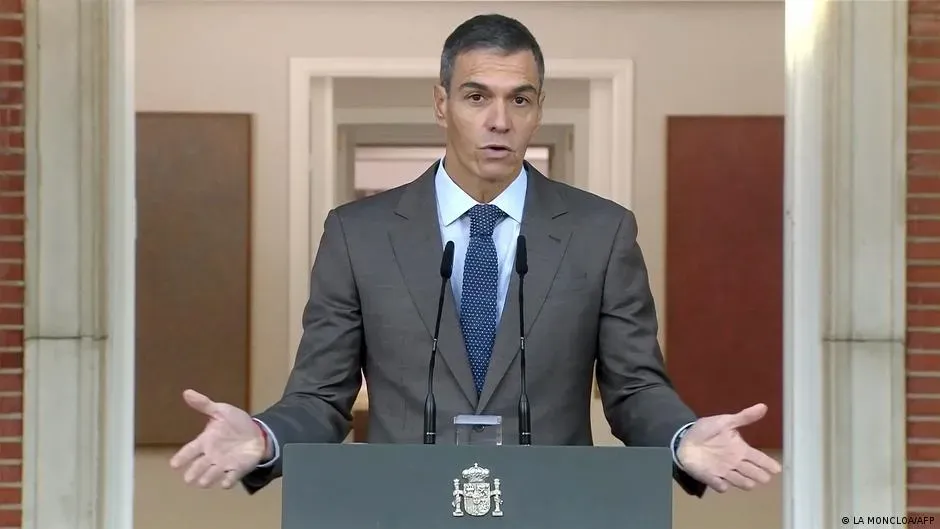
Spain's economic indicators have been showing improvement lately, but its politics have been stuck in turmoil for months. The country has been plagued by a series of crises, and tensions between different factions have been escalating.
Prime Minister Pedro Sanchez made the unexpected decision to call an early election on November 29, aiming to break the deadlock that has crippled the government. This move follows a significant defeat for the administration in parliament last week.
Sanchez's emergency measures to address the housing shortage were voted down by seven lawmakers from the conservative Catalan separatist party Junts, who have been key supporters of the government since 2023. The party's opposition marked a critical turning point in the ongoing parliamentary crisis.
The defeat was not an isolated incident; it came after months of instability within the government's parliamentary base. In fact, Spain has not passed a regular budget since 2023. This lack of progress has put immense pressure on the administration to regain control and stabilize its operations.
Recent events have further strained the government's position, including controversy over mass migration to Ceuta and corruption scandals involving high-ranking officials close to Sanchez. The forced eviction of an elderly woman last month sparked outrage and transformed the housing shortage into a major political issue.
The housing shortage in Spain has been a pressing concern for citizens for nearly three years, with estimates suggesting a shortfall of around 750,000 homes. This figure is expected to rise further, potentially exceeding one million by 2028, according to the Bank of Spain.
Youth unemployment and financial dependence on family members are also significant issues, with over half of Spaniards aged 18-34 living with their parents or relying on them financially. The rising cost of property, which outpaces wage growth at a rate of three times as fast, has further exacerbated the problem.
Spain's social housing stock is meager, accounting for just 1.7% of total homes, placing it near the bottom of EU rankings among member states. This limited availability of affordable housing options has been a major point of contention in recent protests and demonstrations across the country.
The government's proposed measures to address the crisis have been met with skepticism by various groups, including trade unions CCOO and UGT, which announced a 24-hour general strike after their concerns were ignored. The conservative opposition People's Party (PP) has also expressed reservations about stricter rent controls.
Meanwhile, parts of the business community are warning that tighter regulations could worsen the housing shortage, further polarizing the debate over how to address this pressing issue in Spain.
The governing PSOE party's fragile coalition has been a hallmark of Pedro Sanchez's premiership since the 2023 election. The social democratic party has relied on the support of smaller regional parties, including those from the Basque and Catalan regions.
Among these smaller parties is Junts, a Catalan separatist group that has wielded significant influence in parliament. With seven lawmakers, Junts has been able to tip the balance in favor or against government legislation, often determining whether Sanchez's bills would pass or fail.
This precarious arrangement has become increasingly unstable over time, with the government losing nearly one quarter of its votes in just the first half of 2026. The instability is evident in the fact that Spain still operates under a budget approved in 2023, as Sanchez has been unable to secure passage of a new state budget during his entire term.
The inability to pass legislation on key issues has caused tensions within the coalition, with Junts ultimately refusing to back Sanchez on housing policy. This decision was made after nationwide protests highlighted the pressing need for solutions to Spain's housing crisis.
The government's handling of the migrant crisis in Ceuta has also been a source of controversy. In late July, over 70,000 migrants crossed into the exclave from Morocco within a short period, leaving thousands stranded and sparking concerns about public safety and infrastructure.
The recent migrant crisis in Ceuta has put pressure on Spain's migration policy. A new draft of Sanchez's policy seen by Reuters proposes accelerated asylum procedures and deportations, as well as stricter rules for migrants. This shift is a departure from Sanchez's previously liberal approach.
Tensions are running high ahead of the snap parliamentary election at the end of November. The conservative PP party is currently polling strong, but its leader Alberto Nunez Feijoo faces a delicate balancing act to win voters from the center while also appealing to those on the right.
The rise of the right-wing populist Vox party has been remarkable in recent months. With around 18% of the vote, it has gained six percentage points since the 2023 election. If its strong showing continues, it could give PP a chance to form a governing majority with parties from the right.
Vox leader Santiago Abascal is now setting out conditions for cooperation, including prioritizing Spanish citizens' interests and implementing economic deregulation. He also wants a significantly tougher migration policy, which includes deporting foreign nationals back to their countries of origin - a far-right concept that has sparked controversy.
Feijoo's challenge is to balance his own party's right-wing agenda with the need to win over voters from the center. This will be crucial if he hopes to form a governing coalition after the election.
Sanchez's stance on key global issues has made him a thorn in the side of US President Donald Trump. The prime minister has consistently rejected Trump's demands for increased defense spending, which he believes should remain at 5% of GDP.
This principled opposition has put Sanchez at odds with the US president on multiple fronts, including the use of Spanish bases in a potential war against Iran and the Israeli-Palestinian conflict. As a result, Trump has even threatened to cut off trade relations with Spain.
Sanchez's stance on these issues is not only a reflection of his own values but also those of the European left. His more liberal approach to migration policy stands in stark contrast to Trump's hardline deportation policies.
If the Spanish left were to lose the upcoming election, it would be a significant blow to the European Council and its efforts to counterbalance US influence on the global stage.
Facts based on reporting originally published by DW English.
You may republish this story, in full or in part, if you credit News Central Site and link to it (licence CC BY 4.0). Photos are not included.