Iran War Funding Pressures Trump Administration
Democrats are poised to take control of Congress and use their newfound power to pressure the Trump administration to end its involvement in the Iran war.
With Democrats poised to take control of both the House and Senate in January, some members are gearing up to use their newfound power to pressure the Trump administration to end its involvement in the Iran war.
Democratic Representative Rosa DeLauro is set to chair the influential House Appropriations Committee, which will give her a crucial role in shaping the federal budget. As part of this position, she will have significant influence over must-pass bills that fund government operations.
Key lawmakers face a December 11 deadline to secure funding for most federal agencies and avoid a government shutdown, giving Democrats a potential first opportunity to exert pressure on the administration.
The war in Iran has been a contentious issue for many Democrats, and some are now looking to capitalize on their potential control of Congress to bring an end to it.
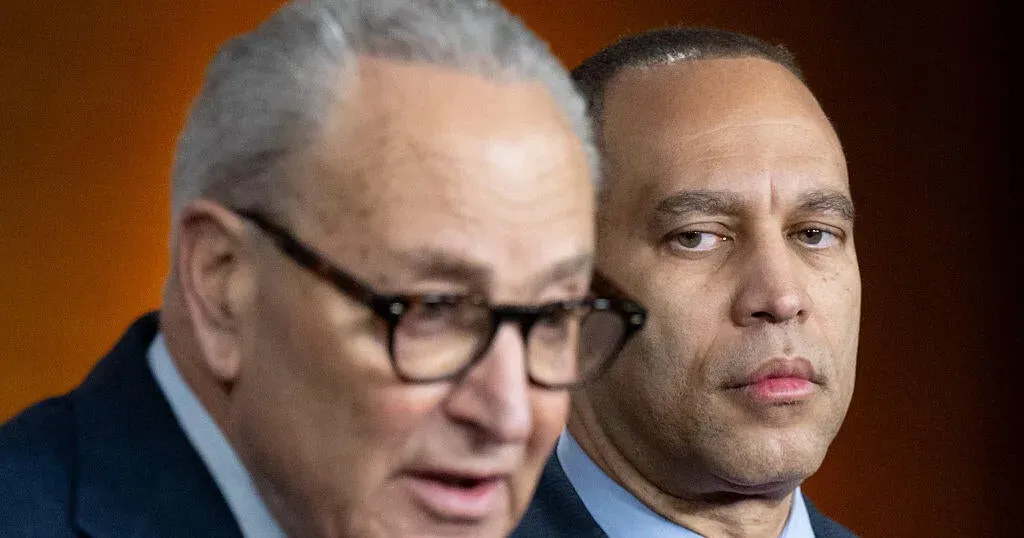
In a statement to reporters, Rep. Hakeem Jeffries indicated that he is open to exploring ways to fund the government without continuing resolutions, which could give Democrats leverage over the administration.
The party's leaders are currently in "active conversation with each other about how to navigate this situation and ensure that the government remains funded beyond December 11.
The Democrats' efforts to end the war in Iran have been gaining momentum, with Rep. Chris Van Hollen of Maryland arguing that the party should use its potential control of Congress to push for an end to the conflict.
This could potentially be done through the appropriations process, which is currently being discussed by the House and Senate committees.
The possibility of ending the Iran war through legislative action is being explored by some Democrats in Congress. This could involve attaching amendments to any government funding deal that would block war funding until a congressional authorization is obtained. Senators Bennet and Duckworth are among those who plan to offer such amendments.
To succeed, Democrats will need to navigate complex procedural hurdles and potentially extend government funding again as well as raise the debt limit in the coming year. They also face the challenge of coordinating their efforts and mustering sufficient political capital to implement any changes. Meanwhile, President Trump has signaled his intention to use his veto power freely.
Lawmakers are aware that forcing the president to halt military action will require a delicate alignment of political opportunity, savvy legislating, and coordination among Congress members. Senate Democrats had discussed these issues during a closed-door lunch meeting on Tuesday, as they considered their next steps in this complex process.
House Democrats are exploring ways to force more votes on war powers resolutions this year, following several failed attempts to rein in President Trump's actions in Iran. The president did not seek congressional authorization for the military intervention, a move that has been criticized by lawmakers from both parties.
Despite some Republican support, particularly from moderate or anti-interventionist members, previous efforts have fallen short due to a lack of consensus. In June, one war powers resolution cleared both chambers, but the Trump administration dismissed it as unconstitutional, arguing that the president has sweeping authority to direct the military.
The Senate's recent decision to block another House-passed resolution has sparked renewed discussion among Democrats about their next steps, with some considering whether to push for more votes on similar legislation. It's something that's under discussion right now, said Representative Jeffries, and we'll take a look at vehicles that we have available to us."
The path forward for Democrats seeking to end US involvement in the war with Iran remains uncertain, but one option is to send a war powers resolution to President Trump's desk. This move would effectively challenge him to veto it, forcing a public confrontation over the conflict.
The war's unpopularity among Americans has created an opening for Democrats to take a stand, and some have suggested using funding bills as leverage in their efforts. A key precedent exists from 1973, when Congress passed legislation blocking government funds for hostilities in Vietnam, Cambodia, and Laos.
The effectiveness of such measures is uncertain, with questions surrounding whether the president would heed Congressional restrictions on his authority to wage war. Some analysts suggest that even if a bar were established, there's no guarantee the president would comply, leaving room for continued conflict regardless of Congressional action.
The Democratic Party has yet to reveal its strategy for dealing with a potential administration refusal to comply with Congressional efforts to bring an end to the ongoing conflict in Iran.
Incoming House Armed Services Committee chairman Rep. Adam Smith of Washington suggests that impeachment should be considered as a means to enforce compliance, but acknowledges that patience is necessary given the uncharted territory ahead.
Facts based on reporting originally published by CBS News Politics.
You may republish this story, in full or in part, if you credit News Central Site and link to it (licence CC BY 4.0). Photos are not included.