SpaceX's Starship Rocket Surpasses Conventional Wisdom in Size and Power
The current configuration of SpaceX's Starship launch vehicle stands at an impressive 407 feet tall, surpassing the tallest living tree, Hyperion, and exceeding the Statue of Liberty's pedestal.
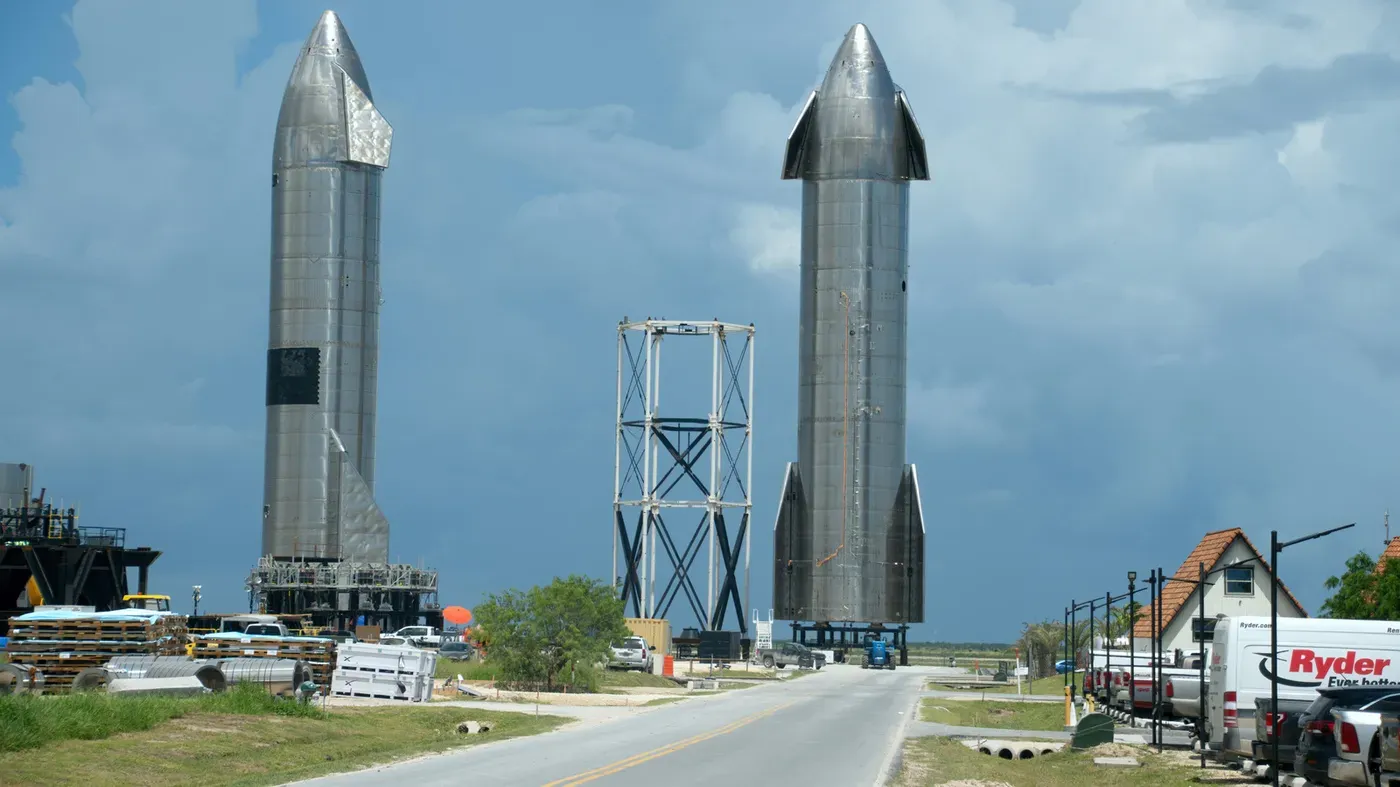
SpaceX's Starship rocket has made significant strides in space exploration, defying conventional wisdom that bigger is not always better.
The current configuration of the Starship launch vehicle stands at an impressive 407 feet tall when both stages are stacked together. This towering height surpasses even the tallest living tree, Hyperion, and exceeds the Statue of Liberty's pedestal included by a significant margin. The sheer scale of this rocket makes it the tallest ever flown, with an unfurled might that also earns it the title of most powerful. Its liftoff thrust is an astonishing 18.1 million pounds-force.
The imposing dimensions of Starship serve a specific purpose: to transport massive payloads into space and eventually facilitate human settlements beyond Earth's orbit. The rocket's vast size allows for the carriage of significant cargo, marking a crucial step in the development of long-distance space travel. To achieve this ambitious goal, SpaceX has designed the system with reusability in mind. Both stages are intended to be recovered after launch.
The Super Heavy booster forms the base of the Starship configuration and provides the initial boost from the launchpad. This 236.2-foot section is followed by the 170.6-foot Starship spacecraft, which will eventually carry both people and cargo into space. The success of this project can be seen in the aftermath of its first full-stack launch in April 2023, where the booster's exhaust caused significant damage to the concrete pad, scattering debris across a wide area.
The sheer scale of SpaceX's Starship rocket is staggering, thanks in part to the massive Super Heavy booster that powers it. With 33 Raptor engines burning liquid methane and oxygen, this behemoth generates a whopping 18.1 million pounds-force of thrust at liftoff.
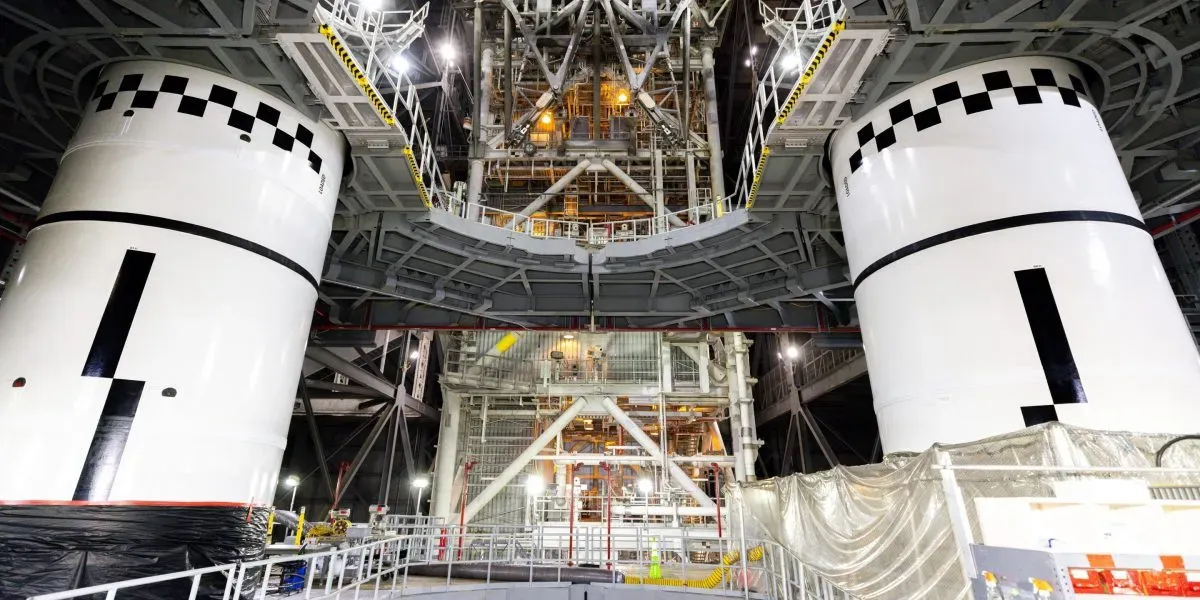
To put that into perspective, NASA's Space Launch System produces significantly less thrust, ranging from 8.8 to 9.4 million pounds-force. However, the Super Heavy booster is only one part of the equation - once it separates, Starship itself will continue on its journey with a more modest propulsion system.
The rocket's immense power is matched by its capacity for carrying heavy payloads. With a listed propellant capacity of 3,650 metric tons in the Super Heavy booster and an additional 1,600 metric tons in Starship, this combination can lift a total of 5,250 metric tons into space.
Despite its incredible capabilities, even Starship will require refueling in Earth orbit for NASA's planned lunar-landing missions. The SpaceX lunar lander will burn through a significant portion of its propellant just to reach orbit, necessitating a mid-course refueling stop.
The SpaceX lunar lander will be prepositioned in Earth orbit, where it will meet with NASA's Orion spacecraft carrying two crew members. To reach this point, a propellant depot will launch first, followed by tanker Starships that deliver fuel to the depot.
Once the depot is fully stocked, the lunar lander can dock and take on the necessary propellants for its mission to the Moon's surface. This process involves several complex stages, including refueling and a support system designed to handle extremely cold propellants in space.
The prepositioned Starship lander will then carry two crew members to the Moon's surface and back, marking a significant milestone in the Artemis program and the broader effort to return humans to the lunar surface.
Facts based on reporting originally published by Engadget.
You may republish this story, in full or in part, if you credit News Central Site and link to it (licence CC BY 4.0). Photos are not included.